

 49 minutes ago
4
49 minutes ago
4
ARTICLE AD BOX
The best referees, as the old saying goes, are the ones nobody remembers. They let the game breathe, keep the contest flowing and, after the final whistle, quietly fade into the background.
This World Cup, the most high-tech of all, has unfolded very differently.
Barely a match has passed without the officiating becoming as much a talking point as the football itself. One of the latest instances came in England’s quarterfinal, where a bizarre sequence preceded the equaliser. Norway argued the ball had clipped an overhead support cable before dropping back into play. To the naked eye, the trajectory appeared to change. Television replays seemed to suggest a deflection. Yet, FIFA’s ball sensors registered no spike, leading officials to conclude there had been no contact.
It was the kind of surreal debate that has come to define this tournament. Instead of discussing England’s movement or Norway’s defending, the conversation centred on cables, sensors and technology.
Before England’s goal in minute 45+2 against Norway, the sensor in the Connected Ball showed no peak in the ‘heartbeat of the ball’ when in the air, and therefore no evidence that the ball touched the overhead wire and changed the movement of the ball. pic.twitter.com/gYf9ukfveT
— FIFA Media (@fifamedia) July 11, 2026
Refereeing controversies are hardly unique to this World Cup. The 2002 tournament remains scarred by decisions that went in favour of co-hosts South Korea’s in their matches against Italy and Spain. Graham Poll’s extraordinary three-yellow-card error in 2006 is part of World Cup folklore. Frank Lampard’s disallowed goal against Germany in 2010 helped usher in goal-line technology. Even Qatar 2022 had Antonio Mateu Lahoz’s chaotic quarterfinal between Argentina and the Netherlands.
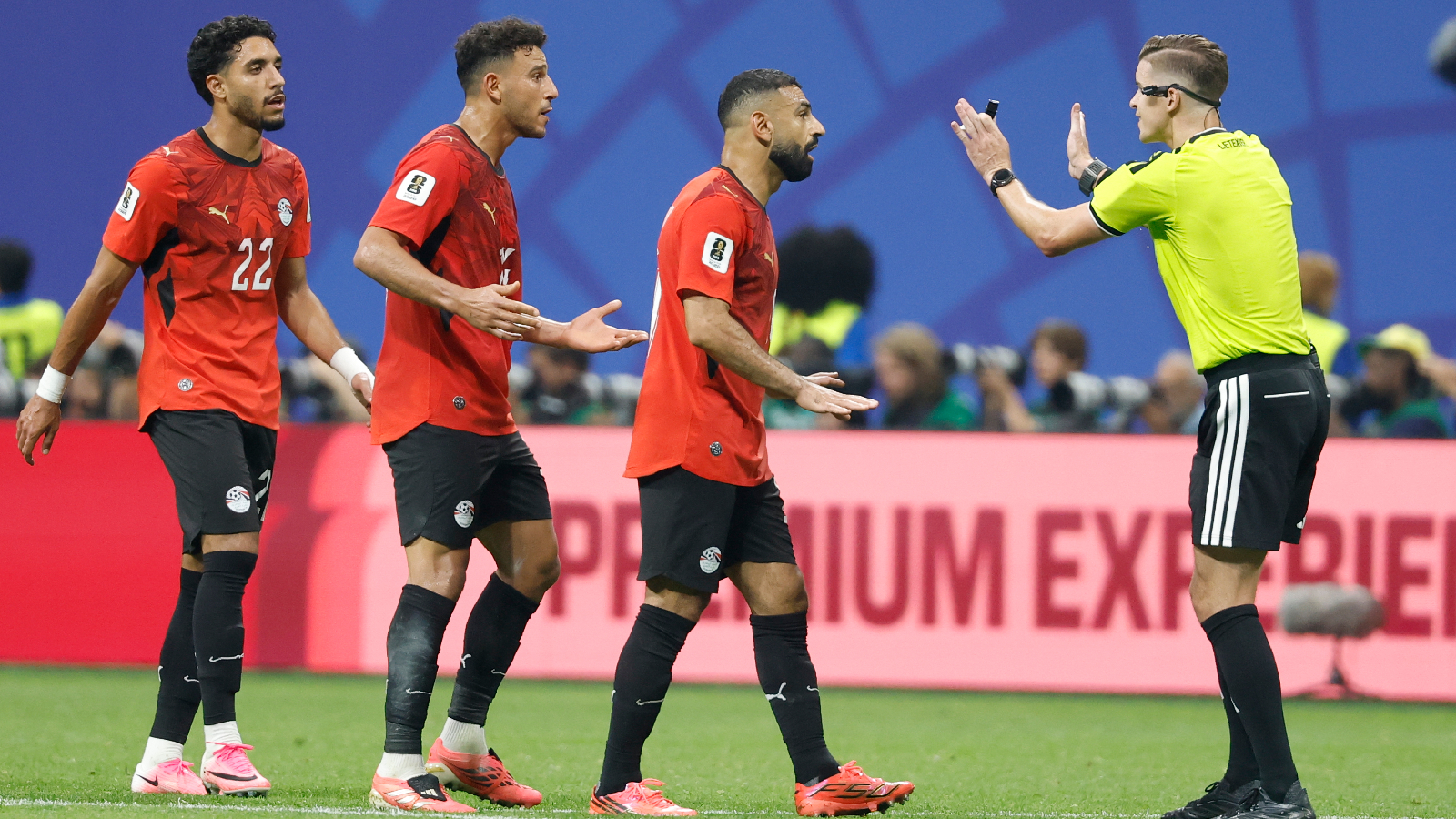
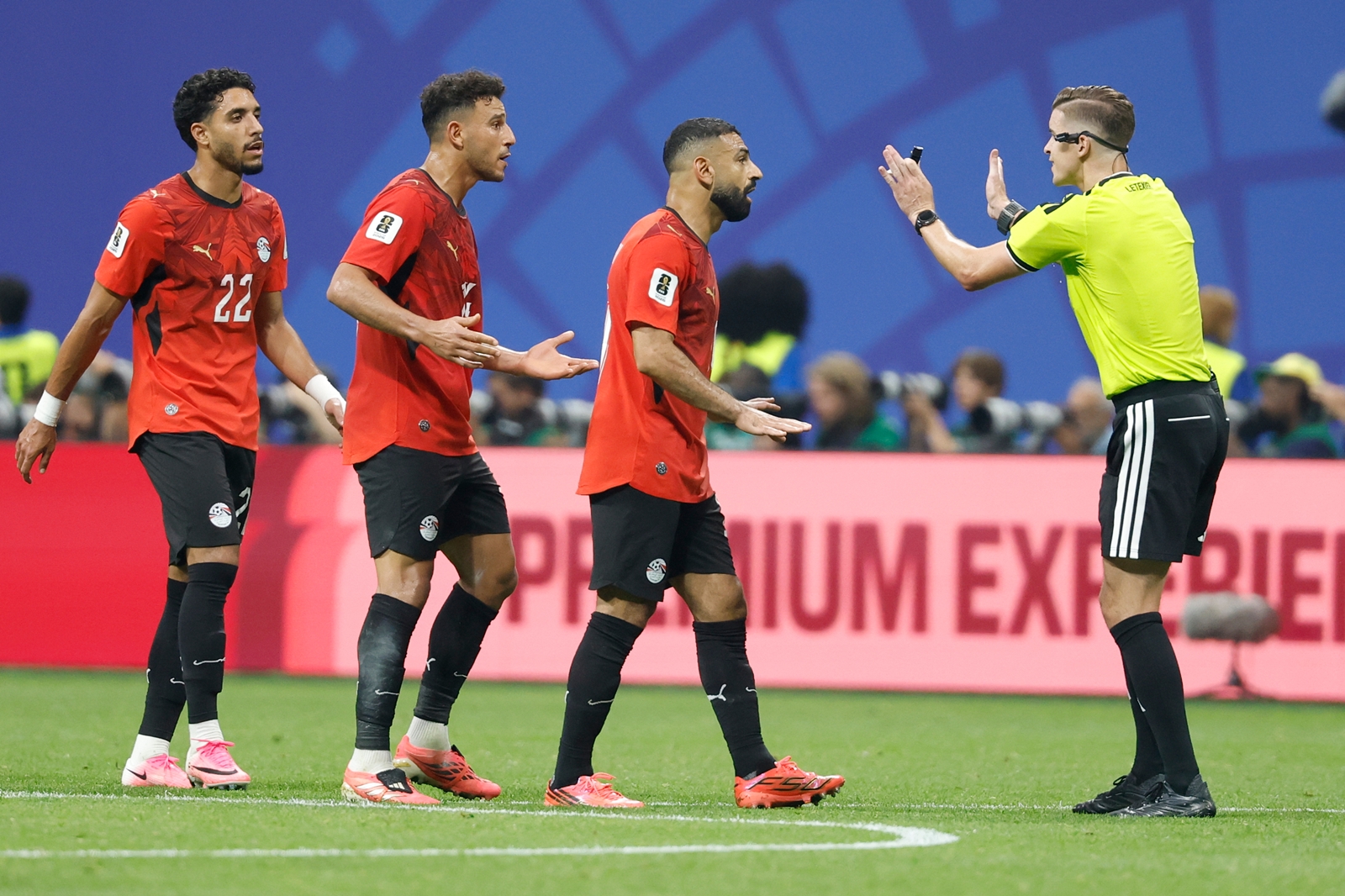 Egypt’s Mohamed Salah (10) talks with Referee Francois Letexier, of France, during the World Cup round of 16 soccer match between Argentina and Egypt in Atlanta, Tuesday, July 7, 2026. (AP Photo/Erik S. Lesser)
The difference is that those tournaments are remembered for a handful of infamous incidents. The 2026 one has felt like a conveyor belt.
There have been contentious penalties, disputed handballs, inconsistent VAR (Video Assistant Referee) interventions and baffling offside calls. Similar challenges have produced different outcomes from one match to the next. Coaches and players have complained not merely about individual mistakes but also about the absence of a consistent threshold for intervention.
Even the refereeing philosophy has appeared to lurch from one extreme to another. Some matches have been allowed to flow with a remarkably light touch, physical contests where officials seemed determined not to interrupt the spectacle. Others have resembled stop-start affairs, with soft fouls, lengthy VAR reviews and frequent interventions denying rhythm. The inconsistency has often proved more frustrating than the decisions themselves because teams have struggled to understand where the line actually lies.
Story continues below this ad
The irony is difficult to miss. This is the most technologically advanced World Cup in history. Semi-automated offside, enhanced VAR systems and new detection technologies were introduced to reduce controversy. Instead, they have often prompted fresh arguments. Fans are no longer debating whether officials saw an incident. They are questioning why technology reached one conclusion while the images appeared to suggest something else.
Different teams, different rules
Then there is the issue of governance.
FIFA’s decision to suspend Folarin Balogun’s automatic suspension after his red card, while simultaneously insisting the referee’s decision remained correct, only deepened the sense of confusion. Whatever the legal justification, the message appeared contradictory: the officials were right, the disciplinary process was right, but the punishment would not stand. That did little to strengthen confidence in the integrity of the decisions.
Perhaps, the clearest indication of how much faith has eroded is the conversation beyond the touchline. Every major Argentina match has been followed by a torrent of posts alleging favourable treatment. That argument gained momentum when Breel Embolo was sent off in Sunday’s quarterfinal, after VAR’s intervention, minutes after Switzerland scored the equaliser.
Story continues below this ad
Whether those claims stand up to scrutiny is almost beside the point. When every contentious decision involving one team is instantly viewed through the lens of bias rather than the human element, trust in the officiating has already been lost.
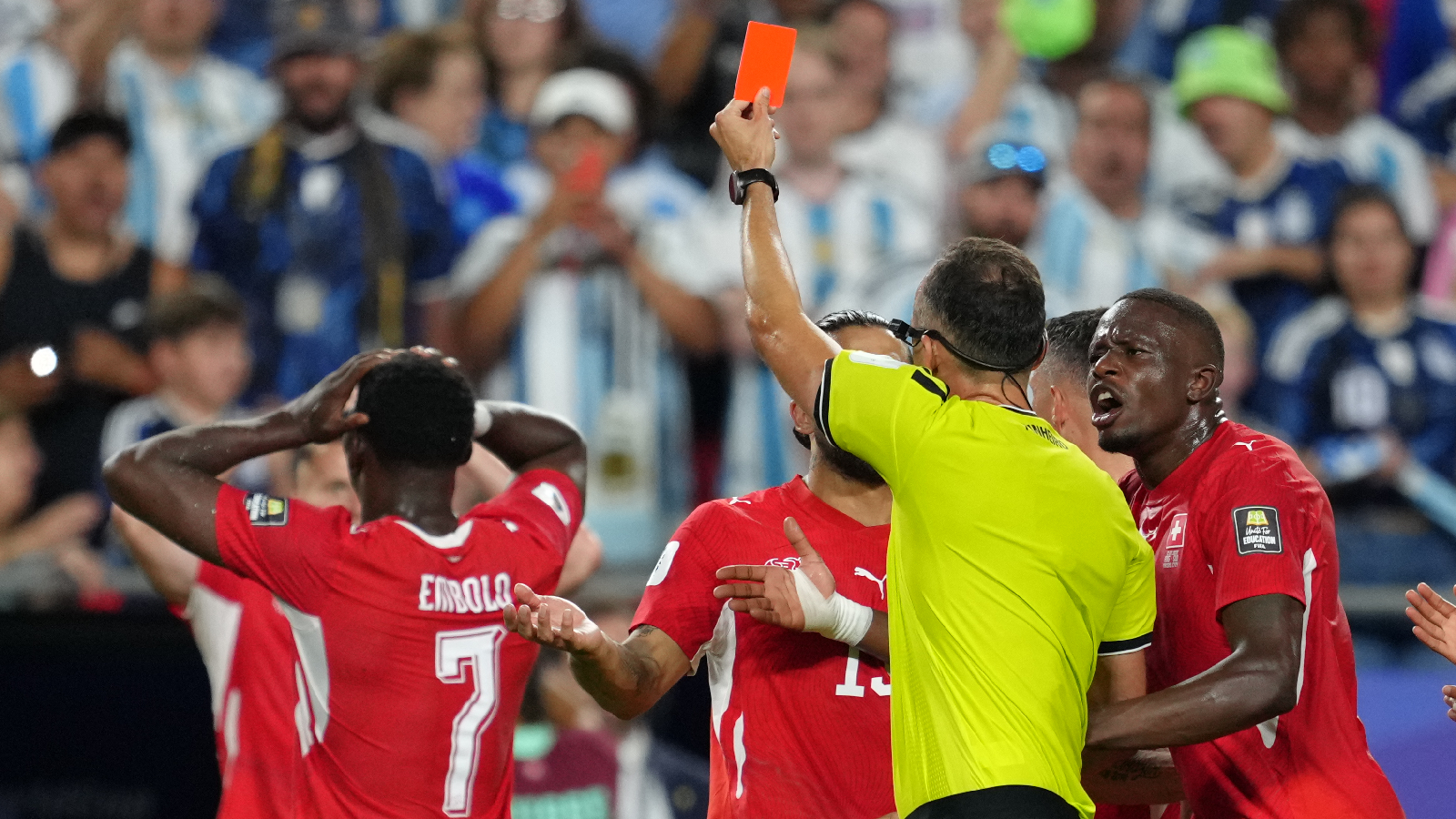 Referee Joao Pinheiro, of Portugal, gives a red card for Switzerland’s Breel Embolo (7) during the World Cup quarterfinal soccer match between Argentina and Switzerland in Kansas City, Mo., Saturday, July 11, 2026. (AP Photo/Ed Zurga)
As chess legend Garry Kasparov noted in his Washington Post column: “It turns out that more rules and more layers of review and tech create even more opportunities for manipulation. Machines measuring offsides, seemingly by a millimetre, and ball sensors that apparently can detect hair (if only Croatian hair) do not solve the transparency problem. Who decides what to review, and when? Who makes the final decision?”
To add to Kasparov’s list of questions: Is this the worst-officiated World Cup?
That’s a difficult allegation to prove. Every generation believes the mistakes of its era were the worst, and football’s biggest tournament has never been free of refereeing controversy.
Story continues below this ad
But this may be the first World Cup where controversy has become cumulative. Every new incident is viewed through the prism of the last one. Every decision begins with a presumption of doubt.
The old adage says the best referees are the ones nobody notices. At this World Cup, they have been impossible to ignore. And that, more than any individual mistake, may be the tournament’s most enduring officiating legacy.



 English (US) ·