

 4 days ago
7
4 days ago
7
ARTICLE AD BOX
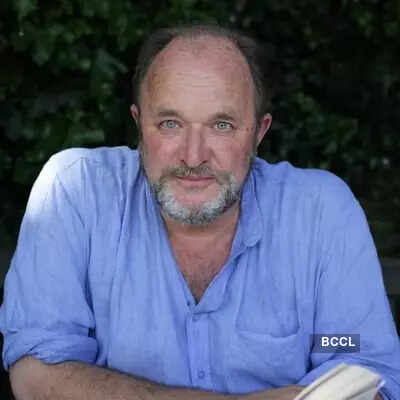
Photo: William Dalrymple/ Twitter
As the cultural conversation around India’s place in global history continues to evolve, an evening with historian and writer William Dalrymple in Delhi offers a timely opportunity to revisit a past that is far more interconnected than often assumed.Italian Embassy Cultural Centre to host William Dalrymple's talk at Sunder Nursery this Wednesday.Few contemporary writers have reshaped our understanding of the cultural and intellectual exchanges between India and the wider world as profoundly as Dalrymple. In his new book, The Golden Road, he traces the vast networks of trade, scholarship, faith and artistic imagination that once connected the Indian subcontinent to Central Asia, the Mediterranean and far beyond. Rather than portraying India as a distant recipient of outside influences, the book presents it as a powerful generator of ideas — a place from which philosophies, aesthetic traditions, scientific knowledge and spiritual practices travelled outward, leaving a deep and lasting imprint on other civilizations.
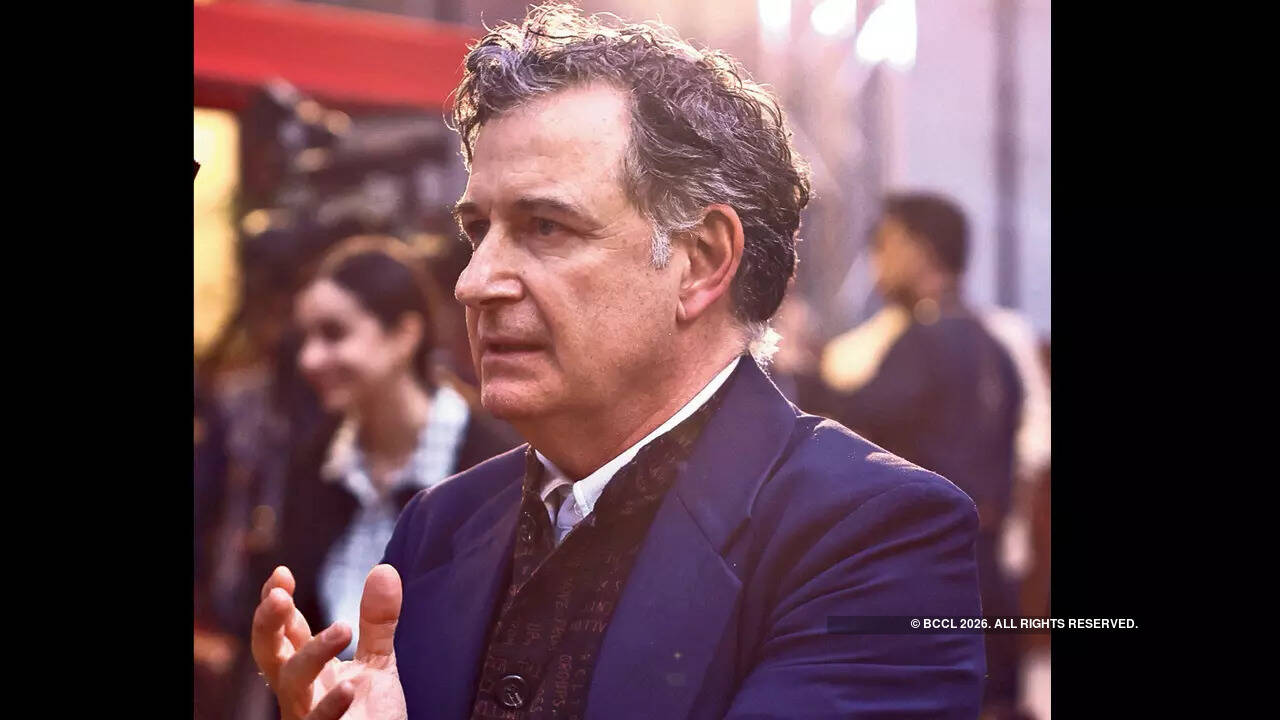
Andrea Anastasio, Director of the Italian Embassy Cultural Centre
This vision of India as a crossroads of creativity and exchange resonates strongly with the spirit of the exhibition Shared Stories. Here, objects are not presented as isolated artefacts but as witnesses to movement — of people, motifs, materials and meanings across time and geography. Sculptures, archaeological discoveries and works by contemporary artists are brought together to reveal an ongoing narrative of encounter and transformation.
Each object carries traces of journeys made, ideas transmitted and traditions reinterpreted.Dalrymple’s scholarship reminds us that what we often describe today as “globalization” is not a modern invention. The routes he describes in The Golden Road functioned not merely as commercial arteries but as intellectual and artistic corridors. Monks, merchants, scholars and craftsmen moved along them, carrying manuscripts, images, techniques and beliefs across continents.
In much the same way, Shared Stories stages a dialogue across time, allowing the past and present to illuminate one another and revealing culture as something continually reshaped through exchange.The conversation between these two projects — a historical narrative on the one hand and a curatorial exploration on the other — opens a space to reflect on a broader idea: that civilizations evolve through contact rather than isolation.
Identities are not fixed inheritances but living formations, enriched through encounter, translation and reinterpretation. History itself, in this sense, is a shared construction.Dalrymple brings to this discussion a career dedicated to uncovering the layered histories of South Asia. The author of the White Mughals, which won the Wolfson Prize for History, and The Last Mughal, recipient of the Duff Cooper Prize, he has long explored the complex interactions that shaped the subcontinent.
His account of the First Anglo-Afghan War, Return of a King, received the Hemingway Award and the Ryszard Kapuściński Award, while his widely acclaimed The Anarchy examined the rise of the East India Company and the making of the British Empire in India.Beyond his books, Dalrymple has played a significant role in shaping contemporary literary culture. He is a fellow of the Royal Society of Literature, the Royal Asiatic Society and the Royal Society of Edinburgh, and has held visiting lectureships at Princeton University, Brown University and University of Oxford, where he is currently an Honorary Bodleian Fellow and visiting fellow at All Souls College.
In 2018 he received the prestigious President’s Medal of the British Academy and was later named among the world’s top fifty thinkers by Prospect Magazine.
He is also the co-founder and co-director of the globally influential Jaipur Literature Festival.An evening devoted to The Golden Road therefore promises more than a discussion of a new book. It becomes a reflection on the long histories of connection that link India to the wider world — histories that continue to shape how we understand culture, identity and the movement of ideas today.


 English (US) ·