

 1 week ago
4
1 week ago
4
ARTICLE AD BOX
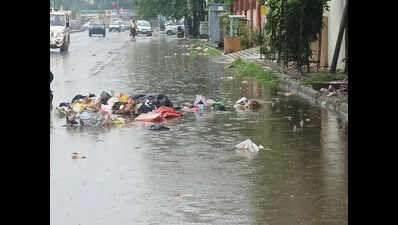
According to officials, the plan has been designed after analysing data of rainfall and waterlogging patterns over the last 40 years in Jaipur
Jaipur: The Jaipur Development Authority (JDA) is preparing to lay down an 87-km-long stormwater drainage project for colonies in south and west Jaipur to address waterlogging problems in Sanganer and Mansarovar areas of the city.
Officials stated that the plan has been designed after analysing data of rainfall and waterlogging patterns over the last 40 years in Jaipur.“Based on this study, a detailed project report (DPR) has been prepared. The plan has been scientifically designed to ensure its effectiveness in the future. We will soon float the tender and begin construction of the first phase after the monsoon this year. The entire project is expected to be over by Aug 2028,” an official added.Officials claimed that a mega stormwater drainage project in Jaipur will be implemented for the first time. The entire project will develop a modern drainage network spanning nearly 87 km. Large box drains will be constructed parallel to all 60-100-foot-wide roads. Their width and depth will range from 1 x 1 metre to 2 x 2.25 metres.“The drainage system is designed to safely drain water from heavy rainfall, up to 300 millimetres in an hour.
Experts claim this capacity far exceeds current needs and is designed to meet potential requirements for the next 30 years,” stated an engineer.The project will be carried out in three phases. The first phase of the project will involve laying a 33-km-long drainage line, costing approximately Rs 88 crore. The second phase will involve constructing a 20-km-long drain, costing approximately Rs 61 crore. The third phase will involve developing a 33-km-long drainage line, costing approximately Rs 111 crore.“Additionally, the existing 14-km drainage network of the area will also get connected with new drain lines, increasing the capacity and effectiveness of the entire system. Under this network, stormwater will flow down from Muhana Canal to the Gular Canal. Ultimately, the drained water will flow into Nevta Dam,” another engineer added.








 English (US) ·