

 3 days ago
6
3 days ago
6
ARTICLE AD BOX
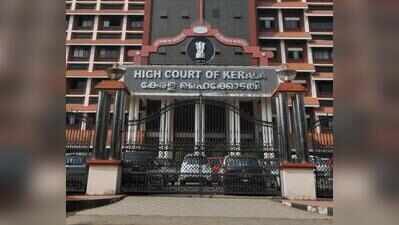
Kochi: High court has approved the draft circular prepared by law department governing the appointment of public prosecutors in district courts, with a modification giving due primacy to the district judge’s opinion on each candidate’s suitability instead of merely requiring that it be given ‘due regard’, as proposed in the draft.A bench of Chief Justice Soumen Sen and Justice V M Syam Kumar accordingly disposed of a PIL filed by P S Sudheer, a lawyer from Kollam, raising concerns over the existing procedure for appointing public prosecutors in district courts.The case arose from the apprehension that the current practice of appointing public prosecutors is not in strict compliance with Section 18(3) of the BNSS, which requires the panel of eligible candidates to be prepared in consultation with the district judge.
Earlier, HC had directed the state govt to frame internal administrative guidelines after noticing that there was no direct interaction between the district judge and the district collector during the consultation process and that, in some instances, adverse remarks made by sessions judges against certain advocates had been ignored.Pursuant to HC’s direction, the law department prepared a draft circular incorporating additional guidelines and submitted it for the court’s perusal.
The draft required the district collector to give due regard to the district judge’s opinion and mandated a joint meeting of the district collector, the district judge and the district police chief. However, the amicus curiae and the petitioner contended that the draft circular still did not accord sufficient weight to the district judge’s opinion.
Accepting the contention, HC directed that the expression ‘due regard’ be replaced with ‘due primacy’.HC also appreciated the provision mandating a joint meeting involving the district collector, the district judge and the district police chief, observing that it would help the committee ascertain the antecedents of the candidates.








 English (US) ·