

 1 hour ago
7
1 hour ago
7
ARTICLE AD BOX
Last Updated:June 09, 2026, 23:27 IST
Kuwait Petroleum Corp is in talks with Saudi Arabia and the UAE to route crude through their pipelines as the near closure of the Strait of Hormuz cripples Kuwaiti exports


Refineries of the State-Owned Kuwait Petroleum Corporation. (Image Courtesy: KPC)
Kuwait’s state oil company is in talks with Saudi Arabia and the United Arab Emirates about routing Kuwaiti crude through their pipeline networks, the company’s chief executive said on Tuesday, as the near-closure of the Strait of Hormuz continues to cut off the Gulf state from its export markets. Bloomberg was the first to report on the same.
Kuwait Petroleum Corp CEO Sheikh Nawaf Al-Sabah disclosed the discussions at a conference in Washington, saying KPC was exploring whether Saudi Arabia and the UAE could expand their existing pipeline systems to carry Kuwaiti barrels. He did not say how advanced those talks were or when Kuwait could begin moving oil through either route.
Geographically Limited, Kuwait Needs To Collaborate
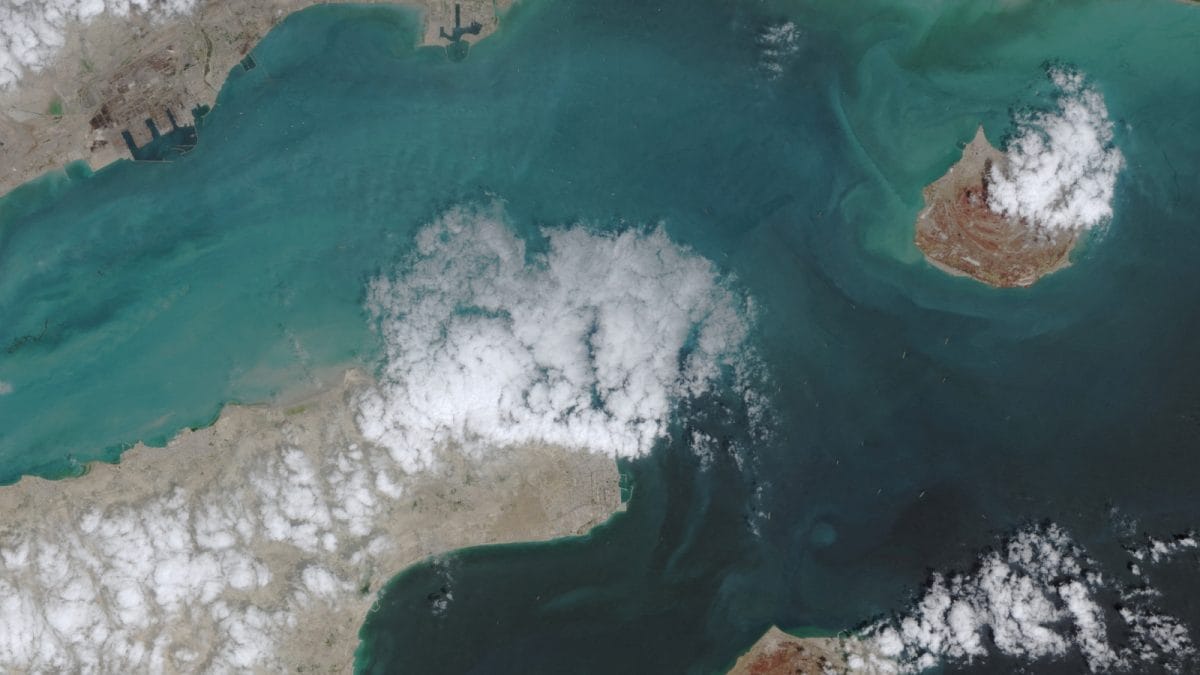
Kuwait has no coastline outside the Strait of Hormuz and no pipeline of its own that bypasses it, leaving it entirely dependent on a waterway that has been effectively closed since late February, when the US-Israel war on Iran triggered Iranian retaliation across the Gulf. The conflict has knocked out roughly a fifth of daily global oil and gas supply. A ceasefire between Washington and Tehran has held since mid-April, but shipping through Hormuz remains at a near-standstill.
Since the war broke out, Kuwait has been running its oil fields at minimum levels, enough to protect wells from damage, meet domestic fuel demand and allow for a rapid restart once the strait reopens. KPC’s international marketing director Shaikh Khaled Ahmad Al-Sabah told an S&P Global conference in London earlier this month that the country could recover 70 per cent of its production within six to eight weeks of Hormuz reopening, with the remaining 30 per cent taking about a month after that.
Which Pipelines Does Kuwait Want Access To?
Saudi Arabia and the UAE have both managed to sustain portions of their exports through infrastructure that bypasses the strait. Saudi Aramco’s East-West Pipeline, which runs 1,200 kilometres from the Abqaiq oil fields in the east to the Red Sea port of Yanbu, was pushed to its full capacity of 7 million barrels per day in late March. The UAE operates the 1.5 million-barrel-per-day Abu Dhabi Crude Oil Pipeline from Habshan to the port of Fujairah, on the Gulf of Oman outside Hormuz. ADNOC is building a second crude pipeline that will double Fujairah’s export capacity, with the project now roughly half complete and expected operational in 2027.
Nothing Is Fool-Proof: Export Sites Must Be Protected As Well
Sheikh Nawaf acknowledged the vulnerability of any pipeline solution. “When you look at pipelines, they are only as safe as the export facility at the end of it," he said. “You’ve seen how Iran targeted both the Saudi and Emirati ones." Iran struck Saudi Aramco’s East-West pipeline in April, temporarily cutting its throughput by around 700,000 barrels per day before repairs restored it to full capacity. The Fujairah port has also come under Iranian attack.
Protection of pumping stations and export terminals will have to be discussed with neighbouring countries and with the United States, Sheikh Nawaf said, pointing to improved air defences for pipeline assets as one area under consideration.
KPC’s London conference delegation separately confirmed the company is looking at expanding its overseas oil storage to reduce its exposure to export disruptions of the kind that have pinned down its output since February.
Handpicked stories, in your inbox
A newsletter with the best of our journalism
About the Author

Anoshito Banerjee is a digital journalist at CNN-News18, specialising in Indian foreign policy, global diplomacy, South and West Asian geopolitics, and strategic affairs. His reporting spans hard news...Read More
Location :
Kuwait City, Kuwait
News world Kuwait Looks To Bypass Hormuz By Routing Oil Through Saudi, UAE Pipelines
Disclaimer: Comments reflect users’ views, not News18’s. Please keep discussions respectful and constructive. Abusive, defamatory, or illegal comments will be removed. News18 may disable any comment at its discretion. By posting, you agree to our Terms of Use and Privacy Policy.
Read More








 English (US) ·