

 1 hour ago
4
1 hour ago
4
ARTICLE AD BOX
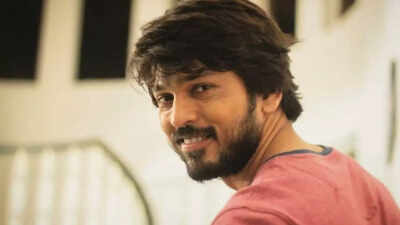
Lalit Prabhakar is an Indian actor and theatre artist best known for his work in the Marathi entertainment industry. He gained widespread recognition and became a household name for his role as Aditya Desai in the popular show Julun Yeti Reshimgathi, where his on-screen chemistry with co-star Prajakta Mali was widely appreciated.Lalit has also appeared in several other TV shows such as 'Jeevalaga', 'Kunku', 'Gandha Phulancha Gela Sangun' and had a notable stint in 'Dil Dosti Duniyadari'. Apart from TV shows, he has acted in Marathi films like 'Chi Va Chi Sau Ka', 'Hampi', 'Medium Spicy', 'Tarri and Smile Please', and continues to work in cinema and web projects.A trained theatre performer, Lalit has directed and acted in stage productions, reflecting his love for experimental and meaningful storytelling.
In an exclusive conversation with ETimes, the young actor shared his experience of working in the industry over years, his love for theatres and much more.You are known for being part of experimental plays like 'Asawastha Samudravar Bail Miley' and 'Invisible City.' What draws you to unconventional theater, and how does it challenge you as an actor?Actually that’s how I started; I began my journey with a theater group led by an unconventional teacher.
His choices were unconventional. He introduced us to interesting and new writers, directors, and plays that were unique and from different parts of the world. He opened me to the world of global literature, which enabled me to opt for a different perspective and attitude towards plays. I think it developed my taste for content accordingly.
And to say how it helps me as an actor, the plays we did were extremely challenging; the texts, subtexts, and performances of them were very complex.
Hence, for every play we worked on, our sir would ask us to read other plays from the same writer even if we weren’t performing them. I ended up reading a lot due to it, which is why it helped me in various ways, like how to play with text and what the body language should be, because initially it was very difficult when I started performing on stage; however, gradually, Sir worked on everything one after another personally.
Whatever progress I could have managed so far is all thanks to those learnings.Theatre often demands emotional honesty and physical discipline that is very different from television or films. How has your theater journey shaped your acting instincts across mediums?Emotional honesty and physical discipline are of utmost importance, and I think it holds true for any art form. Discipline is extremely essential, and you learn from plays.
When I was performing with Ravindra Lakhe Sir’s organization, we used to rehearse one play day in and day out for months, so I think plays make you physically strong, and mentally also, they strengthen you since you are repeating the same things over and over again without getting bored and yet keep finding something new in it every time.
I feel this has been my preparation and practice as an actor for the life ahead; the teachings I received through the process and method involved in the entire learning journey help me in working for any form of content.
When you do hundreds of performances for your play, even after 200-300 times, you manage to find something new in the same play, same lines, and same performance. It is a long road to reach there; it takes time and improvisation. So all the roots of theater help to implement and execute these preparations across mediums or platforms for any project. Just like a soldier is trained, theater is the training ground for an actor; it helps you learn, unlearn, and refresh all the knowledge.
Today when I perform for the camera, the background training from theater helps me to deliver my best even if it takes multiple takes.Your plays rely on subtext rather than overt dialogue. As an actor, how do you prepare to communicate complex emotions and ideas on stage without spelling them out for the audience?I think my answer for this as well is that emotional honesty is the key. When you’re on the stage, you’re completely visible to the audience; in other mediums, the director can selectively showcase certain parts of your body (hands, eyes, legs, back shot, or close-up), and you need to emote accordingly.
However, when you’re on a stage, your entire body is performing for the audience, with the way your eyes, body, voice, and mannerisms stand, sit, and react in order to express yourself.
For all these experiences, I feel theatre is different from the other mediums, and you can’t deceive someone there; they can see everything as it is. You can’t ask someone to only focus on something specifically; you are on display as a whole.
You have no director or crew to help you; the absolute control of the performance lies with the actor. That liberty helps a lot.Experimental theatre does not always aim to please but to provoke thought. How do you balance personal interpretation with the director’s vision while performing such layered material?Theater, or a play, is a collaborative medium where everyone joins hands to create something. Needless to say, the director is the captain of the ship; it is their medium as well, but we have abundant time to explore.
During rehearsals, when a director is narrating an idea or a thought behind the scene or the performance, if you even have a thought, you have the time, opportunity, and liberty to try it. It is a very interesting aspect of theater; you can just try n number of possibilities, unravel layers, and go to the depths, and the director can decide if that helps make their vision translate aptly into the project.Having worked in theater, television, and cinema, what does the live audience response in theater give you that no other medium can, and why do you think theater remains relevant today?Undoubtedly, the experience of a live audience is different than any other experience.
When you are performing on stage, every show is different, every audience and every individual is different, and hence their responses are different too, and those responses affect the performances of the artists too. This phenomenon of interdependence creates a new product every time, which makes every show and its experience unique from one another.
Another interesting aspect of performing live is when you’re performing, they are right along with you, breathing with you; you can feel the gaze and their emotions, whether they are bored or enjoying it.
The entire experience feels like we are isolated from the world, together at a location that feels like a bubble encapsulating the audience and you in front of them performing live; it just feels magical, and I don’t think it can ever die. So with that in mind, I don’t think plays can ever die.Why have you taken a break from theaters post-2016? Any particular reason? Don't you miss it?I definitely have taken no break from theater; in fact, I am performing at Prithvi Theatre for my show on January 29, 2026.
I have been doing multiple shows for this play in the past one and a half years. 'Ghanta, Ghanta, Ghanta, Ghanta, Ghanta' is the name of the play; Mohit Takalkar has directed the play. It is ideally the Marathi adaptation of the UK’s Lemons, Lemons, Lemons, Lemons. We have travelled with the show to various parts of the country, from being selected at the Rang Shankara festival in Bengaluru, the Kerala International Festival, and the Mahendra Excellency Theatre Awards in Delhi.
It makes me immensely proud to present a Marathi play at these various prestigious platforms and very grateful for all the awards and appreciation it has been receiving. I always strive to make time to pursue theater in any form possible; in fact, recently, a few months ago, I did a recital show, 'Ashi Pakhre Yeti,' which is directed by Kshitee Jog. My schedule and timelines are not always conducive to pursuing theater full-fledged at the moment; nevertheless, I do try to be associated with plays and theater as and when possible, but I’m loving this phase of my life too, where I’m trying to make time and experiment with plays and something related to them. I will never stop doing theater.




 English (US) ·