

 1 hour ago
2
1 hour ago
2
ARTICLE AD BOX
Last Updated:April 17, 2026, 16:20 IST
The Leader of the Opposition claimed the government has used the promise of women’s empowerment as a 'political shield' to bulldoze a controversial delimitation exercise


Gandhi argued that if the government were truly committed to women’s representation, it would implement the quota immediately within the existing 543-seat framework. File pic/PTI
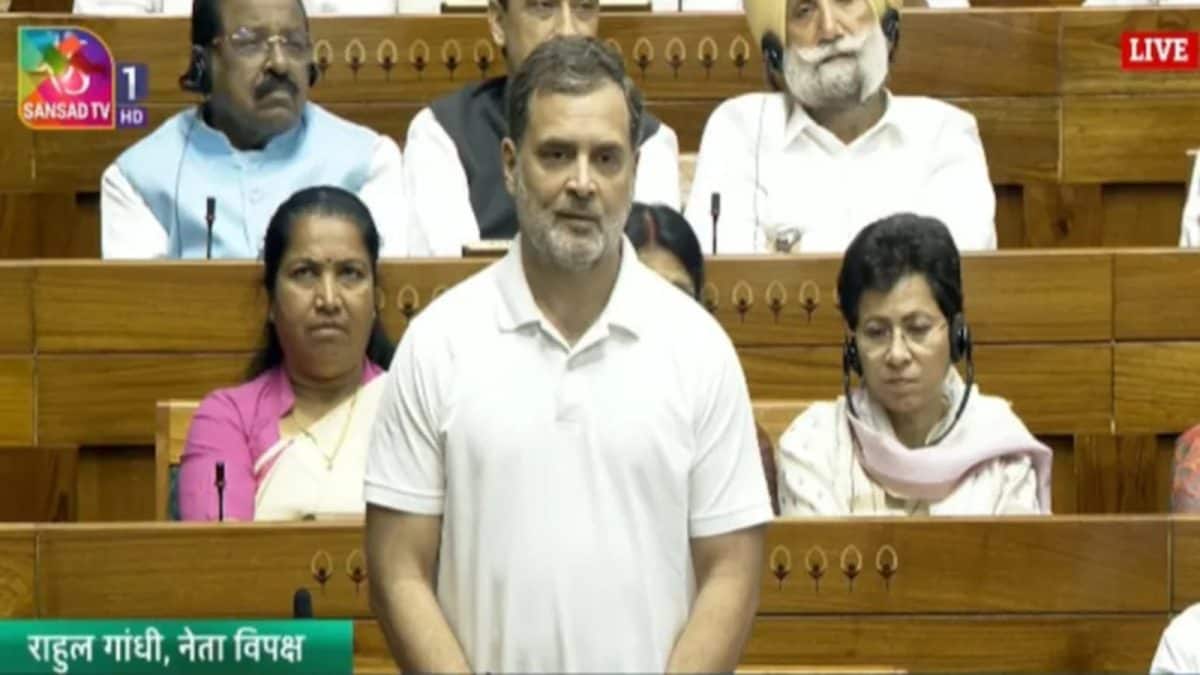
In a sharp escalation of the legislative battle over India’s electoral map, Leader of the Opposition Rahul Gandhi launched a scathing attack on the Constitution (131st Amendment) Bill, 2026, during the special Parliament sitting on Friday. Gandhi alleged that the new legislation is a “dangerous departure" from the 106th Amendment Act of 2023, claiming the government has used the promise of women’s empowerment as a “political shield" to bulldoze a controversial delimitation exercise. Speaking to a packed Lok Sabha, he argued that the current bill has “nothing to do with women’s reservation" and is instead a move to consolidate political power through an unconstitutional expansion of seats.
Why does Rahul Gandhi claim the 2026 Bill differs from the 2023 legislation?
The crux of the Opposition’s argument lies in the decoupling of the women’s quota from a fresh census. Gandhi pointed out that the 2023 Act, which he and the Congress party supported, specifically linked the implementation of the 33 per cent reservation to the “first census conducted after the commencement of the Act." By introducing the 131st Amendment, the government has removed this requirement, allowing delimitation to proceed based on the 2011 Census data. Rahul Gandhi termed this a “legislative sleight of hand", arguing that the government is essentially using 15-year-old data to redraw constituencies for the 2029 elections under the guise of gender justice.
Furthermore, Gandhi highlighted that the 2026 Bill introduces a massive expansion of the House to 850 seats, a provision that was not part of the original 2023 mandate. He contended that by merging the women’s quota with the Delimitation Bill, the government has created a “poison pill" for the Opposition. The Leader of the Opposition suggested that the 2023 Act was about dignity for women, whereas the 2026 Amendment is about “mathematical gerrymandering" intended to benefit the Hindi Heartland at the cost of the southern and eastern states.
How does the Opposition view the link between the quota and delimitation?
For Rahul Gandhi and the broader INDIA bloc, the linking of these two issues is an “assault on federalism." Gandhi argued that if the government were truly committed to women’s representation, it would implement the quota immediately within the existing 543-seat framework. He questioned why the 33 per cent reservation must wait for a massive seat-sharing overhaul that disproportionately impacts states with successful population stabilisation records. By tethering the two, Gandhi alleged, the government has ensured that any MP who votes against the “flawed" delimitation map will be unfairly branded as “anti-women."
The Congress leader also intensified his demand for a caste-based census, asserting that any talk of reservation is hollow without an OBC sub-quota. He claimed that the 2026 legislation deliberately avoids this issue, reinforcing a “power structure that excludes the marginalised." The laughter from the Treasury benches during parts of his address prompted Gandhi to reiterate that the “cunningness" of the bill—a reference to his colleague Priyanka Gandhi’s earlier “Chanakya" jibe—would eventually be seen through by the electorate.
What is the government’s counter-argument to Gandhi’s ‘backdoor’ allegations?
The Treasury benches, led by Home Minister Amit Shah, have maintained that the 131st Amendment is the only practical way to break a thirty-year deadlock. The government argues that an expansion to 850 seats is a “mathematical necessity" to ensure that no state loses its current standing while still fulfilling the 33 per cent mandate for women.
From the government’s perspective, the 2023 Act provided the principle, while the 2026 bills provide the mechanics. They dismiss Gandhi’s “medieval times" rhetoric as an attempt to block a historic reform that the Congress failed to deliver during its own decade in power.
Handpicked stories, in your inbox
A newsletter with the best of our journalism
First Published:
April 17, 2026, 16:20 IST
News politics 'Legislative Sleight Of Hand', 'Nothing To Do With Women's Reservation': What Rahul Gandhi Said In Lok Sabha
Disclaimer: Comments reflect users’ views, not News18’s. Please keep discussions respectful and constructive. Abusive, defamatory, or illegal comments will be removed. News18 may disable any comment at its discretion. By posting, you agree to our Terms of Use and Privacy Policy.
Read More







 English (US) ·