

 1 hour ago
3
1 hour ago
3
ARTICLE AD BOX
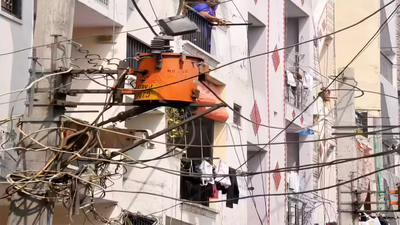
NEW DELHI: On June 25, 2023, teacher and architect Sakshi Ahuja, 35, was walking towards a platform at New Delhi Railway Station, her children’s laughter trailing behind her. Outside, her father Lokesh Chopra was busy finding a parking spot.In an instant, a planned family vacation dissolved into a nightmare. The holiday spirit was shattered by a flash and a scream as Sakshi was electrocuted, her life snuffed out by live wires near a high mast pole — a fatal trap left wide open in one of the city’s busiest hubs.It wasn’t an accident; it was systemic apathy, a tragedy where maintenance was a myth and safety an afterthought.Nearly three years have passed since. But for Sakshi’s father, the clock stopped that day.
A retired govt official, Chopra, 66, spends his days navigating the cold, bureaucratic corridors of Tis Hazari courts, watching a trial that drags its feet while the memory of his daughter’s final moments remains painfully vivid.Despite early promises of swift justice, it has been a slow legal battle; the next hearing is set for April 8, 2026. “In cases where a life is lost due to negligence, at least the trials should be conducted in fast-track courts,” said Chopra.
He argued that this was no mere “negligent act” under Section 304A, but culpable homicide. According to him, the exposed wires were gross disregard for human life that left his young grandchildren without their mother, and with a deep void.Sakshi was pursuing a promising career. She started off as an architect but switched to teaching mathematics and architecture at a private school in east Delhi. The tragedy, said Chopra, left a permanent scar on the family.“Her son and daughter, then aged seven and eight, were present at the time of the incident and were deeply affected. Their studies were also impacted. It is extremely difficult to live life after losing a mother at such a young age,” he added.Following the incident, Northern Railways formed an internal committee while Delhi Police filed an FIR under sections 287 (negligent conduct with respect to machinery) and 304A (causing death by negligence) of the Indian Penal Code.
The police chargesheet named seven employees, including two senior section engineers and five technicians – officials who were responsible for the maintenance of the electric pole and ensuring the safety of passengers at a bustling railway station in the heart of the capital.However, so far, accountability remains only on paper. For the family living in east Delhi’s Preet Vihar, the ‘system’ isn’t a collection of departments; it is the entity that neglected a wire, ignored a risk, and ultimately, traded a mother’s life for a moment of oversight.





 English (US) ·