

 1 hour ago
4
1 hour ago
4
ARTICLE AD BOX
Despite being banned in 31 countries over concerns about DNA damage, toxicity and environmental harm, Dimethoate continues to be sold in India due to its low cost and effectiveness, with regulators opting for partial restrictions instead of a complete ban.
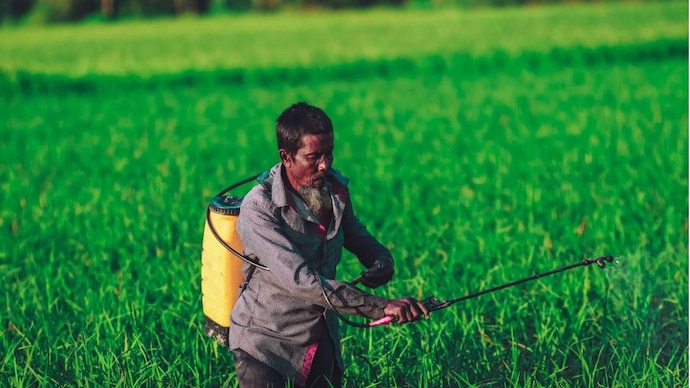
Banned in 31 countries, why is potentially DNA-damaging insecticide Dimethoate still sold in India?

New Delhi,UPDATED: Jun 19, 2026 23:22 IST
A pesticide that has been banned across much of the developed world continues to be widely available in India's agricultural markets.
Dimethoate, a decades-old organophosphate insecticide, remains popular among farmers because it is significantly cheaper than newer alternatives and offers broad-spectrum pest control. However, scientists and regulators in several countries have raised serious concerns about its impact on human health, environmental safety, and genetic integrity.
FROM BATTLEFIELD CHEMISTRY TO AGRICULTURAL FIELDS
Dimethoate belongs to the organophosphate family of chemicals, a class linked to the same scientific principles that led to the development of deadly nerve agents such as Sarin and Tabun during World War II.
German scientists originally developed organophosphate compounds for military applications that targeted the nervous system. After the war, similar chemical mechanisms were adapted for agricultural use. Instead of attacking humans, they were used to disrupt the nervous systems of insects, causing paralysis and death.
Dimethoate was first developed in the United States in 1951 by scientists working for American Cyanamid and was commercially introduced in 1956. It soon became one of the world's most widely used insecticides.
WHY SCIENTISTS CONSIDER IT DANGEROUS
Scientific studies have identified Dimethoate as a potentially genotoxic and mutagenic chemical, meaning it may damage DNA and genetic material within cells. Long-term exposure has been linked to increased concerns about cancer risk and other health problems.
One of the biggest concerns is that after application, Dimethoate can degrade into Omethoate, a metabolite considered significantly more toxic than the original chemical. Some studies suggest Omethoate may be up to ten times more toxic than Dimethoate itself.
Dimethoate is also a systemic pesticide. Rather than remaining on the surface of plants, it is absorbed and transported throughout plant tissues, including fruits and vegetables. As a result, residues can remain inside produce and cannot be completely removed through washing.
Environmental experts have also highlighted its harmful impact on pollinators, particularly bees, which play a critical role in food production and ecosystem health.
WHY MANY COUNTRIES HAVE BANNED IT
Dimethoate has been banned across the European Union, including countries such as France, Germany, Italy and Spain. China has also prohibited its use, while the United States and Australia have imposed significant restrictions.
France was among the earliest countries to act against Dimethoate after pesticide residues were detected in cherries and other fruits. The issue eventually escalated into a wider European dispute over agricultural imports. France refused to import produce from countries still using the chemical, creating trade tensions within Europe.
By 2019-2020, the European Union moved toward a complete ban, citing concerns over consumer safety, environmental protection and pesticide residues in food.
Today, at least 31 countries have prohibited the chemical entirely.
INDIA'S COMPLICATED REGULATORY APPROACH
India's regulatory response has been far more gradual.
The Anupam Verma Committee, constituted between 2013 and 2015 to review pesticide safety, examined 66 pesticides and recommended immediate bans on several hazardous chemicals while suggesting further review of others.
In May 2020, the Ministry of Agriculture proposed banning 27 pesticides, including Dimethoate, through a draft notification. However, the proposal faced opposition from agrochemical manufacturers and became entangled in prolonged consultations and regulatory processes.
Eventually, authorities adopted a partial approach. The Central Insecticides Board and Registration Committee (CIBRC) restricted the use of Dimethoate on fruits and vegetables but continued to permit production and sale of certain formulations for crops such as cotton.
Critics argue that such partial restrictions are difficult to enforce on the ground, especially among small farmers who may have limited awareness of technical regulations.
WHY FARMERS CONTINUE TO USE IT
Despite safety concerns, Dimethoate remains highly popular because of its affordability and effectiveness.
Farmers describe it as a "two-in-one" solution. It can kill sucking pests such as aphids, whiteflies and thrips by being absorbed into the plant, while also eliminating insects that come into direct contact with treated surfaces.
Newer pesticide alternatives are often considerably more expensive, making Dimethoate an attractive option for cost-conscious farmers.
Agricultural experts say that in many rural areas, growers continue to use the pesticide on crops such as tomatoes, brinjal, okra and chilli because of its quick and visible results.
THE ECONOMICS BEHIND THE CONTROVERSY
Industry analysts estimate that older generic pesticides, including the 27 chemicals proposed for prohibition, account for a substantial share of the domestic agrochemical market.
Manufacturers argue that abrupt bans could affect agricultural productivity, employment and business revenues. Critics, however, contend that commercial considerations have slowed the transition toward safer alternatives.
The debate has become a larger question about whether economic interests are being prioritized over public health and environmental protection.
FOOD SAFETY CONCERNS
The issue extends beyond agriculture and enters the realm of food safety.
European authorities have repeatedly rejected agricultural consignments from various countries after detecting pesticide residues above permissible limits. Such incidents have fueled concerns about the effectiveness of residue monitoring and enforcement systems.
Public health advocates argue that unless testing standards, monitoring mechanisms and farmer awareness programs are strengthened, hazardous pesticide residues may continue entering the food chain.
LESSONS FROM PAST TRAGEDIES
Concerns about organophosphate pesticides are not merely theoretical.
In 2017, several farm workers in Maharashtra's Yavatmal district died and hundreds fell ill during pesticide spraying operations involving chemicals from the same organophosphate category. The incident highlighted the dangers associated with exposure, inadequate protective equipment and weak safety practices.
Organophosphates can affect the nervous system, causing severe poisoning and, in extreme cases, death.
A LARGER QUESTION FOR POLICYMAKERS
The Dimethoate debate has evolved into a broader discussion about India's food safety framework and pesticide regulation.
Supporters of a complete ban argue that chemicals discarded by many developed countries should not continue to circulate in Indian agriculture. They believe precautionary principles should guide policymaking when significant health risks are suspected.
Others argue that any transition away from older pesticides must be carefully managed to avoid economic disruption for farmers and industry.
What remains clear is that the controversy surrounding Dimethoate is no longer just about a single pesticide. It has become a test of how India balances agricultural productivity, public health, environmental protection and regulatory accountability in the years ahead.
- Ends
Published By:
Akshat Trivedi
Published On:
Jun 19, 2026 23:22 IST








 English (US) ·