

 1 hour ago
7
1 hour ago
7
ARTICLE AD BOX
Last Updated:March 17, 2026, 20:07 IST
The world is witnessing "war of exhaustion", where attackers use $20,000 drones to force defenders to spend $3-million interceptors. News18 decodes strategy, 4 reasons why it works


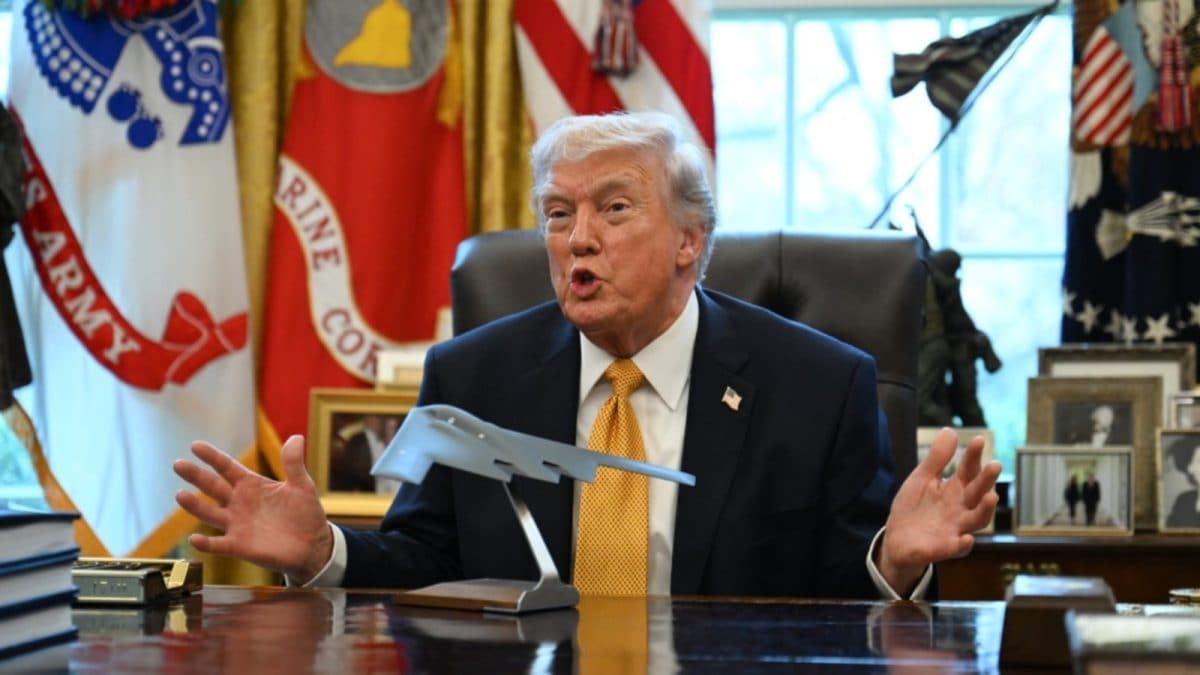
The primary impact of cheap drones is a massive cost-imposition imbalance. (AI generated for representation)
Low Cost, High Impact: 4 Ways How Cheap Drones Are Boosting Air Power Amid Wars Explained
Amid multiple wars, cheap drones are fundamentally shifting the economics of air power. Countries are now moving away from a few “exquisite" high-cost platforms toward “precise mass" — high-volume use of low-cost, expendable systems.
As of 2026, this shift is characterised by a “war of exhaustion", where attackers use $20,000 drones to force defenders to expend $3-million interceptor missiles.
News18 decodes the strategy behind the use of cheap drones.
Cheap drones being used by various countries in recent wars
Shahed-136 ($20,000–$50,000): Used by Iran, Russia, Houthi rebels
A long-range (2,500 km) “suicide" drone used for swarming and striking static infrastructure
FPV Quadcopters ($500–$1,000): Used by Ukraine and Russia (often using Chinese parts) Highly agile, first-person-view racing drones converted into precision “kamikaze" weapons for hitting moving vehicles or trenches.
ZALA Lancet ($20,000–$40,000): Used by Russia
A loitering munition with X-shaped wings used for surgical precision strikes against high-value tanks and artillery.
LUCAS / FLM-136 ($35,000): Used by United States
A low-cost clone of the Shahed-136 designed to overwhelm enemy air defences with mass numbers.
Hornet Queen (Wild Hornets) ($2,000–$5,000): Used by Ukraine
A versatile, larger 17-inch FPV platform used as a bomber, mine layer, or carrier for smaller drones.
Gerbera ($10,000): Used by Russia
A cheaper foam-bodied decoy version of the Shahed used to distract and exhaust enemy air defence missiles.
‘Sting’ Interceptor ($2,500): Used by Ukraine
High-speed FPV drones specifically designed to hunt and ram Shahed-type drones mid-air.
Switchblade 300 ($6,000): Used by Ukraine, US
A portable, tube-launched “flying shotgun" intended for precision anti-personnel strikes.
US Lost $330-Million Reaper Drones In Iran War: 4 Reasons Why LUCAS Is Now Being Picked Explained
Fiber-Optic FPV ($800–$2,000): Used by Russia and Ukraine
Drones controlled via a physical cable, making them completely immune to electronic jamming and radio interference.
Understanding the strategy behind use of cheap drones
The reasons why cheap drones are used, according to Reuters and other media reports:
1. Reversing the economics of air defence
The primary impact of cheap drones is a massive cost-imposition imbalance.
Iranian-designed Shahed-136 drones and their variants cost between $20,000 and $50,000. In contrast, traditional interceptors like the Patriot (Lockheed Martin) cost roughly $3 million to $6 million per shot.
Sophisticated interceptors are finite; for instance, the U.S. produced roughly 600 PAC-3 interceptors in 2025, while a single adversary can launch hundreds of drones in a matter of days to deplete these stocks.
During recent conflicts in 2026, defenders have spent over $1.4 billion in a single campaign to counter drone swarms that cost the attacker less than $360 million.
2. Emerging counter-drone strategies
Militaries are racing to find affordable ways to “kill" cheap drones without using expensive missiles.
Ukraine has pioneered the use of “drone-on-drone" combat, using small, fast interceptors costing $1,000 to $4,000 to ram or explode near incoming UAVs. The U.S. has recently deployed the Merops AI drone to the Middle East for this purpose.
Old-school solutions like mobile machine-gun teams and repurposed propeller aircraft with gunmen are being used to shoot down drones at a negligible cost.
Directed Energy: New technologies like laser systems (e.g., Helios) and high-power microwaves are being tested to “zap" drones at the speed of light for only the cost of the electricity used.
3. The ‘copycat’ era of procurement
The speed of innovation now rivals traditional decades-long defense programs.
Rapid Reverse-Engineering: The U.S. military developed the FLM-136 LUCAS—a $35,000 one-way attack drone—in just 18 months by reverse-engineering the Iranian Shahed design to fill its own gap in low-cost precision strike capability.
Mass Production: Ukraine has scaled production to over 4 million drones per year, moving the industry toward a “Silicon Valley" style of rapid iteration rather than slow bureaucratic procurement.
Decentralised Command: Drones are no longer specialised assets for elite units but are now organic to every infantry squad, acting as “expendable ammunition".
4. Technological shifts in 2026
Modern drones are evolving to overcome their greatest weakness: Electronic Warfare (EW).
Autonomous Terminal Guidance: To counter jamming, new drones use AI-driven machine vision (like the TFL-1 module) to lock onto a target in the “last mile," allowing them to complete a strike even if the operator loses the radio link.
Fiber-Optic Control: Some front-line FPV drones now use physical fiber-optic cables to remain entirely immune to radio frequency jamming.
Algorithmic Warfare: Operators are shifting from “piloting" single drones to managing swarms of 10 to 20 units that coordinate movements autonomously.
With agency inputs
First Published:
March 17, 2026, 20:07 IST
News explainers Low Cost, High Impact: How Cheap Drones Are Boosting Air Power Amid Wars Explained
Disclaimer: Comments reflect users’ views, not News18’s. Please keep discussions respectful and constructive. Abusive, defamatory, or illegal comments will be removed. News18 may disable any comment at its discretion. By posting, you agree to our Terms of Use and Privacy Policy.
Read More






 English (US) ·