

 1 hour ago
4
1 hour ago
4
ARTICLE AD BOX
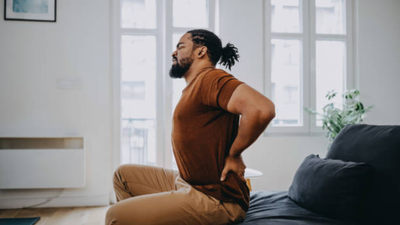
Long hours of travel — whether in flights, cars, or trains — often leave us feeling heavy, stiff, and uncomfortable in the lower body. The hips feel tight, the quadriceps feel overworked, and the lower back becomes sore.
This is not merely discomfort; it is the body responding to prolonged immobility.A simple and mindful yoga recovery routine can help restore circulation, release muscular tension, and bring the body back to balance.In yogic perspective, movement is nourishment for the body. When we sit for prolonged periods, energy (Apana Vayu) becomes stagnant, particularly in the hips, thighs, and lower spine, the foundation of our physical stability.
Watch
Yoga for lower back stiffness
In yogic traditions, the lower body is associated with the Muladhara (Root) Chakra. This is the center of grounding and stability. Yogic philosophy strongly believes movement is nourishment for the body.Yoga also recognises the deep connection between the mind and body. A stiff body is often a reflection of a stiff mind. When the mind carries excessive pressure, the body experiences it as “weight.” As cortisol levels rise, the body naturally shifts into a defensive or protective mode, tightening muscles and reducing ease of movement.
Over time, this stress response can create a cycle: when the mind becomes tense, the body stiffens; and when the body remains stiff and immobile, the mind also begins to feel restricted.During travel, when we sit for long hours, this combination of mental load and physical immobility can intensify stagnation in the lower body. The legs and hips become heavy, circulation slows, and the sense of grounding diminishes.
The science of the "sit": What’s happening to you?
The "traveler's stiffness" is now becoming a daily reality due to sedentary work cultures. By sitting for 8–10 hours a day, we are essentially training our bodies to lose their range of motion. This chronic tightness in the quadriceps and glutes weakens the back of the body( Posterior chain- a muscle group), which is vital for maintaining an upright, healthy posture. Whether it’s a cross-country flight or a long day at the office, the physiological result is the same: a body undergoes a physiological tug-of-war:The Quadriceps & Hip Flexors: In a seated position, your hips are in constant flexion.
This causes the psoas and rectus Quadriceps muscles to remain in a shortened, contracted state. Over time, they "forget" how to lengthen, leading to that tight, pulling sensation when you finally stand up.• The Posterior Chain (Back & Glutes): While the front is shortening, the back is overstretching. The glutes—the engines of the lower body—go "silent" (loses a muscle memory), while the lower back muscles strain to stabilize your slumped spine.• Circulation : Gravity pulls the blood and lymph in the lower extremities, leading to swollen ankles and a heavy, lethargic feeling in the legs. This is nothing but travel edema.
A gentle yoga recovery routine -
To counteract the effects of a long journey, focus on poses that lengthen the front of the body and dynamic decompress the spine.• Ankle Rotations : While seated or lying down, rotate the ankles slowly and flex–point the feet. It Improves blood circulation in the lower legs.• Calf Raises : Try to simply stand if you are sitting for long periods of time, and lift your heels higher up and drop them dynamically.This helps to pump the calf engines i.e your “second heart” by improving blood circulation.• Ashwa Sanchalanasana (Low Lunge): Step one foot forward and gently lower the back knee. This posture releases tight hip flexors and quadriceps, counteracting prolonged sitting.As you move closer to the ground, a natural grounding and anchoring effect emerges, calming the mind along with the body.
As stated in Hatha Yoga Pradipika, “Chale vāte chale chittaṁ, niśchale niśchalaṁ bhavet”—when the breath steadies, the mind becomes steady.With conscious breathing, this pose helps establish stability, bringing a sense of balance, grounding, and ease both physically and mentally.• Adho Mukha Svanasana (Downward Facing Dog): This pose helps resetting the spine. It stretches the entire posterior chain—hamstrings, calves, and back—while encouraging blood flow back toward the heart.• Uttanasana (Standing Forward Fold): Let the head and arms hang heavy. This uses gravity to decompress the vertebrae that have been compressed by hours of sitting.• Viparita Karani (Legs-up-the-Wall): The essential travel recovery pose. It encourages lymphatic drainage and reverses the effects of gravity on the lower limbs.In yogic philosophy, restoring gentle movement to the lower body is therefore not merely about stretching muscles. It is about releasing stored tension, allowing Apana Vayu to flow freely again.This in turn, makes long travels a pleasurable experience.




 English (US) ·