

 1 hour ago
6
1 hour ago
6
ARTICLE AD BOX
This article is authored by Srihari Mulgund, Partner and New-Age Mobility Leader, EY-Parthenon and Mayur Kalgutkar, AVP, EY-Parthenon.Magnesium will soon move from a “nice to have” to a strategic imperative in automotive lightweighting, and India has an opportunity to move in early.For decades, automotive lightweighting was treated as a supporting act – useful for fuel efficiency, but rarely decisive. That has changed irrevocably in the EV era, where every additional kilogram compounds battery size, thermal load, structural reinforcement, and ultimately total cost. Lightweighting is no longer a materials‑engineering exercise; it is a system‑level strategy lever. While aluminum has long been the material of choice for lighter structures, magnesium—the lightest structural metal—is shifting from a niche curiosity to a strategic priority.
As OEMs chase every incremental efficiency and cost advantage in their EV platforms, magnesium is rapidly moving to the center of the conversation.
Global OEMs Are accelerating magnesium adoption
Nations with abundant domestic magnesium reserves recognized this shift early and moved decisively by increasing magnesium content per vehicle, particularly in premium New Energy Vehicles (NEVs). These leaders are estimated to have increased magnesium usage to approximately 15–20 kg per vehicle by expanding the use of magnesium die castings into large structural components such as instrument panel beams, seat frames, transmission housings, and body gigacastings.
Some are also supporting a broader industrial push aimed at reaching ambitious targets of 45 kg of magnesium per vehicle by 2030.Western OEMs are also actively evaluating magnesium’s role in lightweight structures, seen in Tesla’s use of magnesium within body systems and in European brands like BMW and Audi integrating it into gearboxes, frontend structures, and seat frames. Tightening EV economics and the competitive benchmarks would continue to compel Western OEMs to accelerate magnesium integration.
Magnesium castings: why they’re gaining ground now
Magnesium’s core advantage is that it is about 30-35% lighter than aluminum and significantly lighter than steel. This is further aided by properties that are particularly valuable in EVs - high specific strength, good heat dissipation, intrinsic electromagnetic shielding, and excellent vibration damping that enables quieter cabins. Magnesium also melts at moderately lower temperatures than aluminum, aiding energy‑efficient casting. Beyond material traits, process advances in semi‑solid (thixomolding) are changing the game, enabling thinner wall sections, lower processing temperatures that reduce casting defects, and improved surface finish and mechanical consistency. Meanwhile, new magnesium alloys and surface treatments have addressed the historical corrosion and castingquality concerns, broadening structural applications.
India’s Moment of Choice: Start with Cast Magnesium Alloy Wheels
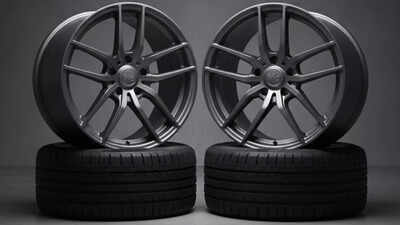
For India, the magnesium opportunity is about timing: the EV and lightweighting journey is still early, architectures and material choices remain fluid. The risk of waiting too long could lock OEMs into aluminum‑heavy platforms just as global benchmarks pivot toward deeper lightweighting.The shortest – and smartest – path for Indian OEMs is “cast magnesium alloy wheels”. Aluminum alloy wheels have already reached ~38–40% penetration in passenger vehicles, creating a familiar upgrade path for OEMs and consumers.
Magnesium wheels build directly on this momentum, offering the next step rather than a disruptive leap.A simple 16‑inch wheel case illustrates the economics. A cast magnesium wheel delivers ~30% weight reduction. In recent years, Mg prices have often traded at 1.2–1.5× aluminum and have steadily fallen as Chinese supply scaled and processes improved; in FY25, the Mg‑to‑Al ratio even dropped below 0.8× in China.
In our calculations, we use a conservative 1.4× Mg‑to‑Al price ratio, which roughly balances the price of the 30% lighter Mg wheel against aluminum.
Further, the weight saving is translated into meaningful downstream battery‑pack savings of ~US$ 24 at US$ 80/kWh. Thixomolding equipment capex is US$ 3.0–3.5 million for a 3,000–3,500‑ton press; even with a 5‑year economic life, the combined effect yields a net benefit of US$ 4–18 per vehicle, depending on annual production and battery‑pack cost assumptions.
As shown in the chart, higher volumes and higher battery‑pack costs quickly tilt the economics in magnesium’s favor, making wheels a low‑risk, analytically sound entry point for Indian OEMs.
Electric Motorcycle: The Wildcard
If passenger cars are the obvious opportunity, electric motorcycles may be the more strategic one. India’s two-wheeler market is electrifying rapidly, led by the scooter segment, but motorcycle electrification continues to struggle: battery weight significantly compromises range, handling, and rider appeal.
This is where magnesium can fundamentally change the design narrative. Components such as swing-arms, motor housings, wheels and wheel hubs, frames, and even battery enclosures are prime candidates for magnesium substitution.
Weight savings here translate directly into either longer range or smaller, cheaper batteries—redefining the motorcycle design equation. Unlike cars, where aluminum is deeply entrenched, twowheelers offer a cleaner slate.
OEMs can design magnesium in from the outset, leapfrogging global peers.
Supply Chain Dilemma
One potential reason holding back Indian OEMs could be the supply risk, often creating exposure to policy, pricing, and logistics shocks. This can be mitigated by progressively reducing import dependence via emerging EU/ROW projects as volumes scale – alongside domestic recycling and remelting loops for magnesium components. These steps could turn a singlepoint risk into a manageable, diversified supply strategy.
Conclusion: A Window That Won’t Stay Open
Magnesium’s moment has arrived not because it is new, but because industry constraints have changed. Major economies are moving in that direction driven by necessity rather than choice. For India, the question is stark: move early and help shape the ecosystem or arrive late and import solutions at a premium. Cast magnesium wheels, followed by targeted applications in electric motorcycles, offer a pragmatic entry point.
OEMs and suppliers that begin asking the right questions about magnesium today will be the ones defining vehicle platforms tomorrow. Magnesium is no longer a footnote; it is fast becoming the headline.Disclaimer: Views and opinions expressed in this article are solely those of the original author and do not represent any of The Times Group or its employees.








 English (US) ·