

 1 hour ago
6
1 hour ago
6
ARTICLE AD BOX
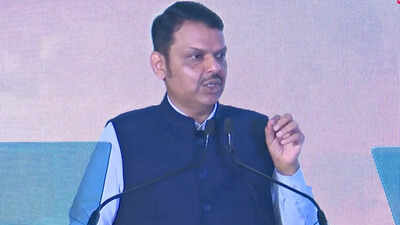
Devendra Fadnavis at The Economic Times Maharashtra Business Summit 2026
Maharashtra has set a target of drawing investments worth Rs 30 lakh crore as it aims to establish itself as a leading global investment destination. The state chief minister Devendra Fadnavis on Thursday outlined a growth strategy centred on infrastructure development, logistics enhancement, and clean energy expansion.Addressing the The Economic Times Maharashtra Business Summit 2026 in Mumbai, Fadnavis said the state’s infrastructure push goes beyond road construction. According to him, Maharashtra is creating economic corridors that will spur industrial growth while improving regional connectivity.The first day of the summit presented Maharashtra’s larger development blueprint, which focuses on integrated infrastructure, port-led industrialisation, and the rise of data centres powered by clean energy.
The objective is to build modern urban ecosystems capable of supporting sustained long-term growth.Highlighting maritime infrastructure as a major catalyst, Fadnavis described the upcoming Vadhvan Port as a transformative project that could significantly strengthen the state’s logistics network and enhance India’s overall trade capabilities.Madhuri Meera Satish Misal, who attended as Guest of Honour and holds multiple ministerial portfolios in the Maharashtra government, stressed that development must be inclusive.
She noted that growth should not be limited to the creation of physical assets but must also generate employment, encourage entrepreneurship, and improve competitiveness. In her view, economic progress should raise living standards while remaining sustainable.Offering a global perspective, Juan Antonio March Pujol, Spain’s ambassador to India, warned against unchecked urban sprawl. He emphasised that integrated urban planning will be essential to effectively manage transport, public services, and quality of life as cities continue to expand.Senior government officials and industry leaders underscored the importance of efficient execution and policy stability in attracting large-scale investments. P. Anbalagan, Principal Secretary for Industries, called for the removal of administrative hurdles and advocated a regulatory environment built on trust, allowing businesses greater operational freedom.Sector-focused discussions also highlighted both promise and challenges.
Sanjay Mukherjee, Metropolitan Commissioner of the Mumbai Metropolitan Region Development Authority, observed that metro rail systems alone cannot fully address the transportation demands of rapidly growing cities.Meanwhile, Abha Shukla, Additional Chief Secretary in the Energy Department, said Maharashtra must ensure that energy availability keeps pace with economic expansion. She highlighted the state’s goal of sourcing 50% of its electricity from renewable energy by 2030.In the pharmaceutical sector, industry executives raised concerns about shifting investment patterns and the long gestation period required for innovation. Bhushan Akshikar, Managing Director of GSK Pharmaceuticals, noted that fresh investments are increasingly being directed to other states. Bhavin Mehta, Vice Chairman of Pharmexcil, added that meaningful innovation in the sector demands sustained financial commitment over many years.





 English (US) ·