

 1 hour ago
3
1 hour ago
3
ARTICLE AD BOX
Last Updated:February 14, 2026, 22:39 IST
During the interview, Liew Chin Tong noted that although India brings scale, skill, and momentum to the table, both sides still have work to do in aligning their supply chains


Tong outlined how Malaysia sees itself as a partner in India’s economic rise rather than a competitor. File pic/X
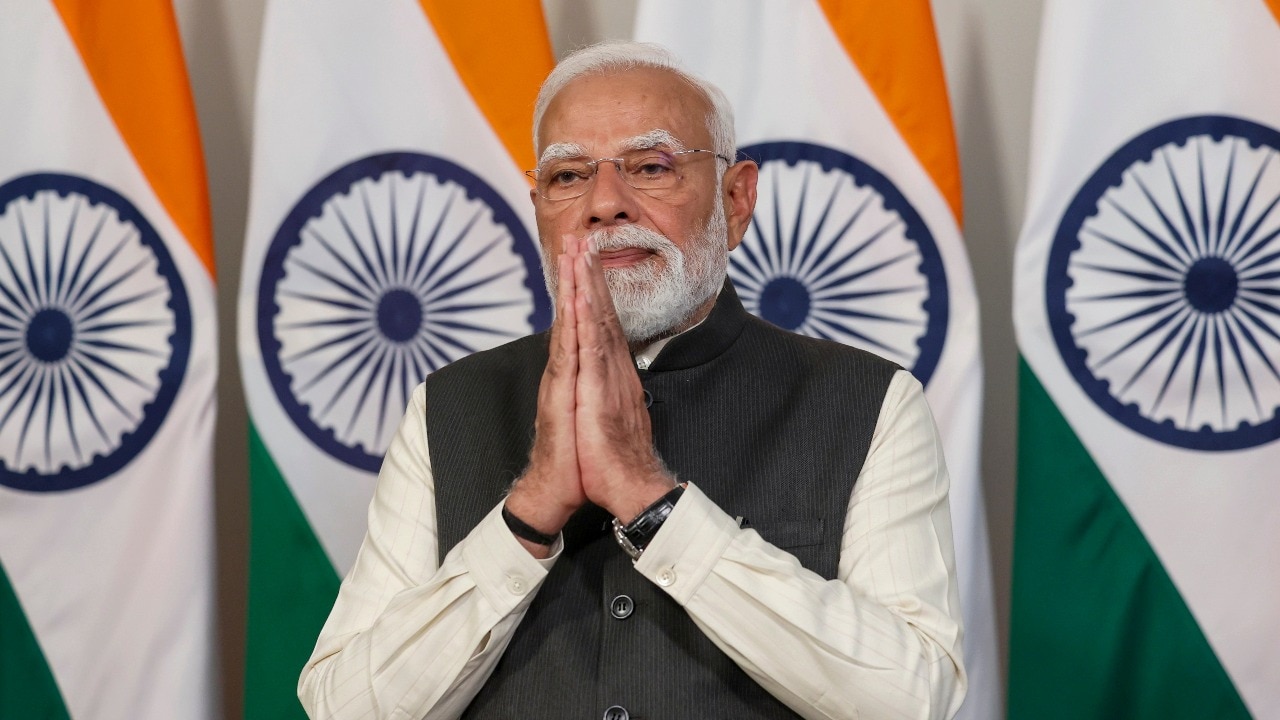
Prime Minister Narendra Modi’s recent visit to Kuala Lumpur, where he met Malaysian Prime Minister Anwar Ibrahim, marked a renewed push to deepen India–Malaysia ties at a time of shifting global supply chains and rising geopolitical uncertainty.
Against this backdrop, CNN-News18 sat down with Malaysian Deputy Finance Minister Liew Chin Tong for an in-depth conversation on the evolving trajectory of bilateral relations. From semiconductors and advanced manufacturing to trade diversification and diaspora-driven linkages, Tong outlined how Malaysia sees itself as a partner in India’s economic rise rather than a competitor.
He also addressed BRICS and the practical limits of its dedollarisation bid, pointing to liquidity as a key challenge.
Edited excerpts from the interview:
Eleven MoUs were signed during Prime Minister Modi’s visit. Which one agreement, in your view, will deliver results the fastest, and what changes on the ground should businesses actually expect?
I don’t want to single out one MoU because each of them matters in its own way. What is more important is the broader context. Malaysia and India are already in a comprehensive strategic partnership, and we are now moving towards a much deeper and more integrated economic relationship.
The real message from this visit is momentum. There is a strong sense that both sides see enormous untapped potential and are committed to translating intent into outcomes. Businesses should expect closer cooperation, smoother engagement, and more opportunities across sectors in the coming years.
Personally, I have been closely involved in discussions on semiconductors. While we did not sign a formal MoU or cooperation agreement in this area during this visit, it remains a priority for us. I strongly believe Malaysia and India can achieve a great deal together in advanced technologies. Semiconductor cooperation, in particular, has the potential to become a key pillar of our future economic partnership.
India-Malaysia trade has grown steadily but remains well below its potential. From Malaysia’s perspective, what are the biggest structural or policy bottlenecks preventing trade from crossing the next threshold?
The biggest constraint, in my view, is that we still do not understand each other’s supply chains well enough. Our trade remains heavily concentrated in a few commodities, palm oil being the most obvious example, even though there are many other sectors where cooperation is possible.
Global trade has changed fundamentally. Growth today is less about one-off transactions and more about building deep, resilient supply chain linkages. Malaysia and India need to integrate far more closely across manufacturing, technology, and value-added industries if trade is to cross the next threshold.
This also has to be a two-way, cooperative relationship. Trade should not be treated as a win-lose contest, where one side’s success is automatically seen as the other’s setback, the way Donald Trump often frames it. Malaysia–India economic ties need a more nuanced model, one that focuses on partnership, shared growth, and long-term industrial collaboration rather than a purely mercantile mindset.
Semiconductors are now central to India-Malaysia cooperation. How does Malaysia see its role in India’s chip ambitions: joint manufacturing, talent exchange, or deeper technology transfer?
When I visited Mumbai and Delhi last year, I said very clearly that Malaysia would like to be part of India’s semiconductor story. India has scale, skills, and market size, and those are powerful advantages. But India is entering this sector a little later, as Malaysia began its semiconductor journey more than five decades ago.
We may not be a high-tech nation in every segment, but Malaysia has deep expertise in outsourced assembly and testing. We have long-standing experience in semiconductor equipment, in supply chains that support manufacturing, and in building reliable industrial ecosystems. Our strength lies not just in infrastructure, but in people, from engineers and managers to those who actually run operations on the ground.
Many of the same companies investing in Penang are also looking at India. That creates natural synergies. Malaysia’s ecosystem has the experience and depth to complement India’s ambitions, and we believe we can be a meaningful partner in building India’s semiconductor ecosystem.
Indian companies are increasingly looking at Southeast Asia for manufacturing and supply-chain diversification. What concrete incentives or policy assurances can Malaysia offer Indian investors in electronics, green energy, and advanced manufacturing?
Malaysia very much welcomes Indian investment, not just in manufacturing, but in building shared access to each other’s markets. Southeast Asia is a fast-growing region, just as India is, and both are home to expanding and increasingly affluent middle classes. That consumer base is, in itself, a powerful incentive.
From our perspective, the most compelling assurance we can offer investors is market access. If Malaysian and Indian companies can serve each other’s growing middle classes more seamlessly, that creates scale, predictability, and long-term demand for manufacturers on both sides. For many investors, that matters more than short-term incentives.
That said, Malaysia, like other Southeast Asian economies, does offer structured incentive packages for incoming investments, particularly in priority sectors such as electronics, green energy, and advanced manufacturing. These are negotiated directly with the government and tailored to the needs of the investor. Those discussions are ongoing, and we remain open, flexible, and pro-investment.
Malaysia is now a BRICS partner country, and within the bloc, there’s growing momentum for settling trade in local currencies. Is Kuala Lumpur open to expanding rupee–ringgit trade mechanisms, and what challenges still stand in the way?
We are clearly seeing a global shift towards greater use of local currencies in trade, including within BRICS. Non-US dollar transactions are already increasing, and Malaysia is open to exploring these mechanisms where they make economic sense.
That said, there are real challenges. Liquidity remains a key issue. When local currencies are not as liquid or as widely traded as the US dollar, traders can be hesitant to take on currency risk. These are practical hurdles that both sides need to address together through stronger financial cooperation and market confidence.
This is not something that will be resolved overnight. The shift is already underway, but it will take time for local currency trade to mature and scale up meaningfully. Still, the direction of travel is clear. The momentum is towards diversification, and Malaysia is open to moving forward in that direction in a calibrated and pragmatic manner.
With global supply chains under stress and geopolitical polarisation increasing, how important is India as a long-term economic and strategic partner for Malaysia within ASEAN and the wider Indo-Pacific?
India is an extremely important long-term partner for Malaysia, both economically and strategically, within ASEAN and the wider Indo-Pacific. In purely geographic terms, parts of India are very close to Malaysia and Southeast Asia, and that proximity matters more today than ever before.
One practical indicator of this closeness is connectivity. We already have a large number of direct air routes linking Malaysia with India, including flights to secondary Indian cities. While many of these routes began with tourism in mind, connectivity rarely stops there. Once air links are established, tourism corridors can evolve into trade routes and eventually into supply chain partnerships.
I am often struck by how extensive our air connectivity with India already is, and we are prepared to expand it further. Malaysia is open to flying into more Indian cities, particularly tier two and tier three markets. At the same time, Indian airlines are increasingly looking beyond Kuala Lumpur to connect with other Malaysian cities.
So, as global supply chains come under pressure and geopolitical polarisation intensifies, these physical and economic linkages become strategically significant. Stronger connectivity creates resilience. It allows Malaysia and India to collaborate more closely across tourism, trade, manufacturing, and supply chains. That is why India is not just a nearby partner, but a central pillar of Malaysia’s long-term Indo-Pacific strategy.
Malaysia’s Indian diaspora has long been a bridge between the two countries. How does this visit translate into tangible economic and professional opportunities for them?
The Indian diaspora in Malaysia has always maintained a deep emotional and cultural connection with India, and this visit strengthens that bridge in very practical ways. Expanding air connectivity between the two countries is already making movement easier, and we are seeing more Malaysians of Indian origin travelling to India, just as Indian visitors are coming in greater numbers to Malaysia.
This growing two-way movement creates real opportunities. Diaspora communities, particularly those with roots in Tamil Nadu and other parts of India, are uniquely positioned to facilitate business links, professional networks, and cultural understanding. They understand both markets, both systems, and both ways of doing business.
Malaysia’s strength lies in its multicultural fabric. We are a society shaped by Malay, Indian, Chinese, and regional influences, and that gives us a natural advantage in navigating a multipolar world. We understand diversity instinctively, whether in people, markets, or ideas.
I would hope that India increasingly sees Malaysia as a regional hub and a trusted partner for deeper engagement with Southeast Asia and beyond. The Indian diaspora will be central to that effort, but this is not just about one community. It is about Malaysians as a whole working with India to build stronger economic, professional, and strategic ties across the region.
What is your response to India’s concerns over Malaysia’s continued hosting of Zakir Naik despite repeated extradition requests?
This is a matter that has been discussed at the leadership level between both countries. I am not privy to the details of those conversations, and it would not be appropriate for me to comment beyond that.
Handpicked stories, in your inbox
A newsletter with the best of our journalism
First Published:
February 14, 2026, 22:39 IST
News world Malaysia Wants To Be Part Of India’s Semiconductor Story: Dy Finance Minister Tong | Exclusive
Disclaimer: Comments reflect users’ views, not News18’s. Please keep discussions respectful and constructive. Abusive, defamatory, or illegal comments will be removed. News18 may disable any comment at its discretion. By posting, you agree to our Terms of Use and Privacy Policy.
Read More





 English (US) ·