

 1 hour ago
3
1 hour ago
3
ARTICLE AD BOX
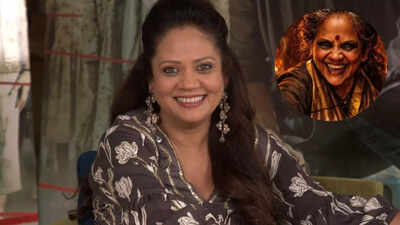
Mallika Prasad’s portrayal of Amma in ‘Mardaani 3’ has struck a deep chord with audiences. From her chilling screen presence to the now-iconic lullaby that sends shivers down the spine, Mallika’s character has emerged as one of the film’s most talked-about elements.
In an exclusive conversation with ETimes, the theatre-trained actor opens up about watching herself on the big screen, her approach to choosing roles, working with child actors, the famous Lullaby, sharing screen space with Rani Mukerji, and the fine balance between stage and screen. Excerpts from the conversation:
In conversation with Mallika Prasad aka AMMA of 'Mardaani 3'
You’re receiving a lot of love from the audience for Amma. What was it like watching yourself on the big screen?Actually, it was quite fun. When you’re watching yourself on screen, you’re also watching how the audience reacts, especially during those surprising moments.
I found myself getting caught up in their reactions. [laughs] I’m also not someone who keeps checking the monitor during shoots, so seeing the final result on screen was a surprise in itself, and a pleasant one.What are your parameters while selecting a role?That’s a really good question. The first thing I look at is the character’s graph, how the character is set up and what their payoff is. That’s very important. Secondly, I ask myself whether the character is driving the narrative in any way. If you remove that character, does it affect the story at all?Of course, there are times, especially early in one’s career, when you do roles because you need to.
I’ve done that too. But ideally, when you choose a role, you should see what impact it has on the overall story, the character’s arc, and whether the larger story itself is worth being part of. Even a good character can’t survive in a completely weak story.On screen, Amma is terrifying, yet she sings a lullaby to children. How did you approach working with kids off screen?That contrast is actually written into the script. The writer had already imagined this terrifying character who sings a lullaby, and our job as actors was to make it believable.
Working with the kids was wonderful. Every time I sang the lullaby, all of them would start singing along, so we had to keep reminding them, “No, no, you can’t sing, it’s supposed to be scary!” [laughs].The children were incredibly disciplined and talented. Whether it was kids with speaking parts or those in the background, the level of focus and submission they bring at such a young age is remarkable. I genuinely loved working with them.What was it like locking horns with Shivani Roy, played by Rani Mukerji?A lot of that happened in my head. [laughs] The setup itself is beautiful, the antagonist and protagonist standing on opposite ends of two very different worlds. That kind of larger-than-life confrontation is always exciting. Building a character that has such strong opposition automatically makes the process more interesting.How was Rani Mukerji as a co-actor, and do you have any favourite films of hers?My exposure to Bollywood films is actually limited. I’ve watched more South Indian cinema and a lot of films as part of my training, including many from the 1970s, both mainstream and what was then called parallel cinema.Working on ‘Mardaani 3’ gave me the opportunity to explore Rani’s work more closely. One film that really stood out for me was ‘Hitchki’. She handled such an interesting condition with a lot of sensitivity. What strikes me most is the sheer range of her career and the fact that the industry has celebrated her presence for 30 years with so much love and respect. She’s genuinely cherished by the fraternity.You come from a strong theatre background. What’s the biggest difference between acting on stage and on screen?The similarity lies in the search for truth—the truth of the moment, the line, and the character.
That process remains the same. The difference is in the medium. Theatre gives you an immediate response and a continuous flow of time. It’s largely driven by the spoken word.Cinema, on the other hand, is about images, how images, silence, and music come together. Words aren’t as central as they are in theatre. Earlier, we used to say we were going to “listen” to a play because everything was conveyed through speech and imagination.
Films communicate in many more ways.The look of Amma, especially during your audition, stayed close to what we see on screen. How did that come about?As an actor, it’s important to bring something to the table. An audition is essentially an offering—this is how I think the character could be approached. Some things work, some don’t. In this case, the team responded positively to that approach, and it carried through.
The lullaby, for instance, was already in the script—it came from Abhiraj’s imagination. As actors, we respond to what the script gives us and build from there.Finally, what’s one memory you’ll always take away from ‘Mardaani 3’?The entire process of building Amma’s world. Creating the external and internal layers of the character with the whole team was incredibly fulfilling. That journey will always remain one of my most cherished memories.







 English (US) ·