

 1 hour ago
7
1 hour ago
7
ARTICLE AD BOX
BJP state unit chief Samik Bhattacharya lambasted former Chief Minister Mamata Banerjee for allegedly depriving the Bengali Hindus of their rights and appeasing the minorities in the state ahead of the statehood day.
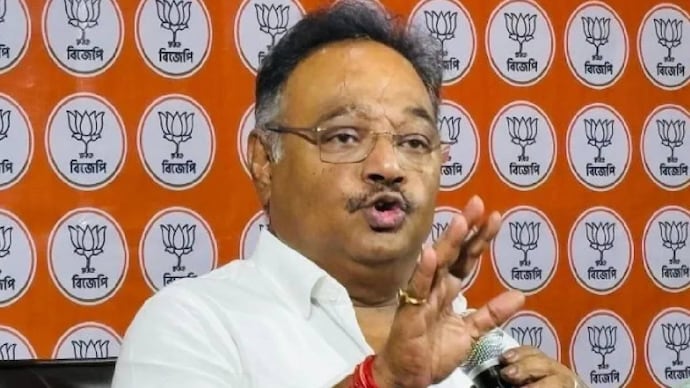
BJP state unit chief Samik Bhattacharya

UPDATED: Jun 19, 2026 20:39 IST
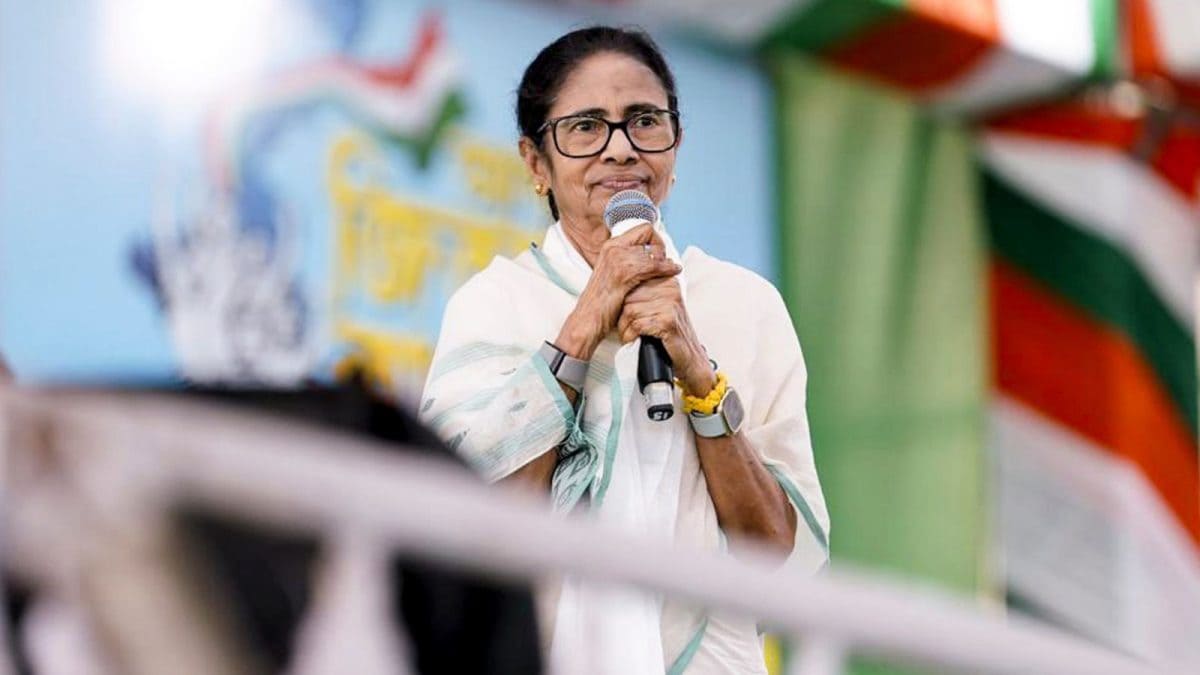
The debates surrounding Bangladeshi infiltration and alleged Muslim appeasement took centre stage ahead of the BJP government's first Paschimbanga Divas (Statehood Day) celebration as BJP’s state unit chief Samik Bhattacharya lashed out at former Chief Minister Mamata Banerjee for her alleged appeasement politics to the minorities.
In an exclusive interview with India Today, Bhattacharya accused Mamata Banerjee of attempting to transform West Bengal into West Bangladesh, signalling that during her tenure Bengali Hindus were deprived of their rights and the infiltrators flourished due to her alleged vote-bank politics.
“Mamata Banerjee was directly involved in erasing Bengal’s history to fuel the agenda of radicalisation,” Bhattacharya told India Today. “She had an agenda to turn West Bengal into West Bangladesh by becoming patron of divisive politics. However, people understood her intentions and defeated her divisive and appeasement politics,” Bhattacharya told India Today’s Indrajit Kundu.
His scathing attack came ahead of the West Bengal government’s first celebration of Statehood Day on June 20, something the ruling party has long advocated for due to its core ideological belief. Tomorrow, Prime Minister Narendra Modi will attend the event as part of his two-day visit to Bengal.
Over the years, the celebration of Statehood Day on June 20 has gone through intense political debates–both on a theoretical level and on practical grounds. As the flagbearers of Syama Prasad Mookerjee’s brand of politics, the BJP always vouched for celebrating the Statehood Day on June 20–as on that day, the representatives of Bengali Hindus voted for the partition of Bengal and the establishment of West Bengal as a homeland for the Bengali Hindus.
However, Mamata Banerjee fiercely opposed the idea. When Raj Bhavan, the former Governor of Bengal, CV Ananda Bose, observed the Statehood Day at his official residence, a committee appointed by the then Bengal Speaker, Biman Bandhyopadhyay, suggested Poila Boisakh (the Bengali New Year) to be the official Statehood Day. She also called an all-party meeting regarding the incident.
Recalling those incidents, Bhattacharya lambasted the TMC for being anti-historical and not paying homage to the history and the culture of the state.
“There is no relevance to celebrating Poila Boisakh as the Statehood Day. It does not have a historical connection,” said Bhattacharya. He also added that Mamata Banerjee tried to establish Poila Boisakh as the Statehood Day by using force, which people laughed at.
A BRIEF HISTORY OF JUNE 20
The fate of the Bengal Province was decided on June 20, 1947, with a question at the centre: whether Bengal would remain united and become a part of either India or Pakistan, or it would be divided into East and West Bengal as homes to Bengali Hindus and Bengali Muslims.
According to a report by The Telegraph, the assembly formed after the 1946 elections met in three separate sessions to decide Bengal’s future in the lead-up to Partition. In the joint session, legislators voted 126–90 in favour of keeping Bengal united and making it part of the newly formed Pakistan. However, in a separate session attended by legislators from West Bengal, members voted 58–21 in support of partitioning Bengal, with the western region joining India.
Meanwhile, in the session of legislators from East Bengal, the assembly voted 106–35 against dividing Bengal. At the same time, members also resolved that if partition became inevitable, East Bengal, which had a Muslim-majority population, should become part of Pakistan—a proposal that passed by 107 votes to 34.
Ultimately, Bengal was divided. West Bengal became a part of India. A development that the BJP attributes to Syama Prasad Mookerjee, one of the party’s ideological forefathers.
Bhattacharya also credited several other leaders of the Hindu Mahasabha for the creation of West Bengal. “Syama Prasad Mookerjee may have led the movement from the front, but several other leaders actively advocated for a separate homeland for Bengali Hindus,” he said. He cited Nirmal Chandra Chatterjee — a barrister and Hindu Mahasabha leader, whose son Somnath Chatterjee later served as Lok Sabha Speaker during the first UPA government as a CPI(M) MP — and recalled his position: “Pakistan or no Pakistan is immaterial, but Bengal should be divided for the sake of Bengali Hindus.”
As Bengal prepares to observe June 20 as Statehood Day for the first time, the occasion is expected to mark a new moment in the state’s cultural and political narrative. With the Prime Minister scheduled to grace the event, the celebrations are likely to draw significant public and political attention amid the evolving political landscape in the state.
- Ends
Published By:
Akash Chatterjee
Published On:
Jun 19, 2026 20:39 IST



 English (US) ·