

 4 days ago
11
4 days ago
11
ARTICLE AD BOX
Last Updated:March 31, 2026, 12:09 IST
According to MHA data, 706 Naxals have been killed in encounters, 2,218 arrested and 4,839 have surrendered.


In April 2025, over 2,000 security personnel launched a 21-day-long operation to dismantle the KGL Hills base.
Hours before the March 31, 2026 deadline to make India Naxal-free, Union Home Minister Amit Shah told the Lok Sabha that Left Wing Extremism was effectively over. “We have no hesitation in saying that we have become free from Naxalism today," he said during a special discussion.
“The central committee and politburo of the Maoists had 21 members in the beginning of 2024. Today, there is none. There were 37 state committee members in the Dandakaranya region. All of them have been either killed, arrested or surrendered. In Telangana, only one leader is absconding. We vowed that by March 31 we will uproot Naxalism. Now, I can say that India is Naxal-mukt," Shah said.
But what really changed over the past two years? Here’s a ground-level look at the key turning points that reshaped India’s fight against Naxalism.
1) Security Camps: From Resistance to Road Connectivity
According to Union Home Ministry data, 406 new security camps have been set up over the last six years — a move that significantly altered the landscape in Naxal-affected regions.
This expansion was not without resistance. Villagers protested land acquisition in places like Silger near Bijapur. Government officials alleged that villagers were misled by Naxals who didn’t want a camp so close to their Gurreila army’s training and operational ground. The protest, however, went on for seven months. Next door at Tarrem, a COBRA jawan was abducted by Naxals after an ambush killed 22 security personnel and injured 31 others. He was released after five days in captivity on intervention of emmininet locals.
Today, the same Silger and Tarrem tell a different story.
A board outside the camp, now named Sooraj Silger Post, commemorates a fallen CoBRA battalion jawan and underscores the presence of the CRPF: “We promise that CRPF is always with Silgerins to protect their smile and constitutional rights. Jai Hind."
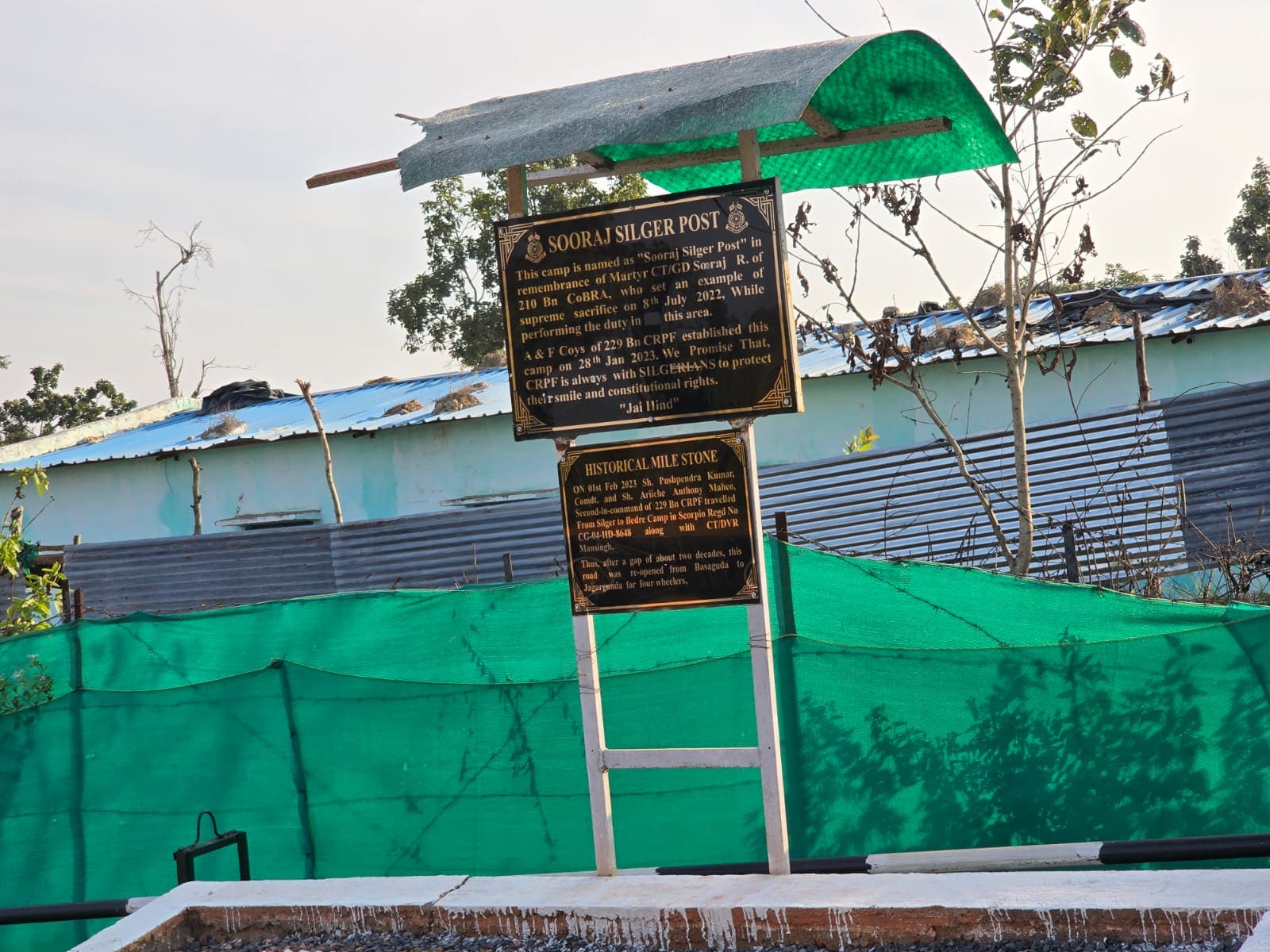
Another plaque highlights a major shift. After nearly two decades, the road from Basaguda to Jagargunda was reopened for four-wheelers in February 2023.
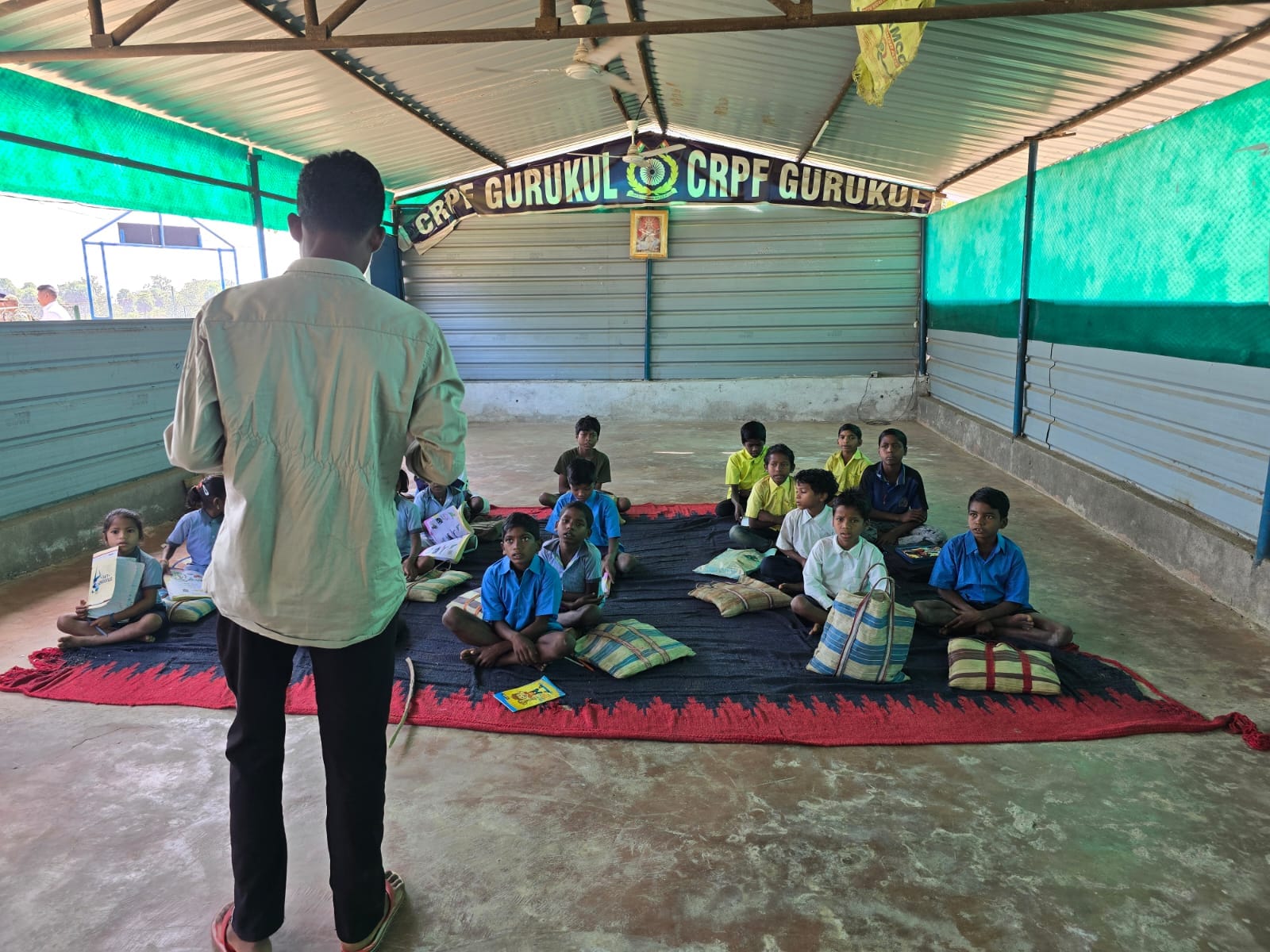
The impact of such camps has been consistent across regions. They have brought road connectivity, public distribution systems, schools, and basic governance into areas once cut off and declared “liberated zones" by Naxals.
In Purvathy — the village of Maoist commander Hidma — roads are still being demined. Yet, signs of change are visible. Students recite lessons in newly built schools, anganwadis are functional, and villagers queue up to get election ID cards made — a sharp departure from the Maoist call to boycott democracy.
Beyond camps, infrastructure has expanded significantly:
- 596 fortified police stations
- 68 night-landing helipads
- 5 hospitals
Together, these have enabled deeper area domination and shrunk the influence of the CPI (Maoist).
2) Killing of Basavaraju: A Blow At The Top
In June 2025, security forces killed Basavaraju, the then general secretary of the CPI (Maoist).
The significance was twofold:
- He was the topmost leader of the outlawed group
- The encounter took place in Abujhmad, long considered an impregnable Maoist stronghold
The message was clear — no area was beyond the reach of security forces any more.
Former bodyguards of Basavaraju, who are now part of the police, played a key role. One of them, now a DRG commando, recalled, “We had specific intelligence about Basavaraju moving in the area. I was earlier his bodyguard, so I could identify him and his new bodyguards."
The integration of former Naxals into forces — through units like the District Reserve Guard (DRG) in Chhattisgarh and C-60 in Maharashtra’s Gadchiroli — proved to be a major operational advantage.
3) KGL Hills Operation: Cracking the Nerve Centre
Speaking in the Lok Sabha, Amit Shah described the Karreguttalu Hills (KGL) operation as decisive: “This operation finished Naxalism in Chhattisgarh, Maharashtra and Telangana."
Also known as Operation Black Forest, the KGL Hills along the Telangana-Chhattisgarh border served as the nerve centre of Maoist operations.
The area housed:
- Permanent camps with solar power
- Food stockpiles sufficient for five years
- IED manufacturing units
- Ammunition reserves for long-term operations
In April 2025, over 2,000 security personnel launched a 21-day-long operation to dismantle this base.
Personnel on the ground described extreme conditions: “It was almost touching 50 degrees. We had to climb the hill and they were perched on top with a clear view. Air Force dropped water packets, but it was tough."
Despite some Maoists escaping through natural caves, 31 were killed, dealing a severe blow to the operational backbone of the insurgency.
4) Wave of Surrenders: Collapse from Within
In September 2025, a letter surfaced from Maoist spokesperson Mallojula Venugopal Rao, also known as Sonu, calling for surrender and ceasefire.
A month later, he surrendered in Gadchiroli along with 60 others. As a Politburo member and key ideological figure, his surrender was a major setback for the movement.
“The party was unable to go and mix with people because of the security presence," Sonu said. “I had raised the issue in 2024 also in presence of Ganapathy."
His surrender triggered a cascade:
- Over 250 surrenders followed within weeks
- Key operatives like Rupesh, an IED expert from Bastar, laid down arms
- Significant arms, including AK-47s and INSAS rifles, were recovered
At Narayanpur’s Livelihood College, surrendered women cadres echoed the shift: “We were told by Rupesh that the situation was no longer conducive for life in the jungle, so we laid down arms."
According to MHA data:
- 706 Naxals have been killed in encounters
- 2,218 arrested
- 4,839 surrendered
5) Loss of Public Support: The Decisive Shift
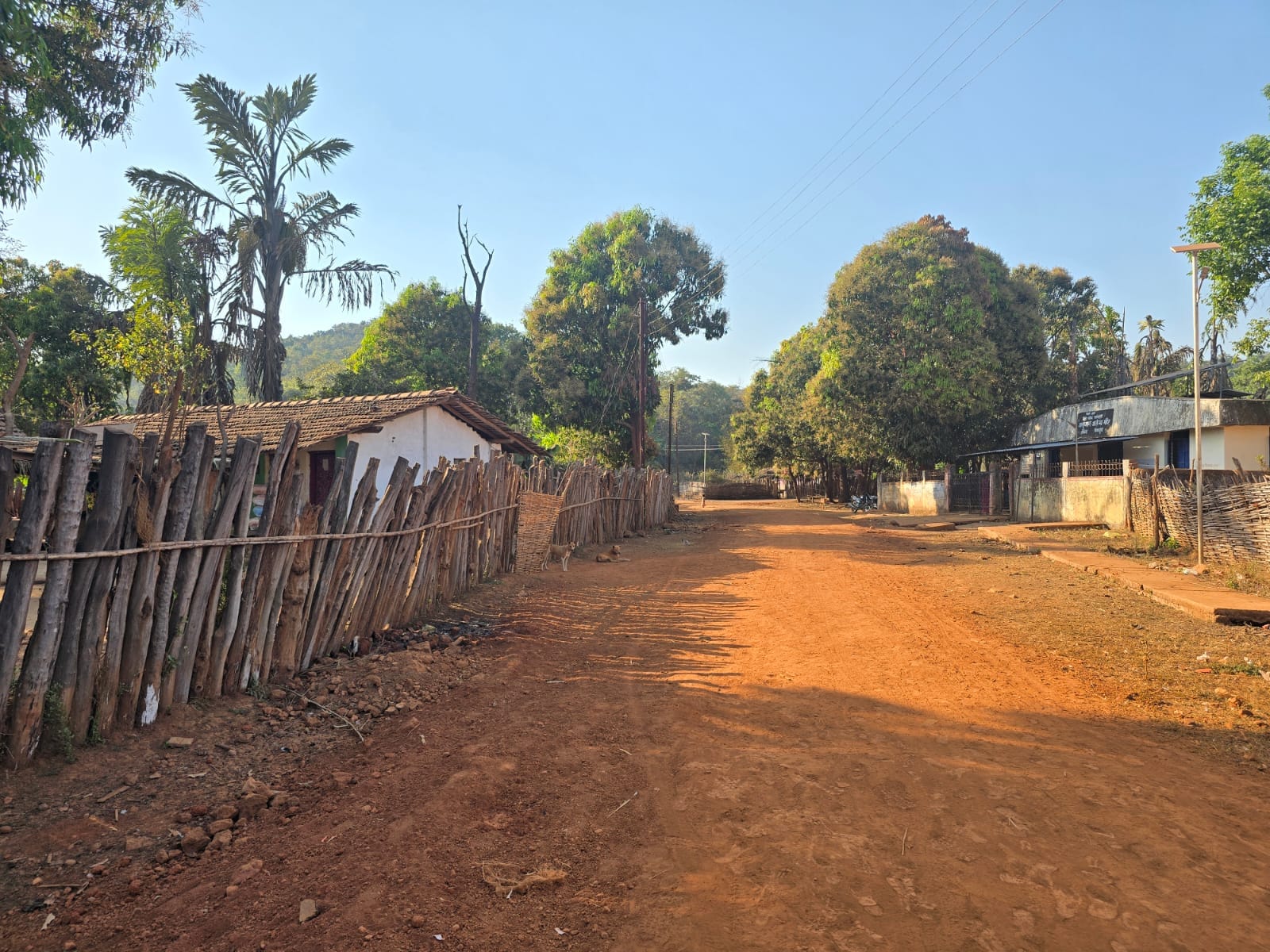
Perhaps the most critical change has been the erosion of public support. Across regions like Gadchiroli, Dantewada, Bijapur and Narayanpur, conversations have shifted. The focus is no longer ideology — but mobile towers, roads, electricity and livelihoods.
In Bhamragadh, Gadchiroli, villagers spoke of seeing electric bulbs light up for the first time — 75 years after independence. In Irakbhati village of Abujhmad, Sukhi Koram shared a small but telling story, “The state home minister had given me a rice machine. It helped me earn money and women could process rice and millet. But after two months, the pin broke. I hope they replace it."
The expectation is no longer from the Maoist Janatana Sarkar, but from the state.
This shift — from ideological allegiance to developmental aspiration — has given security forces confidence that regrouping of CPI (Maoist) is no longer a viable possibility.
The Big Picture
From expanded security infrastructure and targeted operations to high-profile eliminations, mass surrenders, and waning public support — the past two years have seen a multi-pronged push against Naxalism.
As the March 31 deadline arrives, the government claims victory. On the ground, the signs of change are visible — though the long-term durability of this transformation will depend on whether governance and development can sustain the gains made by security forces.
First Published:
March 31, 2026, 12:09 IST
News india March 31 Naxalism Endgame: Operations That Changed Things On The Ground In The Past Two Years
Disclaimer: Comments reflect users’ views, not News18’s. Please keep discussions respectful and constructive. Abusive, defamatory, or illegal comments will be removed. News18 may disable any comment at its discretion. By posting, you agree to our Terms of Use and Privacy Policy.
Read More







 English (US) ·