

 1 hour ago
3
1 hour ago
3
ARTICLE AD BOX
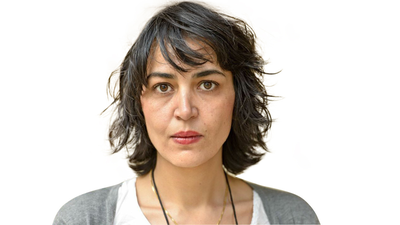
Iranian photographer and filmmaker Azadeh Akhlaghi is known for reconstructing pivotal political assassinations and deaths in Iran’s modern history that were never photographed. Akhlaghi, who has also worked as assistant director to acclaimed filmmaker Abbas Kiarostami, speaks to Sneha Bhura about her work and the uncertainties surrounding Iran’s future.1. You have recreated unphotographed assassinations such as the shooting of a young philosophy student, Neda Agha-Soltan, who later became an icon for protestors. How does Supreme Leader Ayatollah Ali Khamenei’s assassination echo those past turning points in history? My artistic practice focuses on suspicious deaths or assassinations that took place when the camera was not available to capture the event. To reconstruct those moments, I conduct thorough investigations, studying documents and eyewitness accounts.
The details surrounding Khamenei’s assassination remain vague and unclear. So far, there is only satellite imagery showing that the building was completely destroyed, but there are no images of his body. According to some reports, a video of his body exists and was shown to (US president) Donald Trump and (Israeli PM) Benjamin Netanyahu, but the Iranian public has not been allowed to see it. Many Iranians consider Khamenei to have been responsible for decades of imprisonment, violence, and suppression over the past 37 years.
In my opinion, he should have been captured and brought to court in Iran to answer for that history. If the alleged video is not made public, I might consider reconstructing the moment of his death as a historical turning point. At the same time, this situation demonstrates how, despite living in an age of cameras and social media, crucial evidence can still be censored or withheld from the public.2. What do you make of the US assuming it could engineer regime change through airstrikes?Iranian society has a very long and complex history of internal struggles for freedom and political reform.
For more than a century—from the Constitutional Revolution of 1906 to later uprisings and movements—Iranians themselves have been the driving force behind attempts to reshape their political system. Change in Iran has always emerged from internal social movements, intellectual debates, and political struggles.
The experiences of neighbouring countries such as Iraq, Afghanistan and Syria have shown how external military action can lead to long periods of instability or even civil war.
Ultimately, meaningful and lasting political change in Iran can only come from within Iranian society itself, through the continued efforts and sacrifices of its people.3. You live in New York now, but what are you hearing from your friends and family in Iran? How are people coping with the bombardment?The internet has been cut off since the beginning of the war, so I have absolutely no news from most of my family and relatives. Only a very small number of people have been able to access the internet through VPNs, which are being sold at very high prices on the black market.
The media, both international and state-controlled, does not provide a clear picture of what is actually happening inside the country. There are almost no mobile phone images circulating on social media, which would normally provide eyewitness testimonies.
I managed to speak briefly with a few friends. They told me that people have become used to sleeping with their shoes on, under door frames, and away from windows.
There are no air raid shelters or sirens, so people have nowhere to take refuge when the strikes begin. Another friend wrote that he still goes jogging every day in a park near his home because staying inside has become unbearable. Many of them are suffering from sleep disorders. I worry about my father, brothers, and friends. I think about my 14-year-old cousin who must undergo chemotherapy this week, even as hospitals and healthcare facilities are being hit during the attacks.
Saturday was the Iranian New Year, Nowruz, marking the beginning of spring. I cannot imagine my people celebrating the New Year under such horrific bombardment. In just two weeks, more than three million have lost their homes. I left Iran two years ago for New York and have not been back since. I cannot imagine returning to Iran and seeing the places I once loved—the cafés, galleries, parks, and neighbourhoods—destroyed.4. What future do you hope for Iran after this war?I truly have no idea what will happen. Iran has been trapped in a vicious cycle for more than a century. Each time people overthrow a dictator, another system of repression replaces the previous one. What I fear—and what often appears in my nightmares—is the possibility of a civil war. There is also the danger that the country could be left with the same authoritarian system—one that only two months ago violently suppressed protests in the streets and imprisoned tens of thousands of people.
In that case, many of the social achievements and movements that Iranians have built over the past decades could be lost. At the same time, the Iranian people have already suffered under sanctions for many years. A prolonged conflict could push the country into an even deeper humanitarian and economic crisis. Having worked extensively on the modern history of Iran, I feel that we have rarely experienced days as terrifying and uncertain as the ones we are living through now.5. What about the ethics of re-enacting traumatic history and placing yourself in those scenes? By re-enacting traumatic historical moments, I try to visualise the past for my audience so they can have a clearer understanding of it. But it is ultimately impossible to reconstruct history in a completely objective way. Though I try to find as many documents and eyewitness accounts as possible, I know that I will never be able to discover the whole truth. History is full of layers of uncertainty and ambiguity. That is why I titled my previous project ‘By an Eye-Witness’.
It reflects the idea that what I present is my own encounter with history.



 English (US) ·