

 1 hour ago
4
1 hour ago
4
ARTICLE AD BOX
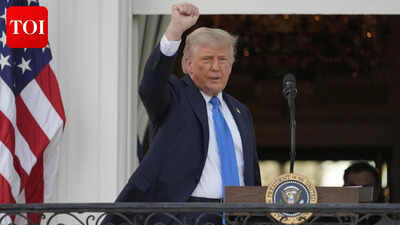
TOI correspondent from Washington: In a red-blooded, chest-thumping spectacle that leaned heavily into economic nationalism and military triumphalism, US President Donald Trump on Tuesday delivered a State of the Union address that painted a portrait of a nation in the midst of a "Golden Age," amid visible partisan fissures.
Measured in tone and focused compared to his campaign rallies but no less assertive, Trump declared the United States “bigger, better, richer, and stronger than ever before,” framing his agenda against the approaching 250th anniversary of American independence. “These first 250 years were just the beginning,” he said, drawing repeated standing ovations and chants of “USA! USA!” from Republicans.The address blended swaggering patriotism with tightly choreographed emotional appeals as Trump turned the chamber into a stage for honouring military heroes, law enforcement officers and private citizens whose stories underscored his themes of strength and order.In the most poignant moment of the evening, the president recognised 100-year-old Navy Captain Royce Williams, awarding him the Medal of Honor for a daring 1952 dogfight against Soviet MiGs during the Korean War — an engagement that remained classified for decades. It was the first time the nation’s highest military decoration was presented during a State of the Union. Trump also awarded Purple Hearts to Staff Sergeant Andrew Wolfe and posthumously to Army Specialist Sarah Beckstrom, National Guard members shot by an Afghan immigrant in Washington last November.
He used the moment to pivot to his “law and order” message, describing the attacker as a “terrorist monster” and renewing his call for tougher enforcement while ignoring the pain of a country ravaged by Russian, American, and Pakistani depredations.
Other honorees included a Navy SEAL recognised with the Presidential Medal of Freedom for leading a high-risk rescue mission overseas; a young police officer and a firefighter who received Public Safety Officer Medals of Valor; and the parents of a young woman killed in a hit-and-run crash involving an undocumented immigrant.
Trump urged Congress to pass stricter immigration laws in her memory, turning the gallery into a tableau of grief and resolve.In a lighter interlude, the president celebrated the US men’s Olympic ice hockey team fresh off a gold medal victory in Milan, announcing that star goalkeeper Connor Hellebuyck would receive the Presidential Medal of Freedom. The women's gold medal team that declined an invite, citing other commitments, would visit the White House shortly, Trump maintained. The speech’s policy architecture rested on three pillars: energy dominance, military strength, and social order.On immigration, Trump reprised a central theme of his presidency, touting additional border wall construction, expanded deportations and what he described as record-low illegal crossings, while pledging support for legal immigration. He framed the policies as essential to defending sovereignty and protecting American families from “criminal invaders.” On foreign policy, Trump celebrated what he called the “obliteration” of Iran’s nuclear facilities in June airstrikes and highlighted his administration’s pressure campaigns against China and Venezuela, including the capture of former Venezuelan President Nicolás Maduro. Domestically, he called for banning corporations from purchasing single-family homes, arguing that institutional investors were distorting the housing market.
In a rare moment of bipartisan applause, Trump urged Congress to pass legislation barring members from trading individual stocks. He also signalled continued opposition to Diversity, Equity and Inclusion initiatives, labelling them “divisive and un-American,” and pressed for stricter voter ID laws ahead of the midterm elections, which liberals fear is a ruse to disenfranchise voters who lean Democrat. Yet even as the president invoked unity in his closing minutes, the visual tableau inside the chamber told a different story.
Dozens of Democrats boycotted the address, attending alternative “People’s State of the Union” events around Washington. Those who did attend registered vocal dissent. Democrat lawmaker Al Green was escorted out early after unfurling a protest sign that read “Black People Aren’t Apes,” while some wore stickers saying “Release the Epstein Files” with the name Epstein blacked out to illustrate the redactions.
Heckling from Democratic lawmakers Ilhan Omar and Rashida Tlaib— including shouts of “Shame!” and “Liar!” — rang out during the speech. The tension peaked when Trump challenged Democrats to stand in support of what he called the government’s “first duty” to protect citizens over undocumented immigrants. Republicans rose in a prolonged ovation; Democrats remained seated. The president paused, glared across the aisle and remarked, “Isn’t that a shame?” one of several times he taunted Dems. By the time Trump exited to another round of chants, the contours of his political strategy were unmistakable: fuse patriotism, personal storytelling and muscular policy declarations into a rallying cry for supporters, even at the cost of deepening partisan divides. The president portrayed a nation resurgent, confident and victorious. But the chamber he left behind — half-thunderous, half-silent — offered a stark reminder that the state of the union remains profoundly fractured.





 English (US) ·