

 1 week ago
11
1 week ago
11
ARTICLE AD BOX
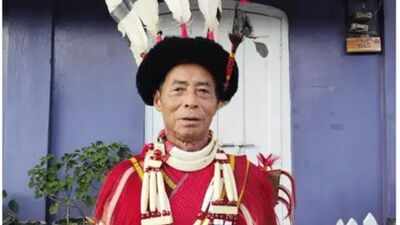
In India, where faith, culture and religion form the core of a person’s daily life, their identity coincides with their practices. A Gujarati cannot live without Garba just as much as a Bengali misses Durga Puja.
The music, the dance, the tales and the sheer belief woven around cultural practices make them much larger than just traditions for people, they become celebrations that they value, cherish and pass on from one generation to another.Thus, when Guru Sangyusang Pongener feared that the indigenous culture of his tribe, the Ao Naga was disappearing, he decided to leave everything to save it.
Meet Guru Sangyusang Pongener
He was born on March 23, 1945, in the Ungma village in the Mokokchung district, of Nagaland.
The eldest of eight siblings, Pongener learned songs, dances and storytelling practices from a young age through village elders.A former football goalkeeper during his school years, he pursued his education from Government Middle School Ungma, Government School Mokokchung and later attended Gauhati University.However, as he grew up, he saw the traditional practices disappearing with the arrival of modernity.
The dance, the songs and the culture that he grew up with were all slowly becoming lost.This is when he decided to leave his stable job and, without financial support, began to work to save the culture so intrinsic to Nagaland’s identity. He has spent the past six decades immersed in the rich oral and performative traditions of the Ao Naga community.Regarded as one of the most influential cultural custodians of the state, he has not only performed traditional folk music and art, but has also worked to document, teach and revive fading art forms.In 1982, he co-founded the Naga Wadir Club, an organisation dedicated to safeguarding Naga heritage and training young artists. Through the platform, he has mentored countless students, ensuring that Ao folk traditions continue to be passed on to future generations. They showcased Naga culture at festivals and cultural events."When I was learning these traditions, I faced many hardships. Everything was passed down orally, and I have memorised and preserved it in my heart.
I continue to teach these traditions orally, and they have benefited many people," he said.Moreover, he has composed dozens of traditional songs and has been involved in stage performances that recount the Ao life and history. He is known for his mentorship role under cultural initiatives, where he has trained over 2,000 young performers in traditional music and dance forms.Since June 2024, he has also been mentoring young artists under the Kala-Deeksha programme of the government of India.In the era of rapid change and modern adaptations, his efforts have helped keep the community-based learning alive.
Recognition and future plans
Over the years, Pongener’s efforts have been recognised through prestigious awards and honours. He received the Sangeet Natak Akademi Award in 2002, the Governor’s Award in 2017 and many others. Recently, he was awarded the Padma Shri, the fourth-highest civilian honour in the country by Indian President Draupadi Murmu for decades of contribution to India’s intangible cultural heritage.The veteran cultural custodian described the honour as a collective achievement, attributing the recognition to the encouragement of all who stood by him and to the national government. “This honour belongs to everyone who supported me along the way,” he added.Moreover, he urged the younger generation to rediscover their roots and embrace their ancestral heritage. “I appeal to our youth to delve deep into their origins and uphold the rich cultural legacy that defines our identity.
Excellence demands resilience, perseverance and patience,” he said.In the future, Pongener expressed hopes of establishing a cultural academy where young people can learn traditional songs, dances, folklore and cultural practices. “The younger generation should know the significance of every garment, its name, its meaning and the correct way to wear it,” he said.“While society evolves, our folk songs, dances, values and traditions must be preserved with utmost sincerity,” he asserted.







 English (US) ·