

 1 hour ago
3
1 hour ago
3
ARTICLE AD BOX

Mike Egan, a US Marine veteran who lost both his legs in an improvised explosive device (IED) blast while serving in Afghanistan, has drawn widespread attention for an extraordinary feat of endurance at the Go One More Ultra.
Competing in a demanding last-man-standing format, Egan covered more than 110 miles over 27 continuous hours using a wheelchair, outlasting 117 other participants to finish in the top 28. The race required athletes to complete a 4.2-mile loop every hour, pushing both physical and mental limits. At one point, when his wheelchair got stuck in mud, Egan was seen dragging himself forward to continue, a moment that has since resonated widely as a symbol of resilience.The Go One More Ultra is structured to test endurance in its purest form. Participants must complete a 4.2-mile loop at the start of every hour, with only the remaining time left for rest before the next loop begins. There is no fixed finish line; the race continues until only one competitor remains. This format creates cumulative fatigue, forcing athletes to manage pacing, recovery, and sleep deprivation over extended periods.
For Egan, completing 27 consecutive loops meant sustaining effort across more than a full day with minimal recovery time.
Mike Egan’s journey from a blast injury to a 110-mile endurance feat
Egan’s journey to endurance sport began after a life-altering injury in 2012. While deployed in Afghanistan, he was severely wounded in an IED explosion that resulted in the loss of both legs and multiple other injuries. He underwent more than 40 surgeries during a long and complex recovery process before being medically retired in 2014.
Rehabilitation required rebuilding strength, mobility, and independence, laying the foundation for his later transition into competitive fitness and endurance challenges.Following his recovery, Egan became involved in adaptive sports, particularly CrossFit and endurance training. He developed the upper-body strength and stamina required to compete in physically demanding events using a wheelchair.
His training focused not only on physical conditioning but also on mental resilience, a quality that would prove essential in long-duration competitions. Over time, he established himself within the adaptive athletics community as an athlete willing to take on extreme challenges.Prior to the Go One More Ultra, Egan had already achieved a major milestone. In November 2025, he set a Guinness World Record by travelling 152.37 miles in a wheelchair over a 24-hour period.
That performance demonstrated his ability to sustain high levels of output over extended durations and positioned him among elite endurance athletes. His latest performance further reinforces that capability under even more unpredictable race conditions.
The moment that defined the race
During the ultra race, challenging terrain added another layer of difficulty. In muddy conditions, Egan’s wheelchair became stuck, threatening to end his run.
Instead of withdrawing, he got out of the chair and moved forward by dragging himself across the ground to complete the loop within the required time. The moment captured the essence of the race’s demands and highlighted the level of determination required to continue under adverse conditions.
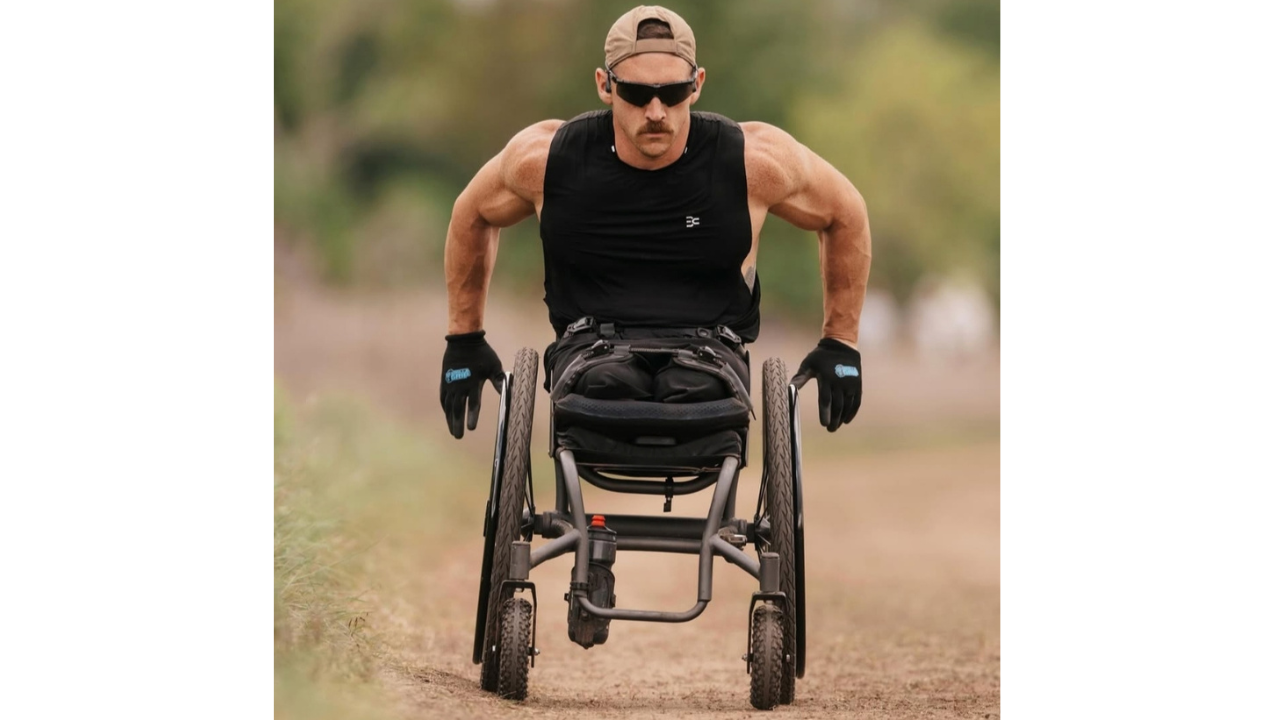
Egan’s performance stands out not only for the distance covered but for the conditions under which it was achieved. Competing in a non-adaptive race format, he faced the same structure and time constraints as all other participants while managing additional physical challenges.
The combination of sustained effort, limited recovery, and environmental obstacles underscores the level of endurance required to complete 110 miles over 27 hours.The response to Egan’s achievement has centred on themes of perseverance and resilience. His journey from combat injury to endurance competition reflects a broader narrative of recovery and adaptation. As more people engage with his story, it continues to highlight the possibilities within adaptive sport and the capacity of individuals to push beyond conventional limits.









 English (US) ·