

 1 hour ago
4
1 hour ago
4
ARTICLE AD BOX
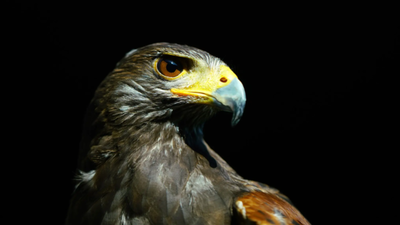
Image: Jane Stockdale/New York Times
Before the gates open and Centre Court fills with spectators, one of Wimbledon's longest-serving team members is already on patrol. His name is Rufus, a Harris's hawk whose daily job is to keep pigeons and other birds away from the All England Club's world-famous grass courts.It may sound like an unusual role at a Grand Slam tournament, but it's one organisers have relied on for years. Birds can damage carefully maintained lawns, leave droppings on the courts and even interrupt play at crucial moments.Rather than using loud deterrents or modern gadgets, Wimbledon turns to nature. For nearly two decades, Rufus has taken to the skies each morning, becoming as much a part of the Championships' behind-the-scenes routine as the groundskeepers who prepare the courts for play.
How Rufus the hawk protects Wimbledon without ever attacking pigeons
Rufus doesn't chase or attack pigeons. His presence alone is enough. Birds instinctively recognise a Harris's hawk as a natural predator, making them think twice before settling on rooftops, grandstands or Centre Court. According to the BBC, Rufus treats the Wimbledon grounds as "his playground", making early morning patrols before the gates open to spectators. His handler, Donna Davis, says the bird has become so familiar with the venue that flying over the famous lawns is second nature to him.
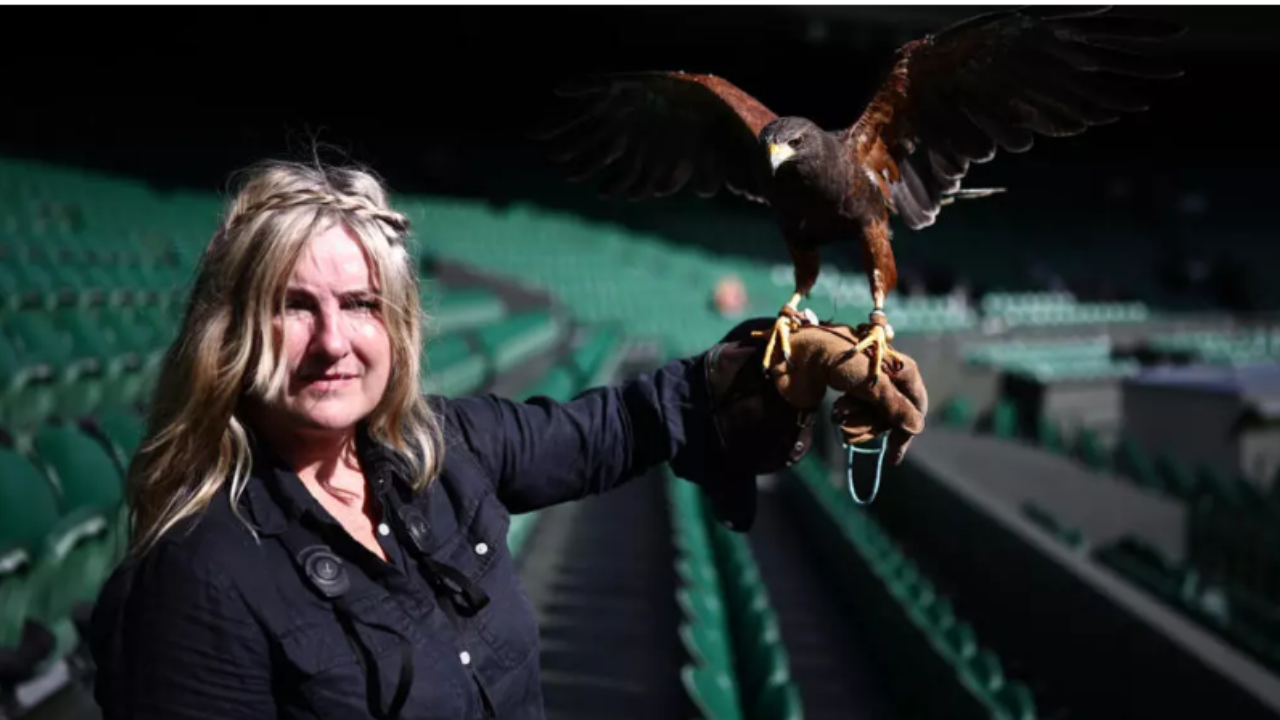
Image: Henry NICHOLLS / AFP
Although advances in drone technology have prompted discussions about whether machines could eventually perform the same role, Davis believes technology still has a long way to go. Speaking to the BBC, she explained that while engineering has become increasingly sophisticated, birds respond very differently to a real predator than they do to an artificial one. For now, nature remains the most convincing deterrent.
Rufus has become as much a Wimbledon tradition as strawberries and cream
Rufus first took to the skies above Wimbledon in 2008, continuing a bird-control programme that began years earlier. According to the Los Angeles Times, he flies every morning between roughly 4 a.m. BST, before players begin practising and fans arrive. During those quiet hours, he sweeps across the grounds, occasionally drawing curious glances from groundskeepers, ball boys and girls, and early staff members preparing the courts for another day of Grand Slam tennis.The hawk has become something of a celebrity himself. Visitors often stop to photograph him, and many regular Wimbledon followers recognise Rufus almost as readily as some of the tournament's biggest stars. His fame even extends beyond the Championships; in 2012, his disappearance after being stolen from his handler's vehicle made international headlines before he was safely recovered.
One of Wimbledon's most important jobs doesn't involve a tennis racket
Wimbledon is famous for its traditions, from its all-white dress code and perfectly manicured grass courts to the ritual of strawberries and cream.
Rufus has quietly earned his place among them.His work may last only a few hours each morning, but it helps preserve the pristine conditions that define the world's oldest tennis tournament. While players compete for Grand Slam glory, Rufus ensures the stage itself remains undisturbed.It's an unusual partnership between elite sport and wildlife, one that has endured because, sometimes, the most effective technology isn't technology at all. Even in an era of AI and autonomous drones, a hawk circling above Centre Court continues to do what millions of years of evolution prepared it to do better than anything humans have yet invented.






 English (US) ·