

 1 hour ago
4
1 hour ago
4
ARTICLE AD BOX
3 min readHyderabadMar 12, 2026 06:33 AM IST
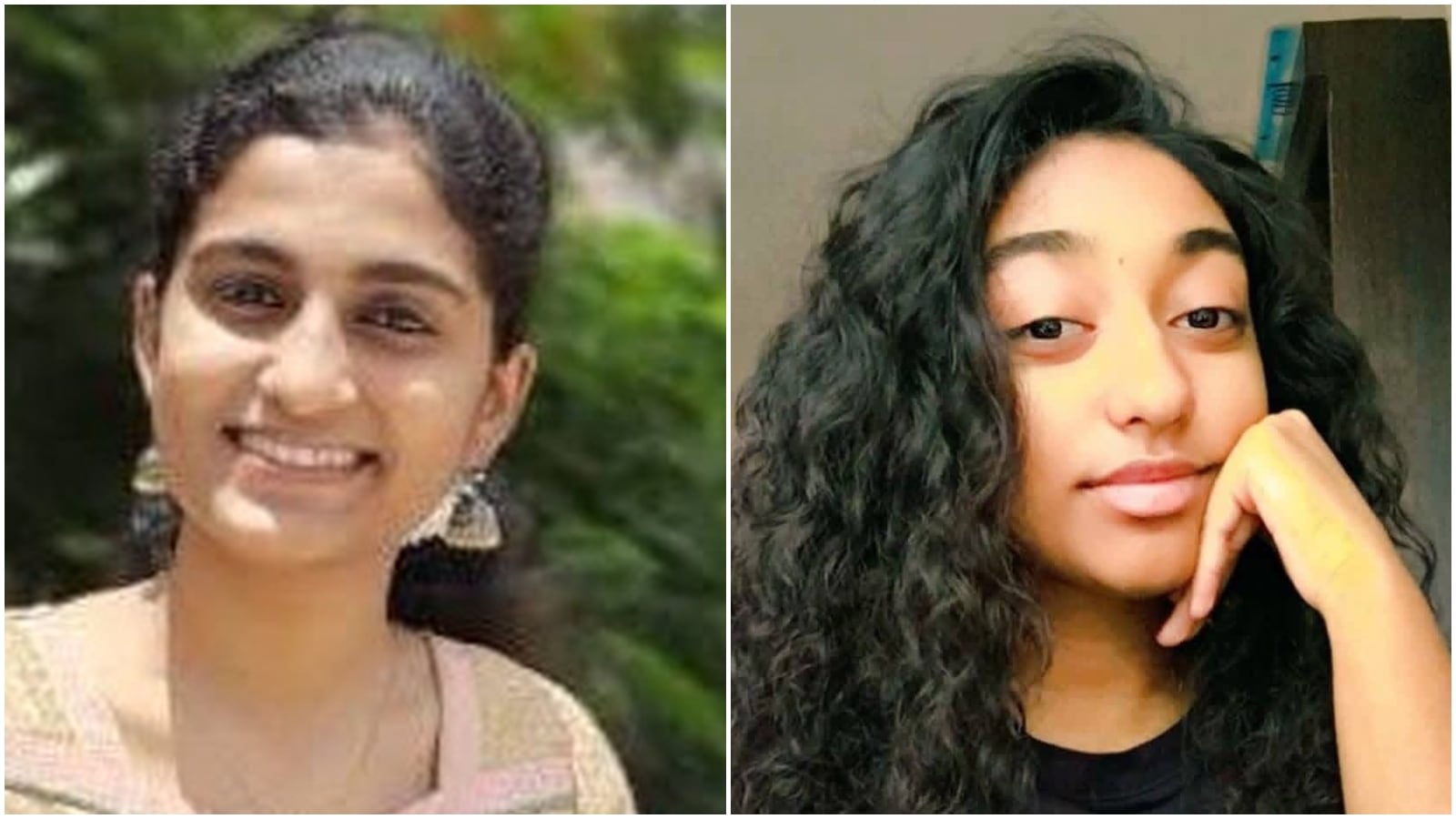 Karunya and (right) Rithaika Sri Omtri, who were administered the Covishield vaccine, had developed acute adverse side effects and they died within a month in 2021, their parents said. (Express Photo)
In 2021, when COVID-19 cases were surging across India, G Venugopalan, a father of two, was battling a different demon. His 20-year-old daughter Karunya, an M Sc Data Science student who was administered the Covishield vaccine on June 8, 2021, developed acute side effects within 10 days — including swelling of the airway and severe leg pain.
“When we took her to the hospital on June 20, the doctors said that her condition was unconnected with vaccination, because at that time the vaccine was considered safe,” Venugopalan, a Kerala native settled in Coimbatore, told The Indian Express. Within five days, she was shifted to a tertiary care hospital but died on July 10, 2021.
In Hyderabad, Rachana Gangu, a mother of two, had already faced a similar situation. Gangu’s daughter Rithaika Sri Omtri, 18, who took Covishield on May 29, 2021, developed acute adverse effects five days later. “She was complaining of a severe headache, blotches of blood clots on her palms, and her platelet count was 40,000 (normal average is above 1.5 lakh). But the doctors were not informed enough to know that it could be vaccine-related,” Gangu told The Indian Express.
Venugopalan’s and Gangu’s experiences form the basis of the case on which the Supreme Court delivered its March 10 landmark judgment asking the Centre to formulate a no-fault compensation policy for people who experienced serious adverse effects following COVID-19 vaccination.
A Bench of Justices Vikram Nath and Sandeep Mehta also directed that the existing mechanism for monitoring adverse events continue to operate and that the data be regularly placed in the public domain, as previously ordered on May 2, 2022, in Jacob Puliyel vs Union of India.
Tuesday’s order ensures that those who suffered injuries from Covid-19 vaccination can claim compensation without needing to prove negligence or liability.
For parents like Venugopalan, the loss is irreparable. But he never stopped fighting, writing letters to the Indian establishment — including the prime minister and health minister — seeking a probe into his daughter’s death and the safety of the Covishield vaccine.
Story continues below this ad
Karunya, he said, had just started interning remotely at Goldman Sachs and dreamt of a bright future when she was diagnosed with multisystem inflammatory syndrome and given IVIG (intravenous immunoglobulin) treatment.
“By then it was too late,” Venugopalan said. “She could have been a nice human being. But we lost her.”
Gangu said Rithaika was admitted to a multi-speciality hospital with severe vomiting and headache five days after she was administered the vaccine. Within three weeks, on June 19, she died of Cerebral Venous Sinus Thrombosis. As she was an organ donor, an autopsy was conducted and the cause of death was determined as Vaccine-induced immune thrombotic thrombocytopenia (VITT). “She was a healthy child who wanted to pursue architecture and was fully ready to study either in India or in the US,” said Gangu, adding that the family had moved to India from the US in 2018.

Nikhila Henry is an Assistant Editor at The Indian Express, based in Hyderabad. With a career spanning 17 years, she has established herself as an authoritative voice on South Indian affairs, specialising in the complex intersections of politics, education, and social justice. Experience & Career: Nikhila commenced her journalism career in 2007 as an education correspondent for The Times of India in Hyderabad,where she gained recognition for her coverage of student politics. Her professional trajectory includes a four-year tenure at The Hindu, where she focused on minority affairs and social welfare. In 2019, she took on a leadership role as the South Bureau Chief for The Quint, where she directed regional coverage across all five South Indian states. Her expansive career also includes a tenure at the BBC in New Delhi and contributions to prestigious international outlets such as The Sunday Times (London) and HuffPost India. Expertise & Focus Areas Nikhila’s reportage is marked by a deep-seated understanding of grassroots movements and institutional policy. Her core focus areas include: Regional Politics: Comprehensive analysis of the socio-political dynamics across South India. Education & Student Movements: Chronicling the evolution of Indian academics and the rise of youth activism. Minority Affairs: Rigorous reporting on the welfare, rights, and challenges facing marginalized communities. National Beat: Elevating regional stories to national prominence through investigative and on-ground reporting. Authoritativeness & Trust A respected figure in Indian media, Nikhila is not only a seasoned reporter but also an accomplished author and editor. She authored the critically acclaimed book The Ferment: Youth Unrest in India and edited Caste is Not a Rumour, a collection of writings by Rohith Vemula. Her dual background in daily news reporting and long-form authorship allows her to provide readers with a nuanced, historically-informed perspective on contemporary Indian society. Find all stories by Nikhila Henry here. ... Read More
Stay updated with the latest - Click here to follow us on Instagram
© The Indian Express Pvt Ltd





 English (US) ·