

 1 hour ago
4
1 hour ago
4
ARTICLE AD BOX
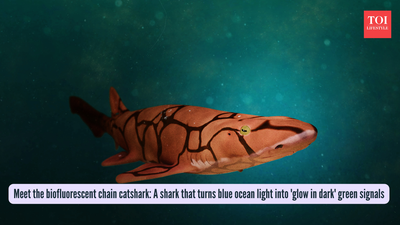
Deep-sea sharks, like the chain catshark, possess a remarkable evolutionary trait: biofluorescence. These creatures absorb blue light and re-emit it as a vibrant green, creating a 'private visual channel' for communication and camouflage. This unique glow, stemming from novel skin compounds, not only aids their survival but also holds potential for medical advancements.
Nature is endowed with innumerable wonders, some of which might still be waiting to be discovered. One of these wonders hides deep beneath the waves, where sunlight fades into whispers of blue and nature reveals secrets that make the ocean a neon wonderland. Imagine sharks swimming through twilight depths, their skin glowing a vivid green under just the right light. This is not animation or magic, but evolution's clever hack.
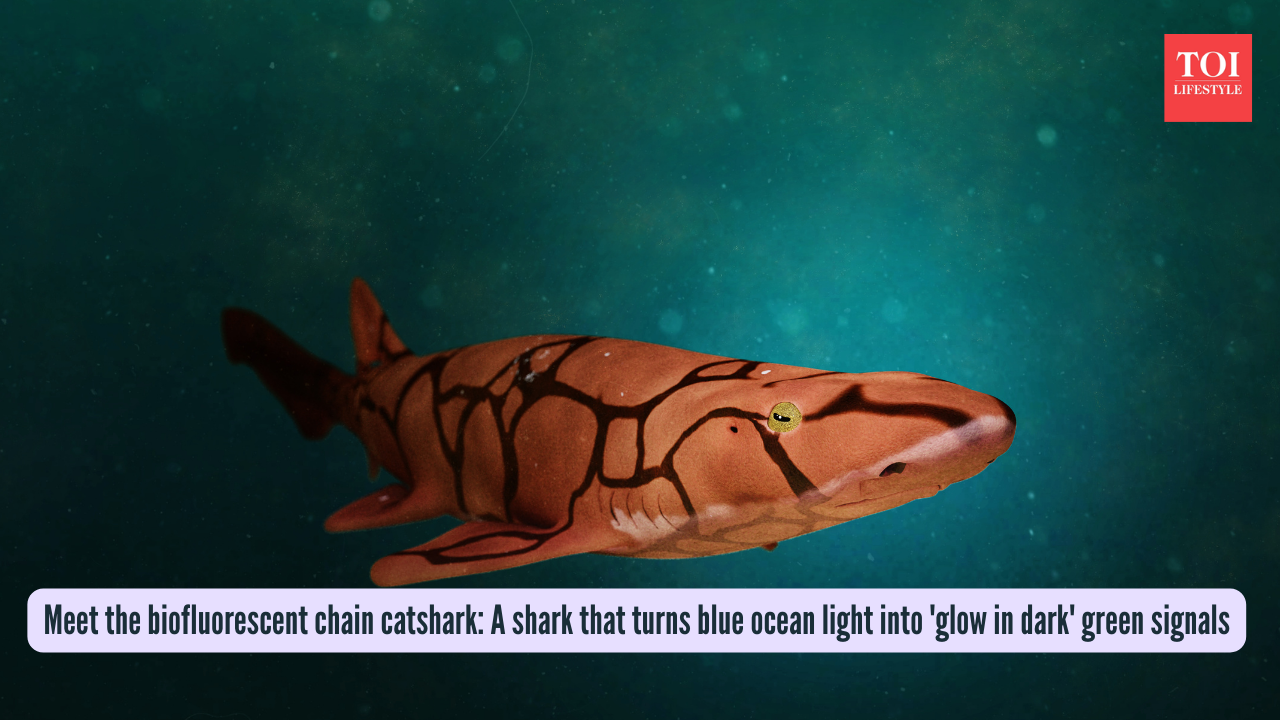
Meet the biofluorescent chain catshark: A shark that turns blue ocean light into 'glow in dark' green signals (Photo via Canva)
Meet the shark that ‘glows in the dark.’
The chain catshark looks plain tan-brown with chain-like dark lines under normal light, but shines bright green when blue light passes through a yellow filter. Unlike bioluminescent creatures like fireflies that spark their own glow via chemicals, biofluorescent sharks absorb blue wavelengths, which are dominant deep down, and re-emit green ones, according to a NIH study.Living on the western Atlantic shelf, where reds vanish fast, they turn scarce blue into standout signals against dim blues
Sharks use their sensitive eyes to spot their kind
Catsharks likely spot each other's glow, with retinas sensitive to their own green output, subtle to us, but visibly bold to them. This creates a "private visual channel" for species chats, mating, or camouflage in low light, according to National Geographic.Their photoreceptors peak at blue-green, matching the emitted light.
What is the chemical secret behind it?
A 2019 iScience study reasoned that bromo-tryptophan-kynurenine metabolites in their skin, which are fairly new to vertebrates, derive from tryptophan's pathway. These glow green under blue light and pack antimicrobial punch, guarding skin too.

Biofluorescent chain catshark (Photo: Canva)
Glow follows chain patterns, brighter in spots for vivid contrast. "Bromo-tryptophan-kynurenines are biofluorescent and show antimicrobial activities," the paper said.
How is this glow useful for these creatures?
A 2017 review in Philosophical Transactions of the Royal Society B stated some important roles for this glow, helping sharks recognise their own kind, attract mates during courtship, or break up their body outline for camouflage.Fluorescent patterns stand out more vividly when viewed through special filters, which helps these sharks thrive in the low-light conditions of their deep-water homes.
Practical benefits today
These glowing skin compounds hold promise for medicine, such as fluorescent markers for imaging cells or new antibiotics to fight growing resistance. The shark's skin texture, with its denticles, might even channel light like tiny fiber optics.









 English (US) ·