

 1 hour ago
5
1 hour ago
5
ARTICLE AD BOX
Marine biologists in Japan have identified a new jellyfish species, the Milky Way Jellyfish (Malagazzia michelin), in the coastal waters of Nagasaki and Yamaguchi. This small, bell-shaped jellyfish is distinguished by brown, oil-like spots on its stomach and reproductive organs, resembling stars.
Japan's coastal waters have long been a treasure trove for oceanic wonders. From ancient fisherfolk tales to modern aquariums buzzing with life, the nation's relationship with ocean life runs deep.Places like Nagasaki and Yamaguchi aren't just postcard-pretty, they're hotspots for biodiversity, where warm shallows brim with life that's often too tiny or see-through to notice right away. A recent discovery spotlights the unsung heroes of the deep ocean- the jellyfish. These drifting wonders, with their unreal glows, have fascinated scientists and artists, popping up in everything from haiku to high-tech labs.
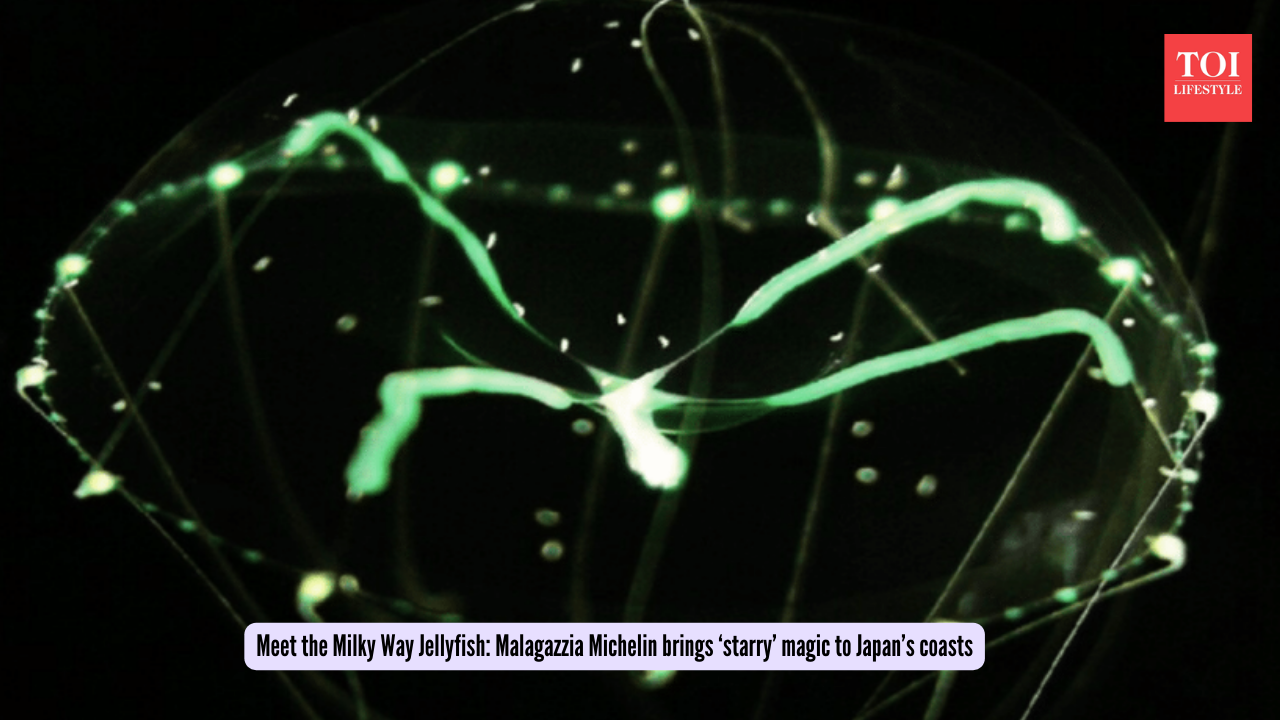
Meet the Milky Way Jellyfish: Malagazzia Michelin brings ‘starry’ magic to Japan’s coasts (Photo: Zookeys)
Meet the Milky Way Jellyfish
Marine biologists in Japan have just discovered a gem from their coastal waters, a new jellyfish species named Malagazzia michelin. Spotted in the shallow, warm areas of Nagasaki and Yamaguchi prefectures, this little wonder is only the second in its genus found there. According to the study in ZooKeys, researchers led by Takato Izumi from Fukuyama University confirmed its uniqueness after raising it in captivity, tracking its full lifecycle from polyp to adult medusa, according to a ZooKeys report.
What makes it stand out among others?
Don't let its size fool you, as Malagazzia michelin's dome-shaped bell measures just 0.47 to 0.79 inches across, fitting snugly on a fingertip. Like others in its genus, it has a four-lipped mouth and straight reproductive organs, but its standout feature is the brown, oil-like spots scattered across its stomach and reproductive areas.These spots grow in number as the jellyfish matures, resembling stars twinkling in the night sky.
That's why it has got the Japanese name "ama-no-gawa-kurage," or "Milky Way Jellyfish." DNA analysis reserved its position as a fresh species, previously mistaken for the unrelated Laodicea genus.
Aquariums helped study these tiny ‘stars’ for long
Aquariums were quite important for this discovery. Teams from Tsuruoka City Kamo Aquarium and Saikai National Park Kuju-kushima Aquarium kept specimens alive long enough for detailed study. Their expertise in handling fragile jellyfish allowed observation of developmental stages, proving M.
michelin's distinct traits.
No less than a cosmic charm for Japanese art!
In Japan, where jellyfish inspire art and festivals, "ama-no-gawa-kurage" ties into cosmic reverence, its speckled glow evoking starry wonder. Yet challenges persist, as jellyfish are tough to spot seasonally, their transparency and similarities demand expert eyes and genetics. This discovery is a shining example of how much ocean life remains hidden, calling more research in Japan's dynamic coasts to catalog these elusive drifters before they're lost.







 English (US) ·