

 41 minutes ago
5
41 minutes ago
5
ARTICLE AD BOX
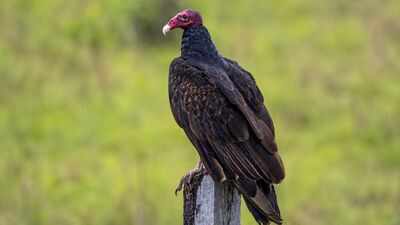
A Turkey vulture drifting high overhead can look almost effortless, its broad wings held in a shallow V as it circles on rising air. From a distance, there is little to suggest that this large scavenging bird relies on some of the most unusual survival strategies found in the animal kingdom.
Yet beneath its calm appearance lies a collection of adaptations that would seem out of place in many other birds.Found across much of the Americas, the Turkey vulture spends its days searching for dead animals rather than hunting live prey. Its role is often overlooked because it addresses the less appealing aspects of nature. By removing carcasses from roadsides, forests and grasslands, it helps limit the spread of disease.
To do that safely, however, the bird has evolved a remarkable set of biological tools that allow it to thrive where many animals would struggle.
How Turkey vulture stomach acid protects against harmful pathogens
Rotting flesh can harbour bacteria and pathogens capable of making many animals seriously ill. Turkey vultures face that risk every time they feed, yet they rarely suffer the consequences.According to NatureMapping Foundation, the species feeds on a wide range of carrion, from small mammals to large livestock carcasses.
The organisation notes that vultures can locate dead animals by smell, an ability that is rare among birds and allows them to detect food that may be hidden beneath vegetation.Once the meal is found, the bird's digestive system takes over. As per the Arizona-Sonora Desert Museum, a Turkey vulture's stomach acid is powerful enough to destroy many harmful bacteria present in decomposing flesh. This allows the bird to consume food that would be hazardous to numerous other species.
The museum describes the adaptation as one of the reasons vultures function as what it calls ecosystem "sanitation engineers", clearing away animal remains before they become larger public health problems.
Why Turkey vultures vomit at predators
The Turkey vulture's defence strategy is far from elegant, but it is effective. NatureMapping Foundation states that when disturbed, the bird may regurgitate its meal and can project the vomit as far as 10 feet.
The behaviour is not limited to adults. Young vultures are also known to vomit at potential threats approaching the nest.There is a practical reason behind the unpleasant tactic. Expelling a recent meal makes the bird lighter and therefore better able to take off quickly if danger is close. The vomit itself can also discourage predators. As NatureMapping notes, "Vulture vomit is an effective predator repellent."Turkey vultures generally avoid confrontation. They are largely scavengers and spend much of their time soaring in search of food. Their unusual defence mechanism allows them to stay out of direct conflicts while still protecting themselves when necessary.
Why Turkey vultures defecate on their legs
Perhaps even more surprising is what Turkey vultures do during hot weather. NatureMapping Foundation reports that the birds often defecate on their feet and legs to cool themselves.
As moisture evaporates from the skin, body heat is carried away, helping the bird regulate its temperature during warm conditions.According to the Arizona-Sonora Desert Museum, an additional benefit. It notes that the uric acid contained in the waste can help kill bacteria and parasites on the bird's legs. In effect, the behaviour may function as a cleaning mechanism as well as a cooling one.What appears unusual to people is therefore tied to two practical needs.
The bird reduces overheating while also limiting exposure to microbes picked up from carcasses and the surrounding environment.
Turkey vultures: Nature's cleanup crew
Turkey vultures rarely enjoy the same public image as eagles, hawks or falcons. Their diet and habits tend to attract attention for the wrong reasons. Yet much of the natural recycling that occurs in ecosystems depends on animals willing to consume what others avoid.NatureMapping notes that Turkey vultures often gather in communal roosts that can range from a handful of birds to thousands.
They may also be seen standing with their wings spread wide in what is known as the "horaltic pose", a posture believed to help dry the wings, warm the body and reduce bacterial growth on feathers.Despite their somewhat alarming habits, Turkey vultures perform a valuable service wherever they occur. By locating dead animals, breaking down carcasses and removing potential sources of disease, they help keep landscapes cleaner. Their methods may involve acid-filled stomachs, projectile vomit and self-applied antiseptic waste, but each adaptation serves a purpose in the life of one of nature's most efficient scavengers.









 English (US) ·