

 1 hour ago
4
1 hour ago
4
ARTICLE AD BOX
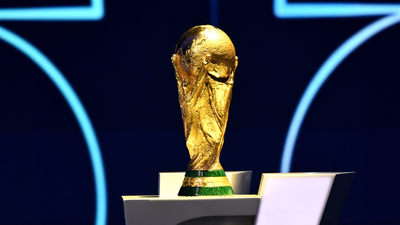
Week one recap of FIFA World Cup 2026 (Image: FIFA)
This World Cup in a North American summer has been thrust upon us like a split screen — 90 minutes of rivetting football drama with an intriguing invitation to absorb the narrative with different perspectives.
If the start to the carnival is anything to go by, it has everything: the usual political razzmatazz, tiny debutants Cape Verde’s plucky draw with Spain, big guns firing on all cylinders and Algeria suffering a Messi end. Mind it, the tournament is but just a week-old.Shaking up the status quoGermany’s 7-1 demolition of debutants Curacao lent more credence to this apprehension of having an unremittingly bleak start to the World Cup. On came another debutants Cape Verde and shook up the narrative completely by holding European champions Spain goalless.Simply Messi-merizingIf Cape Verde’s show can be seen as a rejection of the tournament’s onedimensionality, Lionel Messi has produced football’s very essential joie de vivre moment. His first World Cup hat-trick in Argentina’s 3-0 rout of Algeria was a bold announcement that his magic is very much alive and kicking. With 16 goals in his bag, as he gets ‘Klose-r’ to break more ground in his likely swansong, the Messi-mania will keep us engaged in wondering to what extent the human body can push the boundary.
Unlike Messi, Cristiano Ronaldo began his record-equalling sixth World Cup with an anonymous performance in Portugal’s frustrating 1-1 draw against Congo. The other big guns, however, have been on fire. France’s Kylian Mbappe, England’s Harry Kane and Erling Haaland of Norway all have netted a brace each, bringing immediate life into the race for the Golden Boot.Politics’ underlying currentIn a ‘MAGA’ World Cup, nothing seems to be far from the politics.
And nowhere it is felt more profoundly than in Iran’s case, who had to return to their training base in Mexico two hours after playing a 2-2 draw with New Zealand in Los Angeles. The reason? The Trump administration’s strict travel restrictions imposed on Team Melli. Political exhibitionism was also at play during the game when some Iranian supporters displayed banners reading “MINAB 168” in the stands in reference to the US attack at the girls’ elementary school in South Iran killing 168 while others unfurled Iran’s prerevolutionary flag — as a symbol of opposition to the current regime.A cold reception to hydration breakFIFA’s novel introduction of hydration breaks — pausing a game 22 minutes into each half to help players deal with the excruciating heat of a North American summer has so far received a cold reception from the teams. Some coaches are pouring cold water on the idea saying that it’s killing the pace of the game while others exploit it as extra tactical huddles for passing important instructions to the players. “It’s not two half-times, it is four quarter times basically that we’ve got,” said France manager Didier Deschamps.First ‘casualty’Tunisia coach Sabri Lamouchi became the first ‘casualty’ of the World Cup when he was fired after his team’s 1-5 loss to Sweden in their opening match. In 1998 too, Tunisia had fired their coach Henryk Kasperczak two matches in the World Cup in France.Mora's momentWhen Mexico teenager Gilberto Mora entered as a substitute in the second half of El Tri’s 2-0 victory over South Africa in the tournament opener, the midfielder at 17 years and 240 days became the youngest player to feature in this World Cup.


 English (US) ·