

 1 hour ago
5
1 hour ago
5
ARTICLE AD BOX
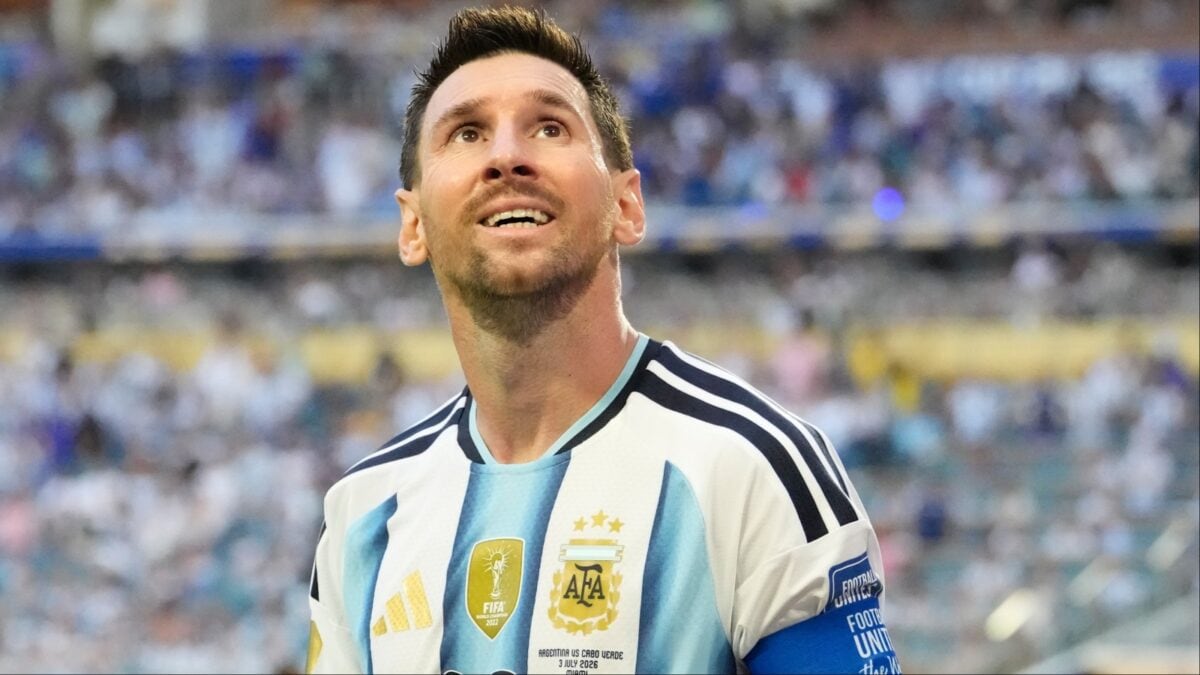
Years, and maybe decades, later, Lionel Messi would remember the game of wildly fluctuating fortunes in graphic detail. The penalty he missed in the first half, the free-kick that cannoned off the post, Egypt’s counter-attacking goals, Cristian Romero’s goal that fired the comeback, his own equaliser on the half-volley, the heart-stopping moments during the VAR check of Enzo Fernandez’s headed winner. And, after all that, the night he cried like a child when he heard the final whistle.
He would recollect it as one of the greatest comebacks he and his country has made, the afternoon he could see darkness creeping through the roofed canopy of the arena in Atlanta.
AS IT HAPPENED | Argentina vs Egypt, FIFA World Cup Round of 16
Just 11 minutes remained for Egypt to close out a game they were deservedly leading 2-0. They stopped everything but not the iron-clad resolve of Argentina, the impenetrable genius of Messi, and their own muddled thinking, their naivety on the biggest stage. Cruel as the 3-2 reversal was for Egypt, they lost to a team that is shaping its own destiny, carving its own legacy.
Egypt’s resistance would not be forgotten, but Argentina’s comeback would acquire epic status. The match would be a touchstone for fight-backs in the tournament’s history. And another occasion to celebrate Messi and Argentina.
The champions never lost their belief. The tight-knit group has survived several setbacks together. Guided by Messi, they have walked through water and fire, rose from the depths of seas and scaled the peaks. But the latest, impending tragedy looked different. The stakes were immeasurable, it equated to the unquantifiable genius of Messi making his last show on the stage.
Revoking Argentina’s romanticised spirit of resilience, Messi and his colleagues fought on. The opening passage of the second half was compressed to 30 yards from the Egyptian goalmouth. The first time Egypt broke the stranglehold, it nearly settled the game, but a Mostafa Zico goal, orchestrated by Hosseim Hassan’s bolting sprint, was rubbed off due to a foul on Lisandro Martinez in the build-up.
Story continues below this ad
But having pushed numbers upfront, Argentina was a walking invitation for counter-attacks. A goal was inevitable; Hassan was the creator with a tearing run down the heart of the field, before cutting back for Zico, running cleverly into space and slamming the ball home to block the comeback route.
Time was dripping away. The shutters on the greatest footballer that has walked the planet was rolling down. Then it rolled itself up. Four minutes after Romero’s header came Messi’s spanking half-volley, propelled with a non-existent back-lift.
Messi winced. For the second time in the tournament, he missed a penalty. Perhaps, the simplest, taken for granted chore, is his tragic flaw. The man who can make the ball travel improbable paths, who can perplex geometricians with the bends and curls of his free-kicks, who has scored every possible variety of goal mankind could, who can run through an entire village to find the target, can also miss a simple strike from 12 yards with just the goalkeeper to beat. It’s a theatre of the absurd, and for nitpickers, the only blot to nitpick.
Football’s immortal has mortal numbers in converting penalties — roughly 77 per cent. He has spilled the last three of his six spot kicks. The attempt was weakly-stuck, his feet wobbling in the follow through. The Egyptian goalkeeper, Mostafa Shobeir, lunged to his left and staved it away without straining. It was the second penalty he has saved this World Cup, the first man to do so in the tournament’s history.
Story continues below this ad
A crestfallen Messi apologised and stared bewilderingly towards the skies. Could he see his endnotes flickering gloomily above? Among the stack records, he would have an unwanted one too — the first player to miss two non-shootout penalties at the same World Cup. He would not bother. The day, eventually, was to be his.
As the afternoon grew, so did his angst. Almost instantly, he could have atoned. But his free-kick, swerving, tucking and arcing inwards rammed onto the upright. He cursed his luck, a rare outburst of anger. His troops rallied around him, and nearly produced the equaliser in the 40th minute. Julian Alvarez, starting ahead of Lautaro Martinez, saw Shobeir’s strong long hands redirect his side-footed shot from the goal. Shobeir absorbed the heat of Alvarez’s header from point-blank range.
Egypt’s strike was not against the flow of a game where both teams were inclined to keep their shape, defend compactly and not concede an early goal. Excursions into the penalty box were rare. It was akin to a pair of boxers shadow punching before landing the blows. One blow could ignite a series of blows. And then the goal happened, and Egyptian fans celebrated with as much shock as awe.
It was Egypt’s first incisive run upfield. Figurehead Mo Salah was involved for the first time in the game, and the right-back Mohamed Hany induced a corner off Lisandro Martinez. Egypt worked the corner shot, near the right channel outside the box, Marwan Attia swung a scything cross to the opposite postcode, where Yasser Ibrahim beat Martinez to the ball and powered his header across the goal, past a reaction-less Martinez. The strike roused the contest from its slumber.
Story continues below this ad
The drama that unfolded would make it an all-time classic. It was heartbreaking for Egypt; their courage would be remembered. But the script that Messi and his teammates wrote was simply more forceful.






 English (US) ·