

 1 hour ago
5
1 hour ago
5
ARTICLE AD BOX
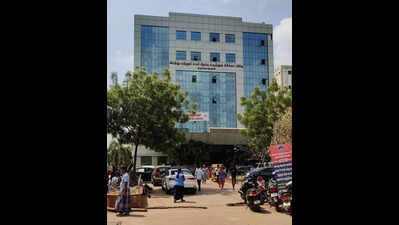
Trichy: As organ donations across Tamil Nadu witness an unprecedented surge in the first two months of this year, Mahatma Gandhi Memorial Government Hospital (MGMGH) in Trichy has also begun the year on a strong note.
The government hospital, among the top contributors in the state so far in 2026, has already recorded three deceased organ donors.The latest donation took place on Feb 26, when organs were retrieved from a 37-year-old man who suffered a brainstem haemorrhage and was later declared brain dead. One of his kidneys was transplanted into a renal patient who had been undergoing dialysis for the past three years at the hospital, marking the 51st kidney transplant performed at MGMGH.
The remaining organs were allocated to various government and private hospitals across the district in accordance with the state's allocation system.
Of the 51 kidney transplants carried out so far at the hospital, 14 were from living related donors, while 36 were from deceased donors across the state. Hospital officials described crossing the 50-transplant mark as a significant milestone for a government medical college.
"Not many government medical colleges have achieved this. We are also planning to commence liver transplant procedures soon," an official said.
Among the three donors this year was the youngest deceased donor recorded at the hospital — a 14-year-old boy who suffered fatal injuries in an accident and was later declared brain dead. Following consent from his family, his liver, pancreas, small intestine, two kidneys, eyes and skin were retrieved, giving a new lease of life to multiple recipients across Tamil Nadu. "The positive trend is encouraging. Work is under way to establish a ‘Wall of Honour' with photographs of donors to recognise their invaluable contribution, and it is expected to be set up soon," the official added. Dean S Kumaravel said the hospital's focus remains on saving lives rather than numbers. "Organ donation is in itself a noble act, and every donation makes a difference. We are thinking of something more meaningful to honour donors and their families, beyond just a wall," he told TOI. According to data from the Transplant Authority of the Government of Tamil Nadu (TRANSTAN), MGMGH recorded 27 donors between 2017 and 2025. A total of 92 organs were retrieved during this period, including 31 kidneys and 61 corneas. While organ donation numbers remained relatively low until 2020, the subsequent years saw a steady rise in donations from brain-dead patients, both trauma and non-trauma cases. The hospital recorded four donors in 2023, nine in 2024 and five in 2025, reflecting the growing awareness and acceptance of organ donation in the region.
‘TN's acceptance rate for deceased organ donation after one counselling is 75%'Tamil Nadu continues to lead the country in deceased organ donation, with the programme overseen by the Transplant Authority of Tamil Nadu (TRANSTAN). After a brief slowdown during the Covid-19 pandemic, the State has recorded 57 deceased organ donations in the first two months of this year — nearly one a day. TRANSTAN member-secretary N Gopalakrishnan speaks to TOI about the factors behind the surge and the sustainability of the model.Tamil Nadu has recorded 57 deceased organ donors in just the first two months of this year — nearly one a day. What explains this surge? There has been an unprecedented surge this year. As early as 2008, when much of the country was still unfamiliar with the concept, Tamil Nadu had already begun building a structured deceased organ donation system. Though there was a brief lull during the Covid period, the programme was subsequently strengthened by bringing together policymakers, the bureaucracy, technocrats, the media and civil society.
The model has now achieved sustainability and is grounded in scientific temper and ethical values.
What factors have contributed to this growth? Several initiatives have played a role. The introduction of ‘honour walks' and Government Order 331, which mandates State honours for deceased organ donors, have been significant. As of February 26, 652 honour walks have been accorded since October 2023, helping to reshape public perception.
Coordination among departments, including the police to facilitate ‘green corridors' for swift organ transport, has also been crucial.
Medical students are being engaged through student charters in government medical colleges, with 15 institutions currently participating and students serving as ambassadors for organ donation. The launch of Vidiyal, a mobile-cum-web application introduced in August 2021, has further streamlined and automated the process, ensuring transparency in organ allocation. Is Tamil Nadu the only State following such a model? Not the only one, but certainly among the few. Some States have adopted similar practices, though with modifications such as offering monetary benefits. We have consciously avoided that approach to ensure that organ donation, a noble act, is not trivialised. How important is public trust in this process? Transparency is critical. No family is coerced into agreeing to organ donation.
Consent is obtained only through counselling. Do families usually agree to donate? The acceptance rate after the first round of counselling is about 75%, and it rises to around 80% after a second round. Are donations higher in private institutions? It is no longer confined to corporate hospitals. Over the past two to three years, donations at government hospitals have equalled or even surpassed those at private institutions.
This year, the government Dharmapuri Medical College Hospital, a non-transplant organ retrieval centre, has recorded the highest number of donations contributing to the State's tally. Does the higher number of deceased organ donations relate to the State's accident rate? While it is unfortunate that Tamil Nadu records a high number of accidents, organ donations are not limited to trauma-related brain deaths. There are also non-trauma deceased donors.







 English (US) ·