

 1 hour ago
9
1 hour ago
9
ARTICLE AD BOX
4 min readNew DelhiJul 3, 2026 12:08 AM IST
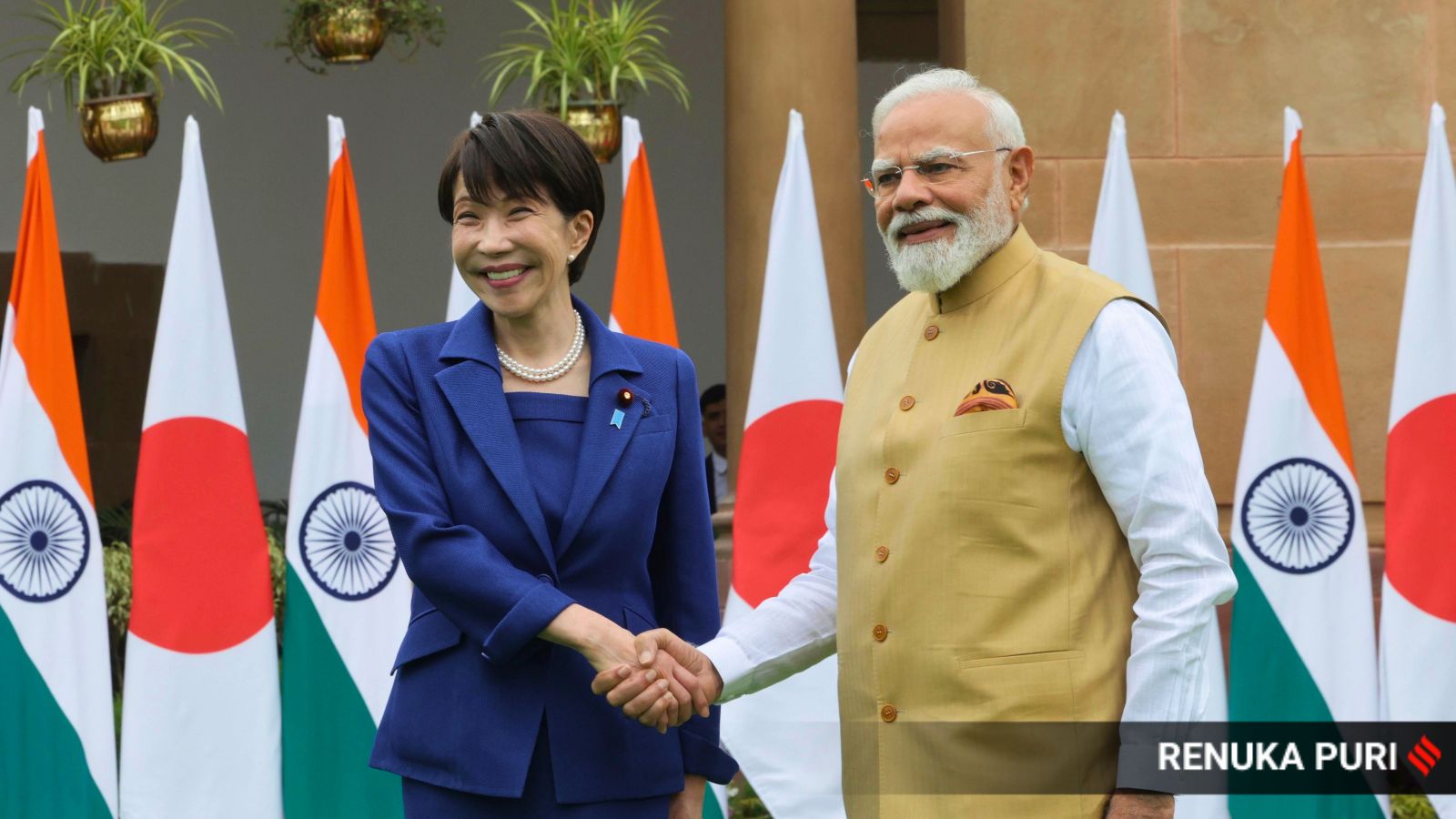 Prime Minister Narendra Modi and his Japanese counterpart Sanae Takaichi positioned economic and energy security as the defining pillars of the next phase of bilateral ties between the two countries. (Express Photo by Renuka Puri)
PRIME MINISTER Narendra Modi and his Japanese counterpart Sanae Takaichi weighed in on a host of global and regional issues, including cross-border terrorism from Pakistan, Gaza rebuilding, the ongoing Ukraine conflict, Strait of Hormuz and West Asia crisis and the situation in South China Sea and East China Sea.
In the joint statement released after the summit talks, both Modi and Takaichi stressed “the importance of securing free and safe navigation through the Strait of Hormuz, maintaining stable supply chains for energy and other essential goods, and upholding international law”. They also stressed advancing the comprehensive plan to rebuild Gaza and live up to the commitment of ensuring a two-state solution.
Both New Delhi and Tokyo have consistently supported the two-state solution as a means to achieve lasting peace in the region.
According to officials in the Ministry of External Affairs (MEA), the Indo-Pacific was discussed at length between the two leaders. They concurred on the strategic importance of India’s northeastern region to realise a resilient and prosperous Indo-Pacific.
They also noted the progress under the Quad framework and spoke about convening the next Quad Leaders’ Summit soon. Delhi was supposed to hold the Quad Summit in 2025, but it did not work out as India and the United States (another Quad member, along with Australia) got embroiled in tariff-related issues.
Both Modi and Takaichi highlighted the importance of cooperation with ASEAN Member States to strengthen regional resilience and promote peace. In this context, they mooted a trilateral 1.5-track policy dialogue with the Philippines, reiterating their strong support for ASEAN’s centrality.
While PM Modi appreciated Japan’s support in enhancing connectivity in the region with road networks and bridges, the two sides discussed creating industrial value chains connecting the Northeast with the Bay of Bengal area in collaboration with regional organisations such as BIMSTEC.
Story continues below this ad
There were discussions earlier to hold the India-Japan summit in Guwahati, in consonance with Japan’s ties with the region, but it was later changed to New Delhi owing to PM Takaichi’s tight schedule.
The two Prime Ministers expressed serious concern over the situation in the East China Sea and the South China Sea, according to the joint statement. Without making any direct mention of China, they reiterated “their strong opposition to any unilateral action that endangers the safety as well as freedom of navigation and to changing the status quo by force or coercion”.
They shared their concerns over the growing militarisation of disputed features, in an oblique reference to China’s growing military dominance in the region.
In another initiative that is aimed at countering China’s growing footprint in Africa, India and Japan discussed the formulation of the Strategic Outlook for Expanding Japan-India Cooperation in Africa.
Story continues below this ad
Modi and Takaichi “unequivocally and strongly condemned terrorism and violent extremism in all its forms and manifestations, including cross-border terrorism from Pakistan”. The two leaders also condemned in the strongest terms the terror incident in Delhi on November 10, 2025.
“They called for the perpetrators, organisers and financiers of this reprehensible act to be brought to justice without any delay,” as per the joint statement, which also called for actions against all UN-listed terrorist groups and entities including al Qaeda, ISIS/Daesh, Lashkar-e-Taiba, Jaish-e-Mohammad and their proxies.
The two sides also shared serious concern over North Korea’s nuclear and missile programmes and over the situation in Myanmar and its regional impact. They called for a just and lasting peace in Ukraine and expressed their mutual support for each other’s candidature for a permanent seat in a reformed UNSC.
Prime Minister Takaichi extended an invitation to PM Modi to visit Japan next year for the 17th Annual Summit.









 English (US) ·