

 1 hour ago
6
1 hour ago
6
ARTICLE AD BOX
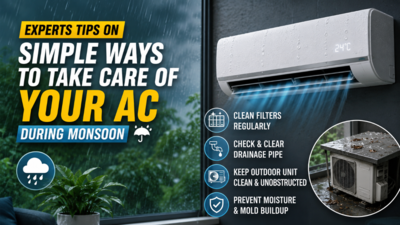
AI generated image for representation
AI generated image representationThe monsoon season brings with it a different kind of discomfort. Even as temperatures drop from their summer highs, rising humidity can make indoor spaces feel just as oppressive.
For air conditioners (AC), the rainy season introduces a distinct set of challenges like moisture buildup, clogged drainage lines, debris around outdoor units, and the risk of mold forming inside the system. With a few adjustments to how the AC is used and maintained, most of these issues can be avoided.Sunil Kumar, Business Head of Residential AC at LG Electronics India Limited, puts it plainly: "People don't think about their AC during monsoon the way they do in summer. But honestly, that's where the mistake begins. The moment humidity rises, your room can feel just as uncomfortable at 28°C as it does at 45°C in peak summers. The problem isn't always the temperature, it's the moisture in the air.The basics still matter, and they're easy to ignore. Clean your air filter regularly. A dirty filter is one of the most common reasons an AC underperforms, and most people only notice it when the electricity bill arrives. Keep the outdoor unit clear, and don't put off that annual maintenance check, monsoon is actually the right time for it, not after.The other thing people miss is the Dry Mode. Modern air conditioners aren't just cooling devices. If you're running your AC purely on cool mode during monsoon, you're likely over-cooling the room to try and manage humidity, which uses more energy and still doesn't fully solve the problem. Dry Mode is built for exactly this situation.Monsoon isn't a downtime for your AC. If anything, it's when the right technology makes the most visible difference."
Using the right mode makes a real difference
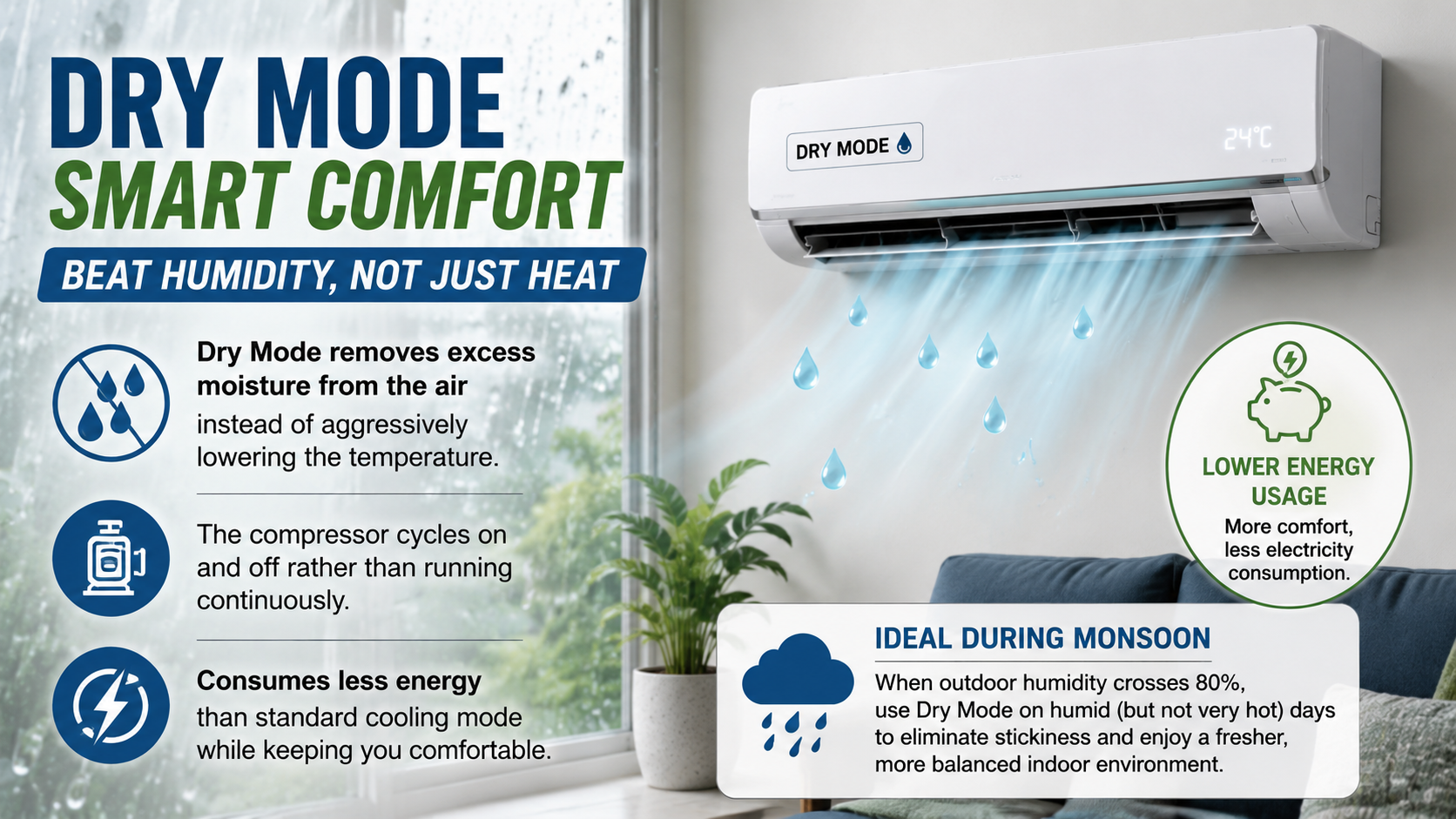
Most modern ACs come with a Dry Mode specifically designed to address high humidity.
Rather than aggressively lowering the room temperature, this mode focuses on removing excess moisture from the air. The compressor cycles on and off rather than running continuously, so it typically consumes less energy than in standard cooling mode while still making the room feel more comfortable.
AI generated image representation
During the monsoon, when outdoor humidity regularly crosses 80%, switching to Dry Mode on humid but not particularly hot days can help manage the sticky indoor feeling that conventional cooling often fails to fully resolve.
Jayant Balan, Head of Room Air Conditioners Business at Voltas, explains what else consumers should keep in mind during this season: "The monsoon season brings welcome relief from the summer heat, but higher humidity and moisture levels can affect the performance and efficiency of air conditioners if not maintained properly. A few simple maintenance practices can help ensure optimal cooling, better indoor air quality and improved energy efficiency throughout the season.Consumers should regularly clean or replace air filters, as accumulated dust and moisture can restrict airflow and reduce cooling performance. Using the Dry Mode, self clean or auto clean features, where available, can help control humidity and reduce moisture buildup inside the unit. During prolonged rainy spells, running the AC for 15 to 20 minutes periodically can help prevent dampness and mold formation.The outdoor unit should be kept free from debris, vegetation and stagnant water, and protected from waterlogging while ensuring adequate airflow around it. Consumers should also check for unusual noises or vibrations after heavy rains or storms and ensure condensate drain pipes remain unclogged to prevent water leakage.Avoid frequent switching between very low temperature settings and turning the AC off, as this can increase energy consumption and strain the system. Maintaining a temperature setting between 24°C and 26°C can improve both comfort and efficiency.A professional preventive maintenance check before or during the monsoon season is recommended to inspect filters, coils, drainage systems and electrical components, helping prevent unexpected breakdowns and ensuring reliable performance throughout the season."Abhishek Verma, Head of Product Marketing and Planning at Panasonic HVAC and CC India, echoes the same priorities: “During the monsoon season, maintaining air conditioners becomes especially important, as increased humidity, dust, and moisture can impact their efficiency and indoor air quality. Consumers should regularly clean or replace air filters, ensure that the outdoor unit remains free from debris and water accumulation, and use the Dry Mode feature to effectively reduce excess humidity indoors. This not only enhances comfort but can also help improve energy efficiency.We continue to witness growing adoption of smart air conditioners and energy-efficient products as consumers seek enhanced functionality beyond cooling."
Outdoor unit and drainage need attention too
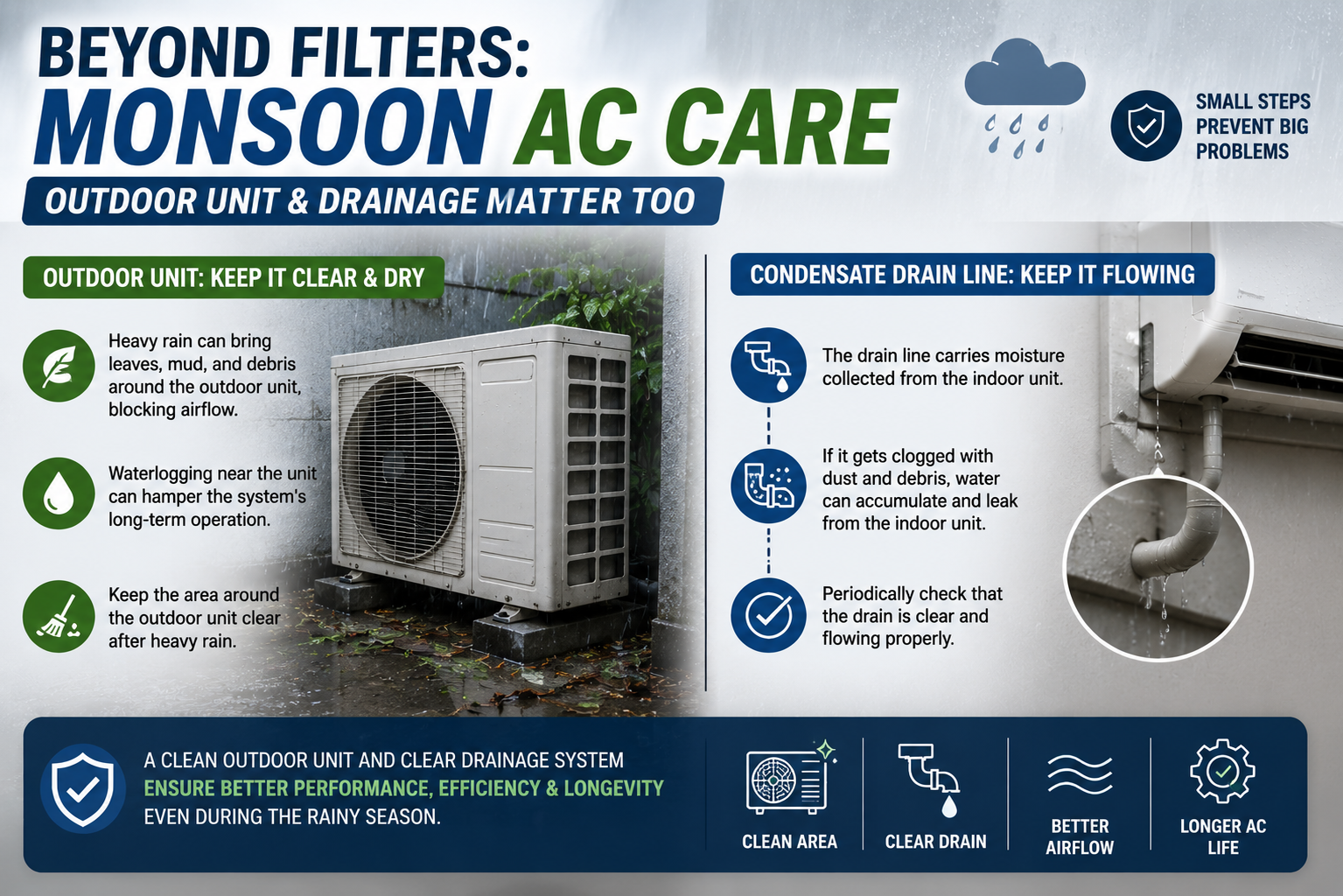
While cleaning the filters is the most discussed maintenance task, the outdoor unit and the condensate drainage system are also equally important during the monsoon.
Heavy rain can bring leaves, mud, and debris around the outdoor unit, blocking airflow. A particular problem is waterlogging near the unit, as standing water can hamper the system's long-term operation. One simple step to avoid performance problems is to keep the area around the outdoor unit clear after heavy rain.
AI generated image representation
The condensate drain line, which carries moisture collected from the indoor unit, is also more prone to blockages during the rainy season.
When this line gets clogged with dust and debris, water can accumulate and leak from the indoor unit. Periodically checking that the drain is clear and flowing properly can prevent water damage and the kind of leakage that tends to catch homeowners off guard.Ashish Goel, co-founder and CEO of Optimist, brings together several of these points: "While monsoons bring relief from intense summer temperatures, they also create conditions that can impact the efficiency and lifespan of air conditioners.One of the most important steps homeowners can take is ensuring that the outdoor unit remains free from waterlogging, mud, leaves, and other debris that may accumulate during heavy rains.Regular cleaning of air filters, checking drainage lines for blockages, and scheduling preventive servicing before or during the season can help maintain optimal performance and healthy indoor air quality. High humidity levels also place additional stress on cooling systems, making timely maintenance critical.A well-maintained AC not only delivers better cooling and energy efficiency but also minimizes the risk of costly repairs and unexpected downtime. With a few simple precautions, consumers can ensure their ACs continue to operate reliably throughout the monsoon season and beyond."
Other everyday habits that helps
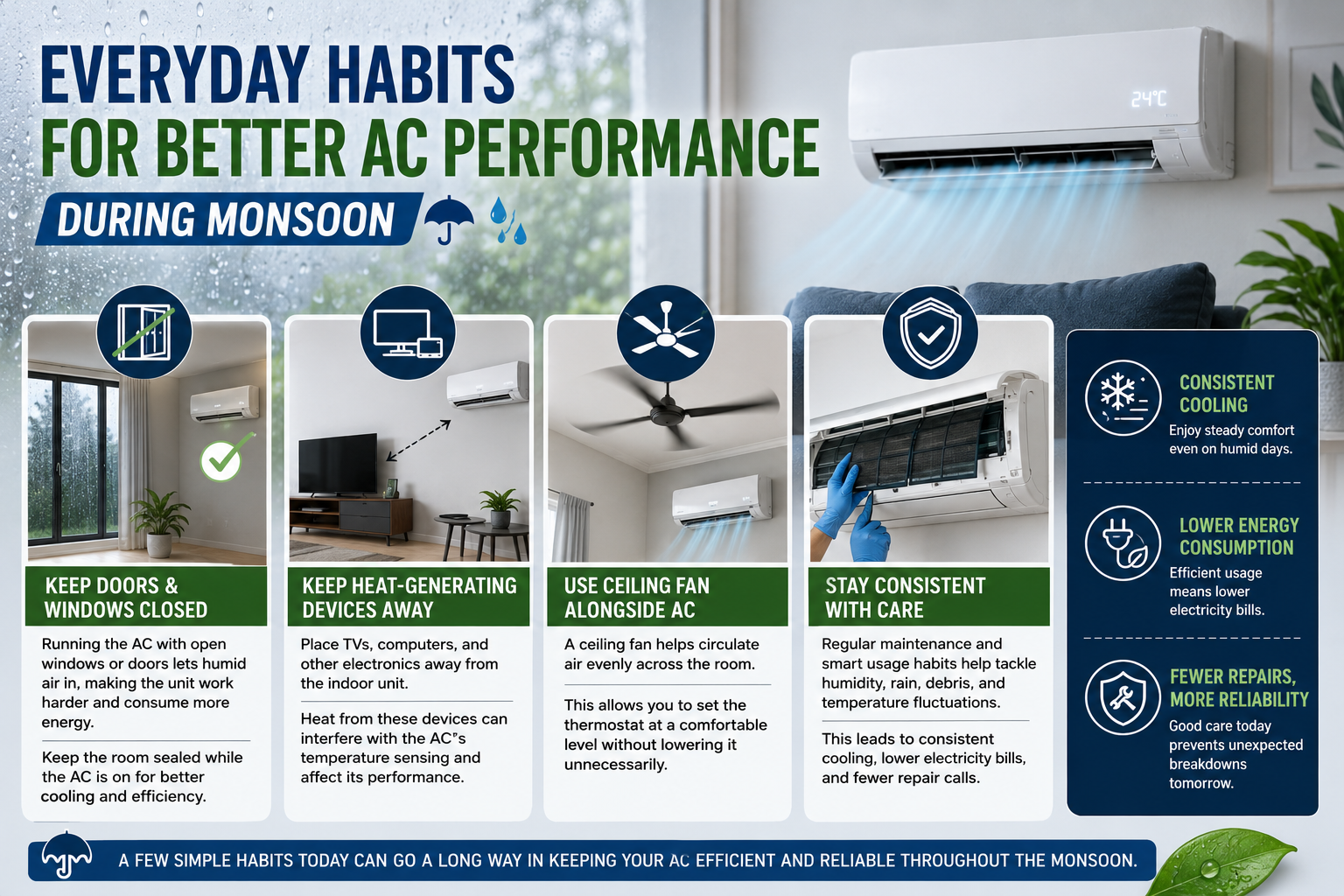
Beyond the mode selection and maintenance, a few everyday practices can keep the AC running more efficiently through the season.
Running the AC with windows and doors open forces the system to continuously process humid outdoor air, raising energy consumption without improving comfort. Keeping the room sealed while the AC is on allows it to work within a controlled environment.
AI generated image representation
Positioning heat-generating appliances, such as TVs, computers, and other electronics, away from the indoor unit also helps. When these devices sit close to the AC, they can interfere with the unit's temperature sensing, affecting how it reads and responds to room conditions.Using a ceiling fan alongside the AC remains useful during monsoon months as it does in summer. The fan helps distribute air more evenly, allowing the thermostat to be set at a comfortable level rather than lower to compensate for uneven cooling.Together, these habits and maintenance practices address the main ways monsoon conditions reduce AC performance. The season's combination of high humidity, rain, debris, and temperature fluctuations places the system under a different kind of load than summer heat alone does.Staying on top of the basics during this period tends to pay off with more consistent cooling, lower electricity consumption, and fewer unexpected repair calls once the season has passed.









 English (US) ·