

 1 week ago
6
1 week ago
6
ARTICLE AD BOX
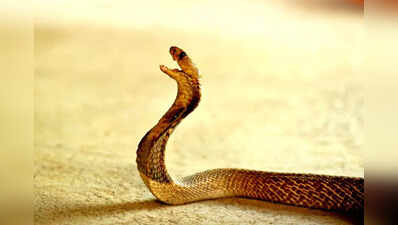
Raipur: The monsoon has barely settled over Chhattisgarh, but another seasonal emergency has already begun unfolding across its forests and villages.Within days of the rains, six people have died of snakebite in northern districts.
Similar cases are now being reported from other forested districts where flooded snake burrows, people sleeping on floors and delayed access to healthcare create a deadly combination every rainy season.The deaths come at a time when India has declared snakebite a notifiable disease and rolled out an ambitious national mission to halve snakebite deaths by 2030. Yet doctors, forest officials and conservationists say the biggest challenge is no longer the availability of anti-snake venom—it is getting patients to hospitals before myths, panic and delays turn a treatable emergency into a fatal one.
'The venom isn't always the biggest killer. Delay is.'
Dr Yogendra Malhotra, professor of medicine at Pt JNM Medical College of Dr BR Ambedkar Memorial Hospital, says the majority of snakebite deaths are preventable."Nearly 80% of snakes are non-venomous. Even in venomous bites, survival chances are very high if treatment begins early. Unfortunately, by the time many patients reach tertiary hospitals, they have already suffered hypoxic brain injury because breathing stopped for too long," he told TOI.
During the monsoon, snakes leave flooded burrows in search of dry shelter and often enter houses. People sleeping on the floor become accidental victims."Snakes are not hunting humans. They are looking for warmth and shelter. While moving, they may brush against a sleeping person's body. A sudden movement startles them and they bite in self-defence," he said.Krait bites, he explained, can be particularly deceptive.
Victims often feel only a needle-prick sensation and go back to sleep, unaware that the neurotoxic venom is gradually paralysing the muscles that control breathing."Many patients never wake up because respiratory paralysis sets in silently during the night."
Faith healing continues to cost lives
Doctors say one of the biggest obstacles remains the widespread dependence on traditional healers.Instead of rushing victims to hospitals, many families first visit Baiga-Gunia practitioners, who may ask to suck the wound, burn it with heated objects, apply herbs or tie tight bands around the limb."None of these methods removes venom. In fact, sucking introduces infection, burning damages tissue and tight tourniquets worsen complications," Dr Malhotra said.Ironically, he said, the popularity of traditional healers is sustained because most snakebites are from non-venomous species."When people bitten by harmless snakes recover after visiting a faith healer, the healer gets the credit. The next victim may not be so fortunate."
Sometimes patients are mistaken for dead
Perhaps the most dangerous misconception surrounds cobra and krait bites.Neurotoxic venom slows breathing and pulse to such an extent that victims may appear lifeless."Families often assume the patient has died because there is almost no movement," the doctors said. "In reality, many are in a reversible state. Even if anti-snake venom is not immediately available, ventilator support and timely airway management can save them."They stressed that treatment should never be abandoned because the patient appears unconscious.
The challenge in rural Chhattisgarh
In much forested Chhattisgarh, the first hospital capable of managing severe snakebite may be 70-80 km away.Patients are often referred from one health centre to another, losing valuable time. Officials also admit that snakebite data varies across different govt portals, making accurate assessment difficult. Experts say strengthening ambulance services, referral systems and early treatment at peripheral health centres remains one of the biggest challenges identified under NAP-SE (National Action Plan for Prevention and Control of Snakebite Envenoming).
What to do—and what not to do
Doctors say the first few minutes after a bite often determine the outcome.The bitten person should be reassured, kept calm and the affected limb immobilised. Rings, bangles or tight clothing should be removed before swelling begins, and the patient should be taken to the nearest hospital immediately.Equally important is avoiding harmful practices. The wound should never be cut, burnt or sucked. Tourniquets, herbs, chemicals, electric shocks and alcohol do not neutralise venom and may worsen the injury.
Experts also advise against trying to catch or kill the snake, as it only delays treatment and can result in additional bites.A disease the country can no longer ignoreSnakebite has quietly emerged as one of India's biggest but least reported public health crises.The Union health ministry launched the NAP-SE in 2024 after acknowledging that India accounts for nearly half of all snakebite deaths globally, with an estimated 50,000 fatalities every year.Under the new protocol, every snakebite case is now a notifiable event, meaning hospitals must upload it on a central surveillance portal. The action plan asks states to ensure uninterrupted anti-snake venom supplies, strengthen emergency referral systems, improve surveillance, train healthcare workers and coordinate between the health, forest, tribal welfare and veterinary departments under a "one health" framework.
A wildlife issue as much as a health issue
Forest officials say snakebite cannot be viewed solely through the lens of public health.Chhattisgarh is home to 42 species of snakes, of which about 15 are commonly encountered around human habitation. Only four are responsible for the vast majority of medically significant bites—the Indian cobra, common krait, Russell's viper and the much rarer saw-scaled viper.With the onset of the monsoon, rescue teams receive a surge of calls as snakes move into houses, schools, cattle sheds and agricultural fields.Working with the forest department, Nova Nature Welfare Society has emerged as key partners in snake conservation and snakebite mitigation in past years. Besides rescuing snakes and relocating them safely, the organisation conducts awareness drives in villages and schools to discourage harmful traditional practices and educate people about safe first aid.Under the King Cobra conservation project, Nova and the Korba forest division have also trained around 400 doctors from districts under the Bilaspur circle in recognising symptoms of snakebite and improving clinical management.
The compensation many families never claim
Few families know that deaths caused by snakebite qualify for Rs 4 lakh compensation under provisions applicable to notified natural disasters through the revenue department.Locals said lack of awareness means many bereaved families, particularly in remote tribal areas, never apply for the assistance.
Snakebite burden bigger than it appears
A forest department's official surveillance data shows snakebite is no longer confined to a handful of forest districts.
Reported cases have risen sharply in recent years, with the state recording around 900 reported snakebite cases in 2023, nearly 2000 in 2024 and over 2,500 in 2025. Even in the first four-and-a-half months of 2026, over 600 cases had already been reported. the cases reported in earlier years range between 2000-5000 snake-bite cases.Raigarh, Gariyaband, Bijapur emerge as major hotspotsAn analysis of the state surveillance data shows Raigarh reported the highest number of snakebite cases over the past three years and the current year, with about 770 reported cases, followed by Gariyaband (around 720) and Bijapur (over 620).
Other districts reporting a high burden include Janjgir-Champa (around 385), Baloda Bazar (about 270), Balod (around 260), Korba (about 250) and Sarangarh-Bilaigarh (about 250).
A race against time
For wildlife experts, snake rescue is about conservation. For doctors, every rescued patient is proof that snakebite is no longer a death sentence.Science, medicine and national policy already exist. What still stands between a bite and survival is the time it takes for a frightened family to choose a hospital over a healer.






 English (US) ·