

 1 week ago
10
1 week ago
10
ARTICLE AD BOX
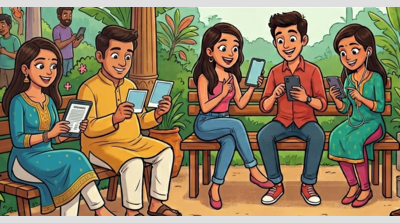
Bengaluru: Karnataka is becoming increasingly connected, with internet use among adults witnessing a steep rise in recent years, according to the National Family Health Survey (NFHS)-6.The share of women, aged 15-49 years, who have ever used the internet rose from 35% in NFHS-5 (2019-21) to 57.9% in 2023-24, while usage among men increased from 56.3% to 84.3%, reflecting the state’s rapid digital transformation.Experts attribute the growth to the increasing integration of the internet into everyday life, coupled with the widespread availability of smartphones and affordable data plans.“From an educational institution to a bus stand or railway station, internet usage is everywhere.
More campuses are becoming smart now and even govt institutions are seamlessly integrating internet services, ensuring almost everyone has some sort of interaction with it. Its use begins at six months of age and extends to senior citizens,” said Ramesh B, vice-chancellor and professor of sociology at Dr Manmohan Singh Bengaluru City University.R Indira, provost, social sciences and allied faculties, MS Ramaiah University of Applied Sciences, and former professor of sociology and director of international programmes at the University of Mysore, said digital access remains uneven across the state.
“Not everyone owns a smartphone or has reliable internet connectivity, especially in remote regions. Even those who have phones may not necessarily have internet access,” she said.At the same time, Indira described the increase in internet use among women as a positive development, particularly for those who have traditionally had limited access to information and social networks.Sociologists, however, cautioned that the implications of rising internet use depend largely on how the medium is being used.
“Internet can be a boon or a bane depending on how it is being used. For those using it for skill development and knowledge cultivation, it is the former, while for those who use it merely to pass time, it is the latter,” said R Rajesh, professor, department of sociology, Bangalore University.Indira stressed that the focus should be on ensuring that digital tools are used for constructive and empowering purposes. “If women are accessing online resources to enhance their knowledge, explore employment opportunities, access helpline services, or report issues such as intimate partner violence, it represents a significant social development,” she said.Experts also pointed how virtual interactions may be changing the nature of community engagement. “People are increasingly connecting with their communities only virtually, and these interactions often lack the exchange of ideas and differences of opinion that naturally occur in physical social spaces,” Rajesh said.Digital transformationGender - Year - Percent of those who use internetWomen - 2019-21 - 35% - 2023-24 - 57.9%Men - 2019-21 - 56.3% - 2023-24 - 84.3%Urban-rural divide in internet usageUrban women - 74.1% Rural women - 45.1% Urban men - 90.2% Rural men - 79.4%Source: National Family Health Survey (NFHS)-6








 English (US) ·