

 46 minutes ago
5
46 minutes ago
5
Barely days after the UDF government assumed office in Kerala, the simmering land dispute involving the residents of Munambam village in Ernakulam has flared up once again, with the Kerala State Waqf Board completing the registration of the controversial land on the UMEED portal.
The Unified Waqf Management, Empowerment, Efficiency and Development (UMEED) portal is a centralised digital platform launched by the Union Ministry of Minority Affairs for the registration, real-time verification, and monitoring of Waqf properties across India.

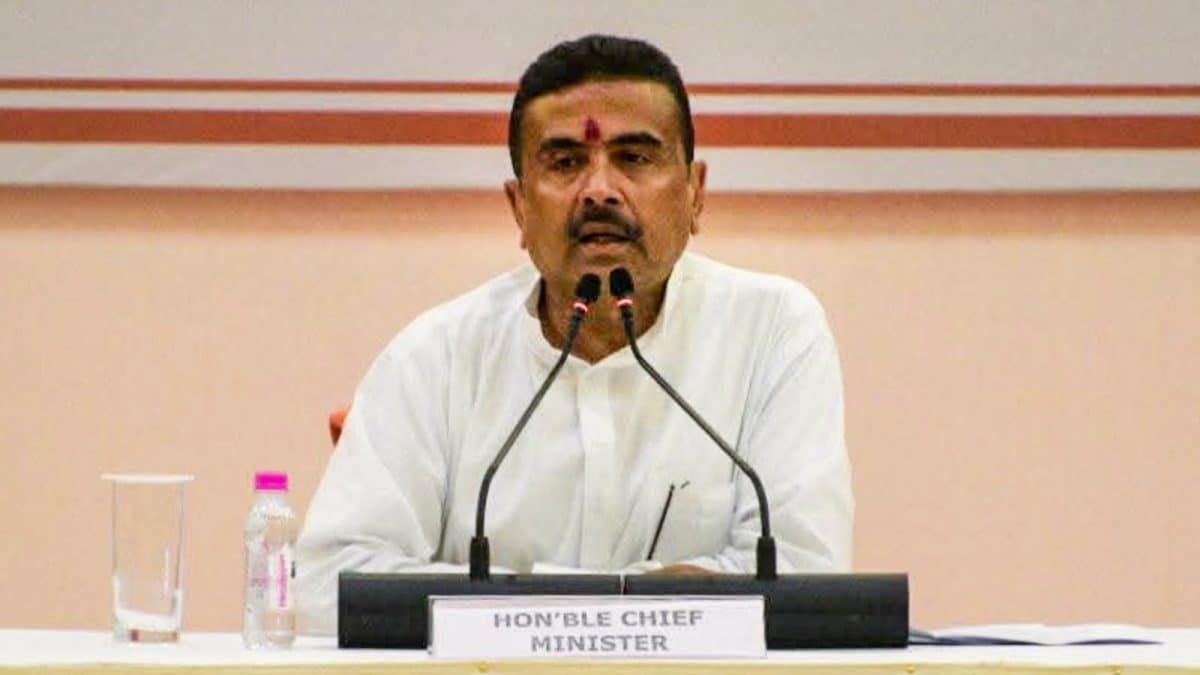
The move has sparked outrage within the Catholic Church, which has launched a scathing attack against newly sworn-in Chief Minister V.D. Satheesan. In a strongly worded editorial published in the Church-backed mouthpiece, Deepika, the Church warned that the registration of the disputed land was not merely a challenge faced by the 610 affected families in Munambam, but “a threat confronting secular Kerala itself.”
The editorial also stated that history would “record the role played by the Waqf Board in strengthening extreme Hindutva forces in the country.” Although the Central government amended the law, the changes offered no protection to the residents of Munambam, who had already become trapped in religious legislation. Instead, it alleged, the amendment effectively enabled the Board to continue its actions in Munambam.
The article further recalled that Chief Minister V.D. Satheesan, while serving as Leader of the Opposition, had declared that the issue could be “resolved within 10 minutes” if his front came to power.
“When the new government recently cancelled the K-Rail notification and the related land acquisition proceedings, the Chief Minister himself stated: ‘The yellow boundary markers erected for land acquisition will be removed. People have been left in a situation where they cannot sell their own land, allow anyone else to purchase it, or even pledge it for their children’s needs.’ The people of Munambam are facing a similar situation. The Chief Minister had earlier stated that the Munambam land was not Waqf property and that, if his side came to power, the issue could be resolved within ten minutes. Is even justice being hindered by religion? Is cancelling a Waqf Board notification not as straightforward as revoking a government notification?” the article asked.
Satheesan accuses Waqf Board of obstruction
Responding to the issue, Mr. Satheesan on Monday accused the Waqf Board, constituted during the previous government’s tenure, of “deliberately trying to complicate and derail attempts” by the UDF administration to resolve the matter swiftly.
“Ordinarily, it is the Muthavalli who is required to register the concerned Waqf property on the UMEED portal. But in this case, the Waqf Board itself has taken the initiative. What we understand from this is a deliberate attempt to pit two communities against each other,” the Chief Minister said.
At the same time, he assured that “not a single resident” would be evicted from Munambam and promised complete protection for the affected families, while also facilitating the payment of land tax by them.
Merely followed Centre’s direction: chairman
However, Kerala State Waqf Board chairman K.S. Hamsa hit back sharply, insisting that the Board had merely complied with directions issued by the Union government. He pointed out that the latest order in the Munambam dispute was that of the Supreme Court, which had validated the arguments raised by the Board regarding the land.
“There was a direction from the Union government to register all properties under the Waqf Board on the UMEED portal by May 17. We have merely followed the procedure,” he said. According to Mr. Hamsa, all proceedings concerning the Munambam land remain subject to government and judicial intervention.
“The Board considers the people of Munambam innocent and holds the authorities of Farook College responsible for misleading them and illegally selling the property. It is the duty of the Waqf Board to ensure that every property is registered. Since the Muthavalli of Farook College was not expected to register the land, we took the initiative ourselves,” he explained.
Meanwhile, protesters in Munambam, under the banner of the Munambam Land Protection Council, accused the Waqf Board of deepening the injustice faced by local residents and resolved to submit a memorandum to the Chief Minister demanding the dissolution of the Kerala Waqf Board, alleging that it had taken incomplete and erroneous decisions.
According to the protesters, the original deadline for uploading property details to the UMEED portal had been fixed as May 17, 2026, but has now been extended by another month. They alleged that such actions were aimed at making the Munambam dispute even more complicated.
They also pointed out that, at the Waqf Board meeting held on April 26, 2026, a decision had been taken to upload details of all properties included in the Waqf register to the UMEED portal, further intensifying fears among the affected families.








 English (US) ·