

 1 hour ago
3
1 hour ago
3
ARTICLE AD BOX
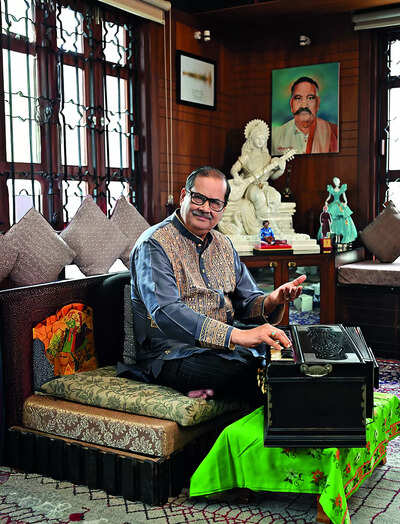
For nearly seven decades, Padma Bhushan awardee Pt Ajoy Chakrabarty has lived and breathed the nuances of Indian music, or as he prefers to call it, raga music, not just as a performer but as a custodian of its traditions.
In a conversation with CT on its 25th anniversary, the Patiala-Kasur gharana exponent reflects on a journey shaped by connection and discipline, rooted in his training under Jnan Prakash Ghosh, and driven by a commitment to nurture future generations.
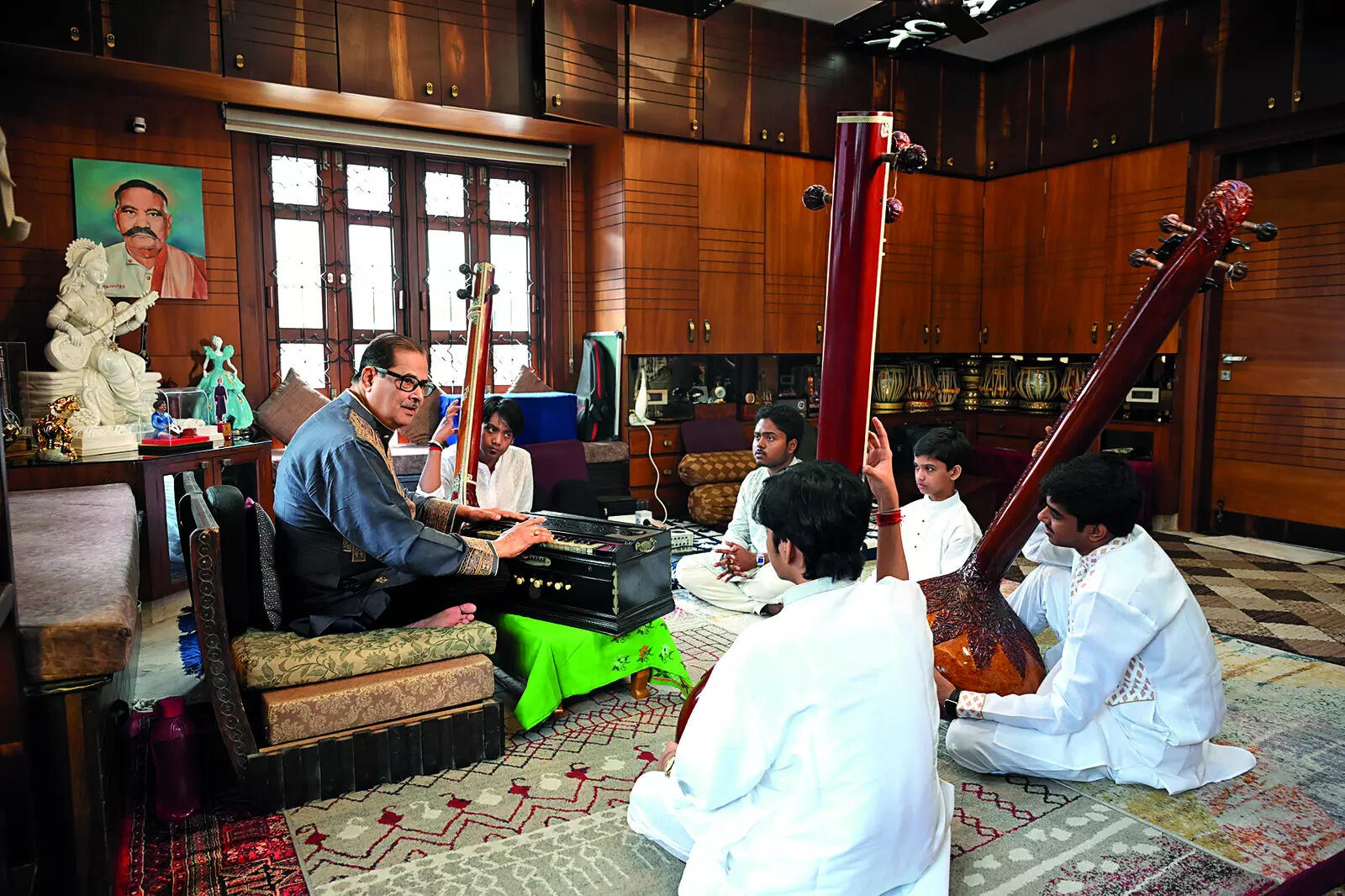
Pt Ajoy Chakrabarty, an exponent of the Patiala-Kasur gharana sits beneath a portrait of Bade Ghulam Ali Khan, who heavily influenced his gayaki
Where the self finds meaning in the otherFor Ajoy Chakrabarty, the answer lies in a single word, ‘Tumi’ (you). Drawing from Rabindranath Tagore, he reflects that just as waves exist because there is an ocean, and not vice versa, in the same way, “A sense of ‘I’ exists because ‘you’ exist.”
Without someone to receive, understand or appreciate what an artiste creates, he believes the existence of the artiste loses meaning. It is about the essential need for another consciousness that acknowledges and completes the act of creation.
“If one continues to create endlessly without any emotional or intellectual exchange, then that creation becomes hollow,” says the veteran musician. This idea forms the core of his philosophy, where connection is central and art is never self-contained but always relational, rooted in a shared space between the creator and the listener.
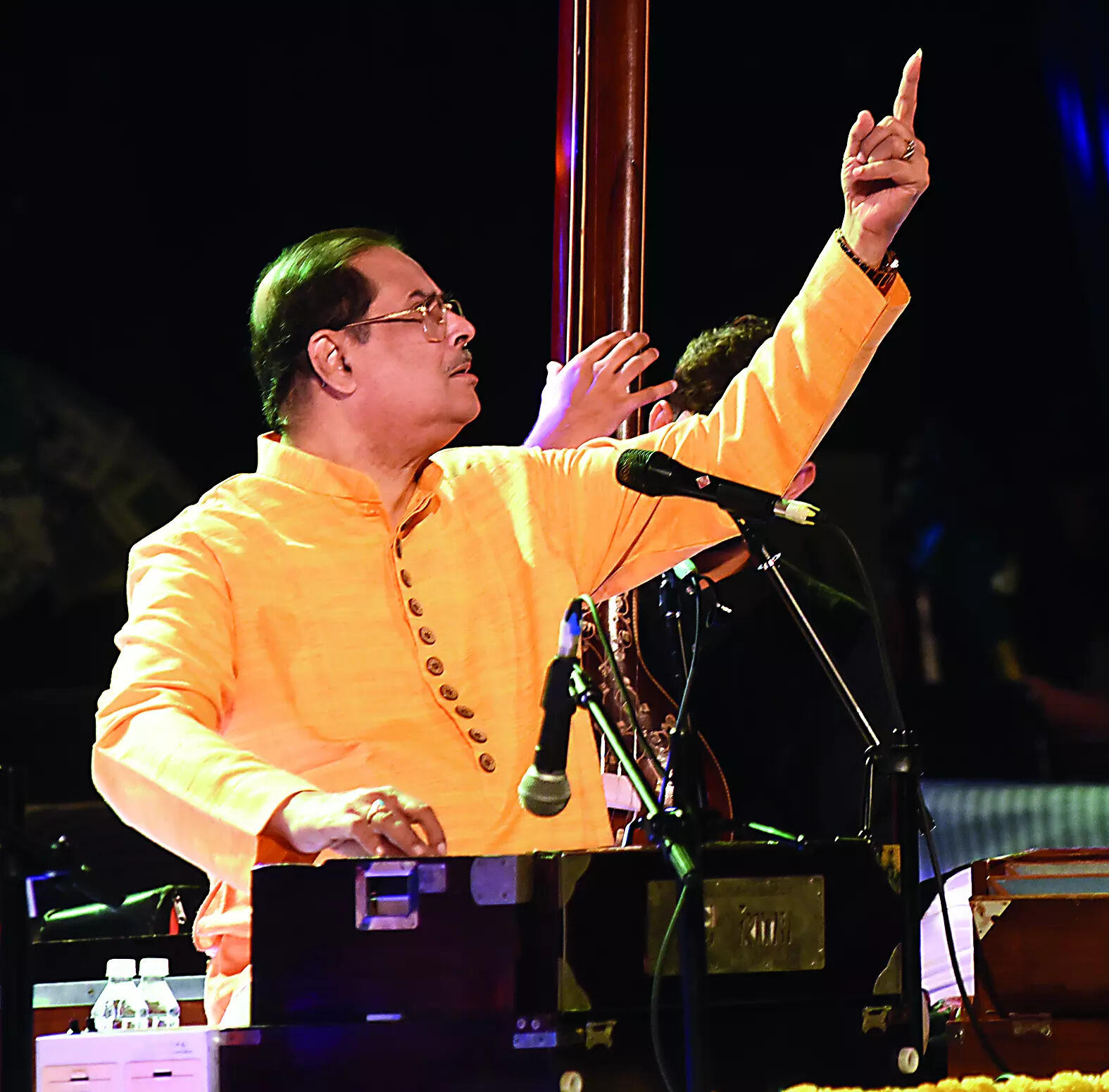
Pt Ajoy Chakrabarty performing at Swara Sandhya–Swara Sankranthi 2026
The discipline of effortFor someone who has spent nearly seven decades learning music, Chakrabarty remains disarmingly aware of how little he truly knows, often reflecting, “Music is much bigger than any ocean we know, because the deeper you dig, you realise there is so much left to know. What we know is probably just a fraction and the rest is yet to be explored.”His journey is anchored in an uncompromising discipline shaped by years of rigorous practice, where, as he says, “If I miss my riyaaz (which happens rarely), I do not eat that day.”
The rule speaks as much about devotion as about self regulation. Equally central to his philosophy is the practice of self criticism, something he consistently imparts to his students, urging them to look inward and improve through honest evaluation.
As he puts it, “Learn to criticise yourself; the more you do that, the more you understand how you can better yourself.”The art of silenceQuoting Mozart, Ajoy Chakrabarty reminds us that music is not just about notes but also about the silence between them.
“Music is very much dependent on the silence in between. When there is silence, it creates expectation, but if you keep speaking or creating continuously, that expectation is never formed.” For him, this is where Indian music reveals its depth, in its ability to shape and measure silence, to “colour” it in a way that allows emotion, meaning and anticipation to emerge as powerfully as sound itself.
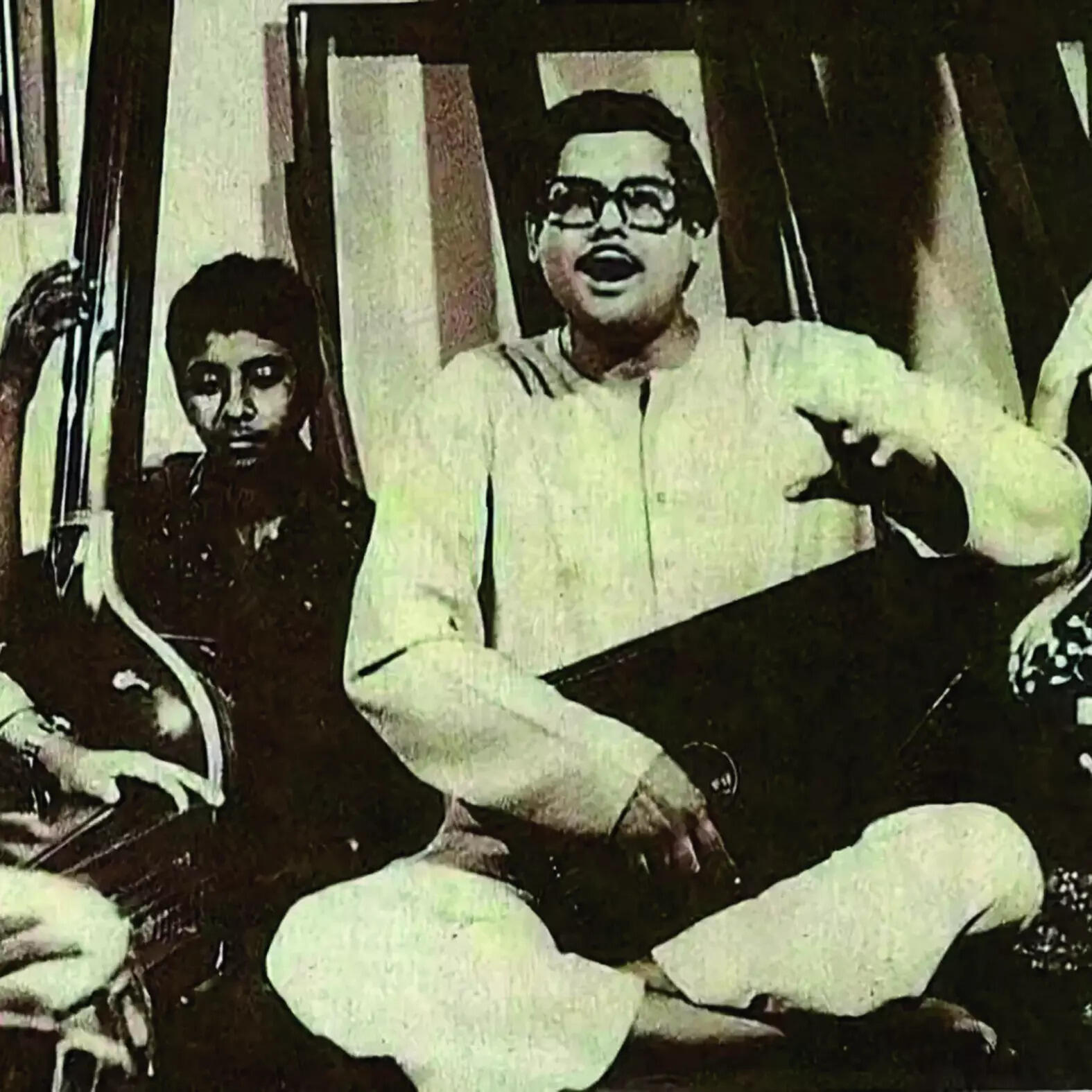
Pt Ajoy Chakrabarty and a young Ustad Rashid Khan
A personal journey shaped by struggleBorn into hardship, with his father (Ajit Chakrabarty) displaced during partition, discipline entered Chakrabarty’s life early, shaping a journey where music was never a matter of choice but a necessity forged by circumstance.
That same rigour extended into his approach to parenting, where emotion often took a backseat to discipline, and his daughter, Kaushiki Chakraborty, in his own words, was “more a student than a daughter” in her early years.
As he admits, “I was struggling then, there was no space for indulgence, my interaction with her was only through music.” Even so, he recognises her as a rare and gifted musician, placing her alongside talents like Rashid Khan, while also acknowledging the role of his wife (Chandana Chakrabarty) in shaping her foundation.
His son, Ananjan, despite early challenges with his singing voice, found his path in sound engineering, training under Daman Sood, and today contributes to the world of music through technology, extending the family’s musical legacy in his own distinct way.Music within selfTrained under Jyan Prakash Ghosh, Chakrabarty grew up with two simple lessons: knowledge must be shared and the self constantly questioned.
“In music, imagination is far greater than knowledge,” he says, adding that without it, Indian music cannot exist. He prefers the term raga music over classical music, describing it as a living form shaped by improvisation and inner exploration. “Improvisation comes from within,” he explains, drawing a parallel with Isaac Newton, noting that while apples always fell, gravity was realised only when it was observed, much like truth, which is born from within.Music as a processAt Shrutinandan, a music academy established by him in 1997, the focus is not just on teaching music but on creating a sustained process of learning. He describes the academy as “not just a school, but a process through which one can understand and learn.” Drawing from stalwarts of Indian music across genres, he has worked to distil a system for future generations. His over four-decade association with ITC Sangeet Research Academy also reflects a lifelong commitment to sustaining Indian music.There is nothing called effortless; everything comes from deep effort. What may seem simple is built on years of discipline and hard workMusic is like an ocean, holding both the smallest fish and the largest whale. Looking at the world through music makes it peaceful & beautifulThe essentialsAt the heart of his philosophy are four values, simple in articulation but increasingly rare in practice:
- Love
- Belief
- Respect
- Surrender




 English (US) ·