

 2 hours ago
5
2 hours ago
5
ARTICLE AD BOX
Last Updated:April 03, 2026, 00:37 IST
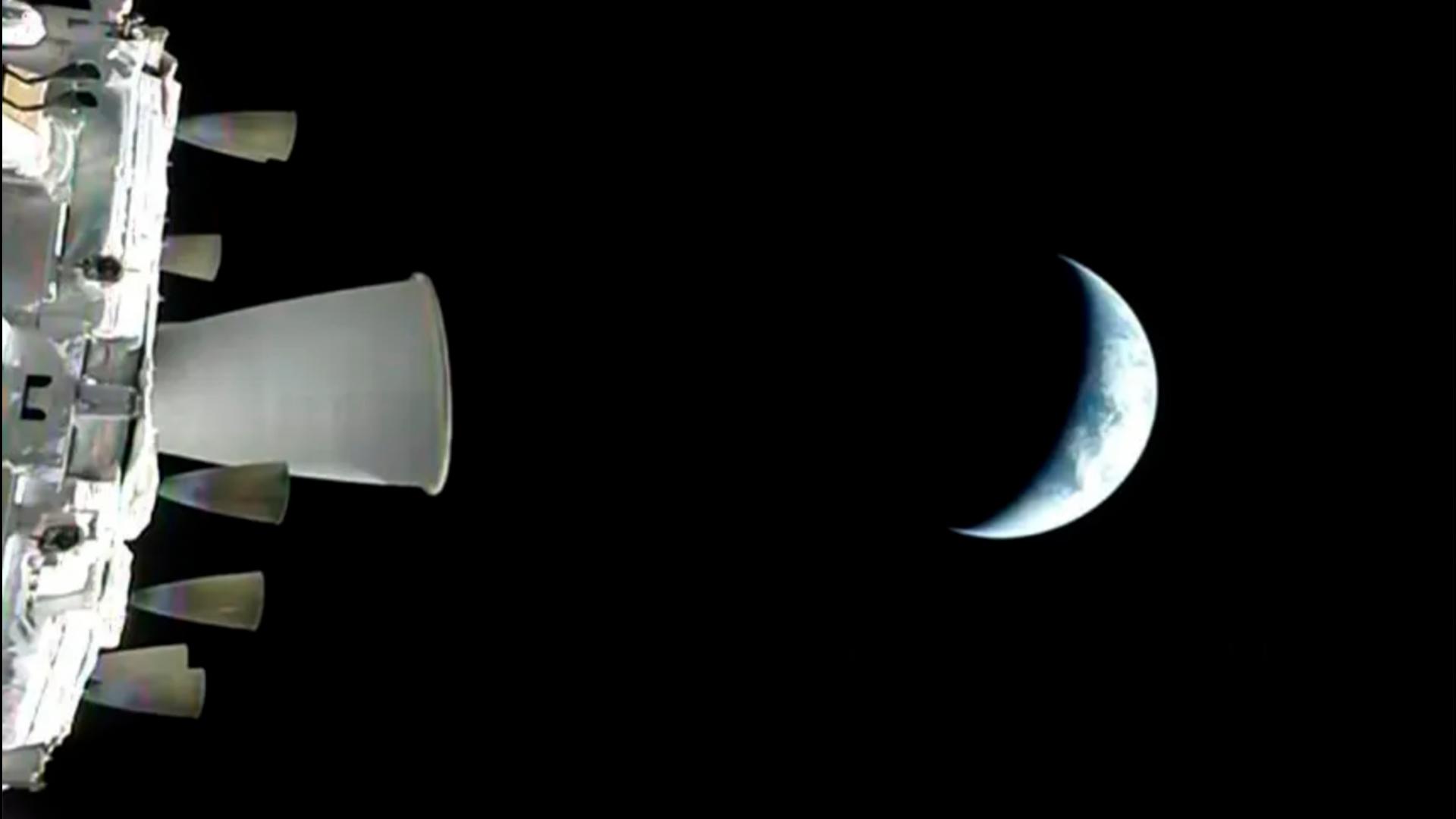
NASA Artemis II shares first Earth image from Orion after launch, four astronauts begin 10 day lunar flyby test mission that will circle the Moon without landing.


In this photo provided by NASA, a view of the Earth from NASA's Orion spacecraft as it orbits above the planet, April 2, 2026.
Following a successful blast off from Florida’s Kennedy Space Center, NASA’s Artemis II shared the first image of Earth from the Orion spacecraft.
Artemis II, humanity’s first crewed mission to the Moon’s neighbourhood since Apollo 17 in 1972, is a 10-day journey around the Moon and back. The four astronauts on the mission are NASA commander Reid Wiseman, pilot Victor Glover, mission specialist Christina Koch, and Canadian Space Agency mission specialist Jeremy Hansen.
As the crew look toward the moon, NASA shared the picture looking back at the Earth, which appears as a crescent in the black of space. The image is a screenshot from the Orion livestream, available via YouTube. It showed part of the Orion spacecraft as it travels around the Earth.
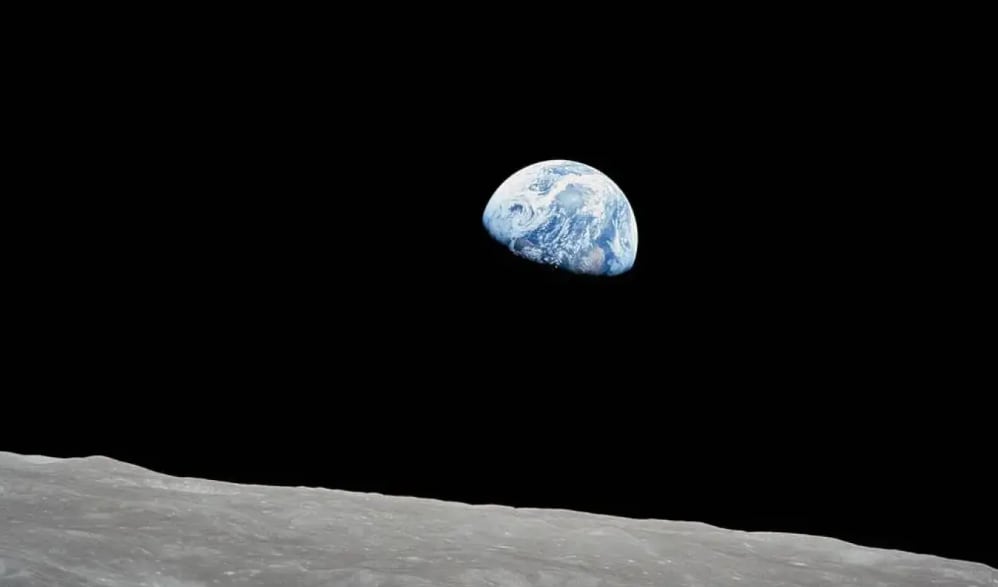
The picture called to mind another iconic NASA photograph, known as “Earthrise." Taken by Apollo 8 astronaut Bill Anders on December 24, 1968, the famous “Earthrise" photograph depicted the Earth rising above the ghostly lunar horizon.
Apollo 8 astronauts were the first to orbit the moon, and thus the first-ever humans to witness Earthrise in person.
What Exactly Will Artemis II Do?
The crew on the 10-day mission won’t land on the Moon, but will circle it, while travelling further from Earth than anyone has ever been before.
Artemis-II builds on the success of the uncrewed Artemis-I in 2022, and will demonstrate a broad range of capabilities needed for deep space missions. It will be NASA’s first mission with crew aboard the Space Launch System (SLS) rocket and the Orion spacecraft. It is structured as a crewed deep space test mission, not a landing attempt.
Once near the Moon, Orion will not enter orbit or descend. Instead, it will follow a free-return trajectory, flying around the Moon and slingshotting back toward Earth. On the closest approach, astronauts are expected to witness rarely seen regions of the lunar far side, with the Moon appearing roughly the size of a basketball held at arm’s length.
Why Won’t Artemis II Land On The Moon?
The fundamental reason is technical: the Orion spacecraft is not built to land. It is designed as a deep-space transport vehicle, not a lunar lander. It lacks the systems required for descent, landing and ascent from the Moon’s surface. As a result, even if astronauts reach lunar proximity, they have no way to physically touch down.
Orion will carry astronauts to lunar orbit in future missions, but the actual landing will be carried out using specialised spacecraft being developed separately by private partners such as SpaceX and Blue Origin.
First Published:
April 03, 2026, 00:37 IST
News world NASA’s Artemis II Shares Mesmerising Image Of Earth | See Pic
Disclaimer: Comments reflect users’ views, not News18’s. Please keep discussions respectful and constructive. Abusive, defamatory, or illegal comments will be removed. News18 may disable any comment at its discretion. By posting, you agree to our Terms of Use and Privacy Policy.
Read More









 English (US) ·