

 13 hours ago
4
13 hours ago
4
ARTICLE AD BOX
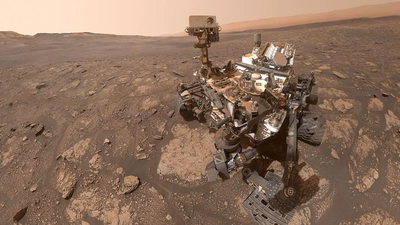
The Curiosity rover from NASA has, once again, redefined the way we perceive Mars after finding organic compounds that have not been seen before on the planet. The presence of these compounds does not indicate the existence of any forms of life that were there on the planet or may still be there now, but they do support the hypothesis that there were chemicals on Mars that could facilitate the emergence of life.
Through samples collected from the Gale Crater on Mars, it has been discovered that there were many complex organic compounds present there.
NASA’s Curiosity rover detects new organic compounds on Mars
These organic molecules were detected by the Curiosity rover, which was a part of NASA’s Mars Science Laboratory Mission. Organic molecules are molecules that contain carbon and are an essential constituent of life forms as we know them. These molecules could also be formed without any biological activity.As reported by NASA, the use of the Sample Analysis at Mars (SAM) instruments that came on board with the rover helped detect these chemicals as they were heated up from rock samples in order to extract gases. According to the NASA official report,"These findings confirm previous indications that Mars had conditions amenable to life."What makes these molecules different is the fact that they are unique molecules that have never been detected before.
Earlier, simpler forms of organic molecules had been detected on Mars; however, these new compounds make the scenario all the more interesting.
Does the presence of these organic molecules mean life on Mars
The existence of complex organic molecules makes it easier for scientists to believe that the planet was once home to living organisms. Scientists who participated in the experiment explained that millions of years ago, there could have been water on Mars. According to scientists working on the project, the discovery of organic molecules does not necessarily mean the existence of past life on Mars. As stated by NASA researchers:“Organic molecules can be made by both biological and non-biological processes, so their presence alone is not proof of life.”Their existence on such an old planet indicates that Mars could protect them from being destroyed by radiation and oxidation.
Future Mars missions and the search for life
These discoveries will undoubtedly impact future Mars missions aimed at bringing back samples for further study. Analysing the samples obtained using cutting-edge laboratory technology should help us to understand whether these organic compounds originated biologically.There are already plans underway by NASA and its international partners regarding the Mars Sample Return program.
These missions are expected to collect and analyse carefully selected samples, which might be used to finally prove the hypothesis of extraterrestrial life, perhaps the biggest question humanity faces today.These new discoveries made by the Curiosity rover supplement the data collected by other space missions, including Perseverance, which is currently exploring the crater Jezero and collecting samples.The discovery of new and previously unknown organic molecules through the Curiosity rover provides an important milestone for Mars exploration. This is not definitive proof of any extraterrestrial life forms. However, this information may provide vital clues about what conditions prevailed on Mars long ago and the possibilities of life existing there.








 English (US) ·