

 1 hour ago
5
1 hour ago
5
ARTICLE AD BOX
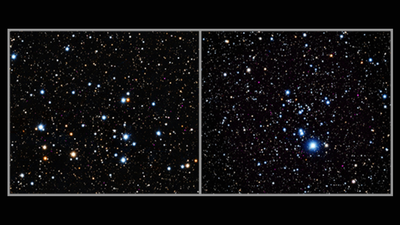
An interesting discovery has been made by NASA researchers who have noted that young stars fade much faster when it comes to their X-ray emission compared to what was initially thought.
It was long known by researchers in the field that such stars would emit X-rays for long periods of time. However, recent studies have shown otherwise, and the findings could alter the way scientists understand the evolution process of young stars. This discovery not only impacts knowledge regarding celestial bodies but also has significant importance on planetary systems and potentially life-supporting conditions around young stars.
Why young stars emit strong X-rays
Young stars are also characterised by their active nature. At the early stage of their existence, they spin fast and produce highly magnetic fields. The interaction between their magnetic field and atmosphere heats the outer layer of their atmosphere, resulting in the production of high amounts of X-rays.As reported by NASA’s Chandra X-ray Observatory, “young stars are highly magnetic compared to older stars like the Sun.” This explains their higher X-ray emission.
This type of radiation is significant in the development of the space environment around young stars.
NASA findings: X-ray emissions fade faster
Some recent research carried out with NASA X-ray observatories showed that X-rays decrease in intensity faster than previously thought. Researchers discovered that in the case of a cluster of newborn stars, the X-rays’ intensity decreased at a certain rate over time.As a result, it became clear that the decline of X-rays’ intensity occurs much sooner than was assumed by previous models. According to NASA scientists, “X-rays get fainter as a star ages on short astronomical time scales.”
Impact on planet formation and habitability
The discovery has important implications for planets forming around these stars. High levels of X-ray radiation can strip away planetary atmospheres or alter their chemistry. If the radiation fades sooner, it could change how scientists understand the development of habitable environments.NASA’s Exoplanet Exploration Programme notes that stellar radiation “can affect the atmospheres of surrounding planets and influence their potential habitability.”
A shorter period of intense radiation might allow some planets to stabilise earlier, potentially improving their chances of supporting life.
What this means for astronomy: A new perspective on young stars
This discovery demonstrates just how much there is still left to discover within the universe. While something seemingly understood by scientists, like the birth process of a star, may yield new surprises due to new technology and information.Moreover, the mission of projects like the Chandra X-Ray Observatory proves the usefulness of missions like these.
In developing further theories on how stars behave, it enables scientists to better understand stars outside our solar system, as well as understand more about the Sun's history.Thirdly, the discovery of rapid dimming of X-rays in young stars is a wonderful illustration of the endless discoveries that might still lie ahead in the universe. It makes us realise that the universe is brimming with secrets to be discovered.Future studies regarding this discovery could reveal facts about a variety of different phenomena, ranging from the evolution of star systems to the existence of life outside Earth.









 English (US) ·