

 2 hours ago
5
2 hours ago
5
ARTICLE AD BOX
3 min readRaipurMar 26, 2026 05:55 AM IST
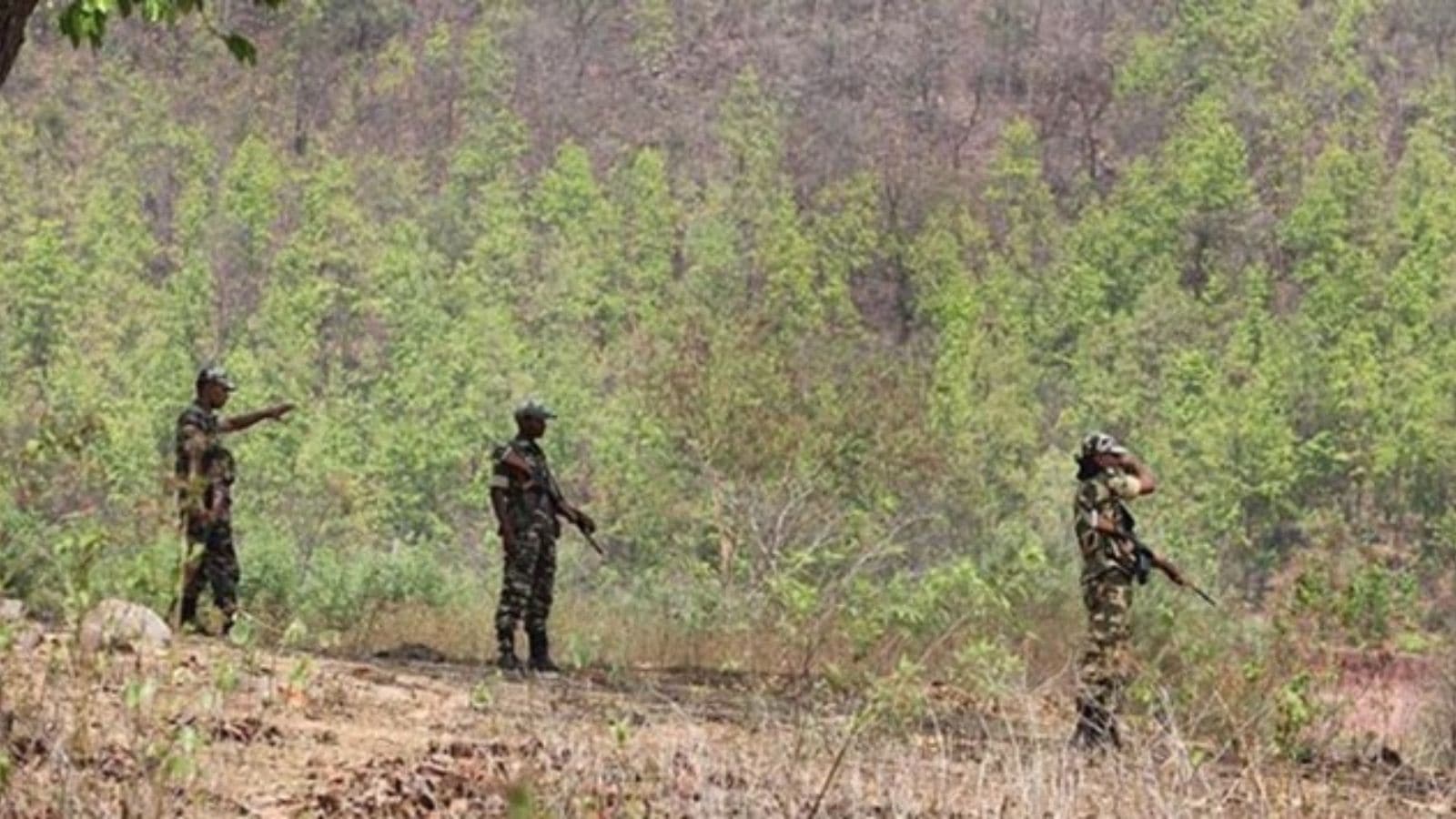 Over the last decade, security forces have set up more than 200 police camps, including Forward Base Camps, to address the security vacuum in Bastar, which comprises seven districts and is larger than Kerala.
With only 35-40 Maoist cadres left in the border areas of Chhattisgarh’s Bastar region, Home Minister Vijay Sharma said over 200 police camps set up to plug the security vacuum will be repurposed for policing, schools, hospitals and other development needs.
With a few days left for the March 31 deadline set by Union Home Minister Amit Shah to eradicate Left Wing Extremism (LWE), Sharma, along with senior police officers, addressed a press conference in Jagdalpur in Bastar district, outlining progress and the region’s future.
On the occasion, senior Maoist commander Papa Rao, among the last remaining top leaders of the insurgency, formally surrendered along with 17 other cadres. Their surrender, announced Tuesday, took place under the state government’s “Poona Margem” (from rehabilitation to social reintegration) initiative.
“They had a collective reward of Rs 87 lakh. Security forces recovered 18 weapons, including AK-47 rifles, SLRs, INSAS rifles, .303 rifles, a 9 mm pistol, a BGL launcher, and Rs 12 lakh in cash from them,” said Inspector General of Police for Bastar Range, Sundarraj P.
Asserting that Maoism was nearly “finished” in Bastar, Sharma said: “Nearly 96 per cent of Bastar’s vast geographical area is now free from Naxal influence. Today, Bastar and the entire Chhattisgarh are out of the clutches of red terror. Bastar is ready to move ahead swiftly on the path of development”.
Sharma also cautioned against misinformation, stressing that Bastar’s natural resources — ‘jal, jungle, zameen’ (water, forest, and land) — belong to local communities, particularly the youth, who must safeguard them.
Over the last decade, security forces have set up more than 200 police camps, including Forward Base Camps, to address the security vacuum in Bastar, which comprises seven districts and is larger than Kerala. Of these, over 120 came up in the past two years.
Story continues below this ad
At present, these camps also function as Integrated Development Centres, delivering government schemes and basic healthcare.
On their future, Sharma said: “In the future, these camps will function as schools, hospitals, and centres for collection and processing of minor forest produce, thereby providing local residents with improved opportunities for education, healthcare, and jobs, strengthening the foundation for sustainable development”.
The deputy chief minister said technical support from agencies such as the Indian Space Research Organisation, the National Technical Research Organisation, ITBP’s technical wing and the National Security Guard (NSG)’s Bomb Disposal Squad was crucial to the anti-Maoist campaign.
Speaking in Raipur, Chief Minister Vishnu Deo Sai termed Rao’s surrender “a significant step” towards eliminating Maoism, “in line with the vision of Prime Minister Narendra Modi and Union Home Minister Shah”.

Jayprakash S Naidu is a Principal Correspondent for The Indian Express, currently serving as the state correspondent for Chhattisgarh. With an extensive career in frontline journalism, he reports on the political, security, and humanitarian landscape of Central India. Expertise and Experience Specialized Conflict Reporting: Jayprakash is a leading voice on the Maoist/Naxalite conflict in the Bastar region. His reporting provides a critical, ground-level view of: Internal Security: Tracking high-stakes encounters, surrender programs for senior Maoist leaders, and the establishment of security camps in formerly inaccessible "heartland" villages. Tribal Rights & Displacement: Investigative reporting on the identity and land struggles of thousands of displaced tribals fleeing conflict zones for neighboring states. Governance & Bureaucratic Analysis: He consistently monitors the evolution of Chhattisgarh as it marks 25 years of statehood, covering: Electoral Politics: Analyzing the shift in power between the BJP and Congress and the impact of regional tribal movements. Public Policy: Reporting on landmark infrastructure projects (e.g., mobile connectivity in remote zones) and judicial interventions, such as High Court rulings on civil and family law. Diverse Investigative Background: Prior to his current focus on Chhattisgarh, Jayprakash held reported from Maharashtra, where he specialized in: Crisis & Disaster Management: Notable for his extensive coverage of the Cyclone Tauktae barge tragedy (P-305) and the COVID-19 pandemic’s impact on frontline personnel. Legal & Human Rights: Investigative pieces for platforms like Article-14, focusing on police accountability and custodial deaths across India. Environmental & Social Justice: Authoritative reporting on the Hasdeo Aranya forest protests and the approval of major tiger reserves, highlighting the tension between industrial mining and environmental preservation. ... Read More
Stay updated with the latest - Click here to follow us on Instagram
© The Indian Express Pvt Ltd







 English (US) ·