

 1 hour ago
4
1 hour ago
4
ARTICLE AD BOX
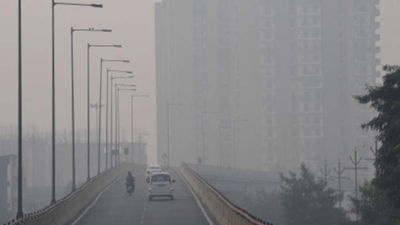
Image used for representational purpose only
GURGAON: Cities in NCR cluster dominated the 2025 pollution charts, with Loni being India’s most-polluted place last year, followed by Delhi, Ghaziabad, Noida, Greater Noida.
Loni’s annual PM2.5 average was 112.5 µg/m³ in 2025. Delhi ranked third with 99.6 µg/m³ in India, followed by Ghaziabad in fourth place at 89.2 µg/m³. New Delhi stood eighth with 82.2 µg/m³, while Noida and Greater Noida ranked ninth and 10th with 80.5 µg/m³ and 77.2 µg/m³, respectively. Gurgaon was placed 11th, with an annual average PM2.5 concentration of 74.6 µg/m³. Although this was an improvement from 87.4 µg/m³ in 2024, the city remained among India’s most-polluted urban centres, with air quality consistently far above safe limits.
Globally, New Delhi remained the most polluted capital city for the eighth consecutive year, according to the report. The city recorded an annual PM2.5 concentration of 82.2 micrograms per cubic metre, nearly 16.4 times World Health Organisation’s safe limit of five micrograms per cubic metre. India’s national ambient air quality standard for PM2.5 is 40 micrograms per cubic metre. As in previous years, the report differentiated between the city of New Delhi and the wider National Capital Territory.
On that basis, the entire Delhi was ranked the fourth most polluted city globally, after Loni in Ghaziabad (112.5), Hotan in China (109.6), and Byrnihat on the Meghalaya-Assam border (101.6). Among capital cities, Dhaka ranked second with an average annual PM2.5 concentration of 68 micrograms per cubic metre in 2025. Nationally, India saw only modest improvement, with average PM2.5 levels declining 3% from 50.6 µg/m³ in 2024 to 48.9 µg/m³ in 2025, according to IQAir World Air Quality Report. Within NCR, Gurgaon reflected wider regional pattern of severe winter spikes and brief monsoon relief. Monthly data showed PM2.5 peaking in Nov at 153.6 µg/m³ and in Dec at 147.4 µg/m³, while Jan remained critically polluted at 96.3 µg/m³. During the monsoon, pollution dropped to 25.1 µg/m³ in July before rising again from Oct. Regional character of the crisis extended beyond NCR. Across UP, PM2.5 levels rose by an average of 62% in Dec, following the same winter pollution cycle seen in Gurgaon and nearby cities.
Delhi also experienced sharp short-term surges. A dust storm in April pushed PM2.5 levels up by 15%, while Dec saw a 44% jump driven by crop residue burning, temperature inversion and stagnant winds. In Haryana, Manesar was the only other monitoring station included in the dataset. It recorded an annual PM2.5 average of 51.1 µg/m³, down from 65.4 µg/m³ in 2024, but still above permissible standards. Like Gurgaon, Manesar showed a pronounced seasonal pattern, with pollution peaking in Nov at 105.5 µg/m³ and Dec at 94.6 µg/m³ before falling to 17.2 µg/m³ in July.
This suggested exposure to the same regional pollution drivers.
“Out of 259 cities, 115 exceed even India’s lenient air quality standards, yet most of the most polluted cities remain outside National Clean Air Programme’s coverage. The focus must shift to sector-specific emission targets that address both particulate pollution and the gases that form it,” said Manoj Kumar, analyst with Centre for Research on Energy and Clean Air (CREA). The report also underlined structural gaps in India’s clean air response. Although National Clean Air Programme aims at reducing pollution levels by 40% by 2025-26, nearly 64% of its funds have gone toward road dust control. Much smaller shares were allocated to biomass burning at 15%, vehicular emissions at 13% and industrial pollution at just 1%. Experts said the policy response remains overly focused on PM10, despite the greater health risks posed by PM2.5.
Weak enforcement of emission norms, according to the report, continued dependence on coal and rapid urbanisation have further worsened the problem. Public health impact became especially visible in Nov 2025, when hazardous air quality in Delhi triggered rare public protests at India Gate as PM2.5 levels neared 460 µg/m³. Hospitals across the region reported a rise in respiratory and cardiac cases, prompting emergency measures including school closures, construction curbs and restrictions on diesel generators.
For Gurgaon, the latest data reinforced a familiar pattern. Annual averages may show slight improvement, but winter pollution continues to drive overall outcomes and blunt the effect of year-on-year gains. As part of one of the world’s most-polluted airsheds, the city remains exposed to seasonal spikes, regional emissions and policy gaps that have kept air quality hazardous year after year. “Gurgaon continues to exceed air quality standards despite being outside NCAP, showing the limits of a city-focused approach,” Kumar said. (with inputs from New Delhi)








 English (US) ·