

 1 hour ago
6
1 hour ago
6
The National Democratic Alliance romped home with all five Rajya Sabha seats in Bihar and three in Odisha while the counting for the two seats in Haryana was delayed after the BJP and the Congress filed separate complaints.
A Congress delegation met with the Election Commission in Delhi and submitted a memorandum over the matter, with Congress president Mallikarjun Kharge writing to the EC alleging attempts to interfere with the integrity of the election.
Rajya Sabha elections updates on March 16, 2026
In Odisha, the BJP secured the victory of three candidates, including Dilip Ray, a hotelier and Independent candidate it supported, while the Biju Janata Dal managed to win just one seat amid large scale cross-voting.
State BJP president Manmohan Samal, sitting BJP MP Sujeet Kumar and BJD candidate Santrupta Mishra romped home with a comfortable victories, with first preference votes from party MLAs. A fierce competition was expected between Mr. Ray and Datteswar Ray, a “common” candidate announced by BJD with support from the Congress and Communist Party of India (Marxist).
In the end, it turned out to be a one-sided fight with many Congress and BJD MLAs voting across party lines in favour of Mr. Ray, one of founding members of the BJD. As many as 11 MLAs, including eight from BJD and three from Congress, had cross-voted.
Despite lacking the requisite numerical strength in the Odisha Assembly, the Mr. Ray secured an incredible victory. He had earlier pulled off a similar win in 2002, when the BJD was at its peak of its power.
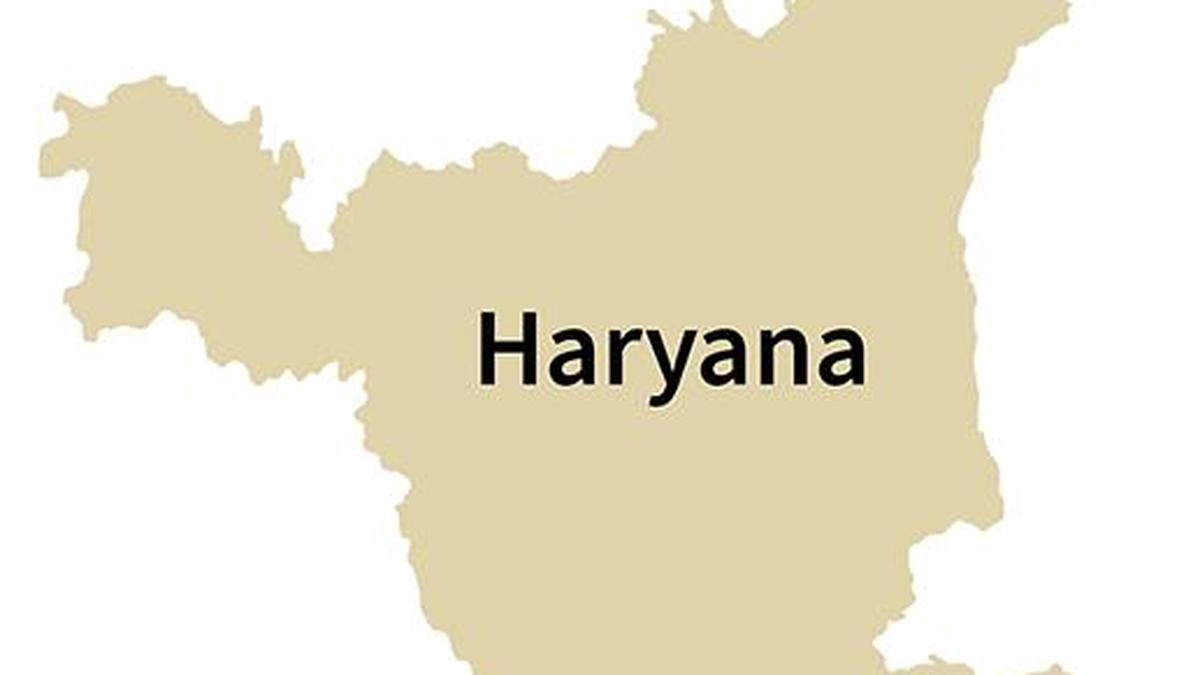
In Haryana, where two Rajya Sabha seats were up for grabs, the process got stuck at the counting stage after the BJP and the Congress filed separate complaints.
The counting was to begin at 5 p.m., but hadn’t begun at the time of filing of this report.
Congress president Mr. Kharge wrote to the Chief Election Commissioner, saying there was an attempt at interference with the election to the Rajya Sabha in Haryana.
In the letter, Mr. Kharge, said “There is a clear attempt to interfere with the integrity of the election and it must be stopped - redressed by the EC immediately. Furthermore, no disqualification of our legitimate voters - votes cast can be allowed in what is clearly a transparent attempt to taint/derail the process.”
The BJP on its part had filed a complaint about a breach of secrecy in the votes of two Congress MLAs, including Bharat Singh Beniwal, MLA from Ellenabad, and Parmvir Singh, MLA from Tohana. The Congress party registered a complaint with the returning officer about a breach of secrecy in the vote of Cabinet Minister Anil Vij.
In the 90-member Haryana Assembly, 88 MLAs cast their votes. Two MLAs of the Indian National Lok Dal (INLD), including Arjun Chautala and Aditya Devilal, stayed away from voting. With 88 votes polled, the winning quota came down to 30 votes.
For Haryana’s two vacant Rajya Sabha seats, three candidates are in the fray. The Congress party had fielded Karmavir Singh Boudh while the BJP nominated Sanjay Bhatia. The third candidate was Satish Nandal as an Independent.
The ruling BJP has 48 MLAs, the Congress has 37, the INLD has two and three legislators are Independents in the 90-member Haryana Assembly.
In Bihar, all five candidates of the NDA made it to the Rajya Sabha after four MLAs of the Opposition Mahagathbandhan did not turn up for the voting. All 202 MLAs of the NDA cast their votes, whereas only 37 MLAs from the Mahagathbandhan voted.
The five candidates who secured victory included two from the BJP -- national president Nitin Nabin and Shivesh Kumar, and two from the Janata Dal (United) -- Chief Minister Nitish Kumar and Ramnath Thakur. Rashtriya Lok Morcha (RLM) president and former Union Minister Upendra Kushwaha also secured victory.
Out of the six Congress MLAs, three skipped the voting process -- Manohar Prasad Singh (Manihari), Surendra Prasad (Valimikinagar) and Manoj Bishwas (Forbesganj). Rashtriya Janata Dal (RJD) MLA from Dhaka Assembly constituency Faisal Rahman also skipped voting.
There was a contest for the fifth seat between Mr. Shivesh Kumar and Rashtriya Janata Dal (RJD) candidate Amarendra Dhari Singh. As per the calculation, there was a requirement of 41 votes to win a seat from the NDA side and Mr. Shivesh Kumar got 38 votes whereas Mr. Singh got 37 votes.
According to the Assembly Secretariat, Mr. Nitish Kumar and Mr. Nitin Nabin each secured 44 votes whereas Mr. Thakur and Mr. Kushwaha got 42 votes each.
In the first preference round, Mr. Shivesh Kumar received 30 votes. Rajya Sabha follows a system called the Proportional Representation by means of a Single Transferable Vote (STV). In this system, instead of voting for just a single candidate, MLAs get a ballot paper with the names of all the candidates. They must then rank them in order of their preference, i.e. first choice, second choice and so on.
A candidate doesn’t need the most votes to win. They just need to reach a specific “quota”. This number is calculated based on the total number of MLAs voting and the number of seats available. If a winner gets more votes than the quota, their votes are transferred to the second preference. This is what happened when Mr. Shivesh Kumar defeated the RJD’s candidate Mr. Singh in second choice.




 English (US) ·