

 1 hour ago
2
1 hour ago
2
ARTICLE AD BOX
- News
- India
- Nearly 3,000 Indians died waiting for organs in 5 years; over 82,000 still on transplant waitlist
Data provided by the Union health ministry in Parliament shows that Maharashtra tops the organ transplant waitlist with 20,553 patients, followed by Gujarat and Tamil Nadu.
Written by Anonna Dutt New Delhi | December 11, 2025 04:08 PM IST
 3 min read
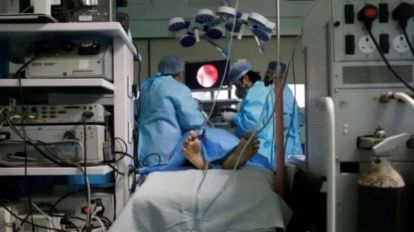 Data released by the Union health ministry in Parliament on Wednesday reveals that 2,805 people died waiting for organs between 2020-2024. Delhi tops the list with 1,425 patients followed by Maharashtra and Tamil Nadu. (Express Photo)
Nearly 3,000 Indians have died waiting for an organ transplant over the last five years, with the national capital accounting for nearly half of these deaths. Data provided by the Union health ministry in Parliament on Wednesday shows that 2,805 people died waiting for organs between 2020 and 2024. Of these, 1,425 patients were from Delhi, followed by 297 from Maharashtra, and 233 from Tamil Nadu.
Story continues below this ad
Delhi conducts the highest number of transplants in the country, but most involve organs donated by living relatives, and not those from deceased donors. This trend is evident in the longer waiting lists in states such as Maharashtra, Gujarat and Tamil Nadu, where patients receiving organs from relatives are likelier to undergo transplants sooner.
Everyone in need of an organ transplant must be registered on the central website, and they are taken off the waiting list if they secure an organ from a relative.
Story continues below this ad
At present, 82,285 patients are awaiting organ transplants across the country. This includes 60,590 patients waiting for a kidney transplant, 18,724 for a liver, 1,695 in need of a heart transplant, 970 in need of lungs, and 306 requiring a pancreas.
As per the data, 20,553 patients are awaiting transplants in Maharashtra as of December 2025. Of these, 13,045 need a kidney. Gujarat follows with 9,592 patients on the waiting list, of which 7,405 need a kidney transplant, and 2,019 a liver. Tamil Nadu ranks third, with 9,166 patients awaiting transplants, of whom 6,448 need kidneys and 2,020 a liver.
Story continues below this ad
In Delhi, 8,853 patients are on the waiting list as of December 2025, according to the data provided in Parliament. Of these, 5,894 need a kidney and 2,835 need a liver transplant.
It may take a few months to a couple of years for a person to receive an organ from a deceased donor, depending on their health, the time before they start developing complications, and other factors like their blood type, body size, etc
States set criteria
Organ allocation usually depends on criteria set by each state. For example, states such as Telangana, Maharashtra, and Gujarat have their own scoring methods. States such as West Bengal, Karnataka, Rajasthan, and Kerala allocate organs based on who was registered earlier as a recipient. Tamil Nadu, on the other hand, follows a zonal method where the entire state is divided into three zones, and organs remain within the zone. If they cannot be utilised within the zone, they are allocated in a clockwise manner. Madhya Pradesh and Chhattisgarh give priority to patients without a living donor or where a matched living donor has refused to donate in writing.
The National Organ and Tissue Transplant Organisation has now moved towards a uniform allocation process, with an expert committee earlier this year suggesting that it come up with common variables—essential and optional ones—that every state must provide at the time of registration for uniform allocation.

Anonna Dutt is a Principal Correspondent who writes primarily on health at the Indian Express. She reports on myriad topics ranging from the growing burden of non-communicable diseases such as diabetes and hypertension to the problems with pervasive infectious conditions. She reported on the government’s management of the Covid-19 pandemic and closely followed the vaccination programme. Her stories have resulted in the city government investing in high-end tests for the poor and acknowledging errors in their official reports. Dutt also takes a keen interest in the country’s space programme and has written on key missions like Chandrayaan 2 and 3, Aditya L1, and Gaganyaan. She was among the first batch of eleven media fellows with RBM Partnership to End Malaria. She was also selected to participate in the short-term programme on early childhood reporting at Columbia University’s Dart Centre. Dutt has a Bachelor’s Degree from the Symbiosis Institute of Media and Communication, Pune and a PG Diploma from the Asian College of Journalism, Chennai. She started her reporting career with the Hindustan Times. When not at work, she tries to appease the Duolingo owl with her French skills and sometimes takes to the dance floor. ... Read More
Stay updated with the latest - Click here to follow us on Instagram
© The Indian Express Pvt Ltd





 English (US) ·