

 1 hour ago
5
1 hour ago
5
ARTICLE AD BOX
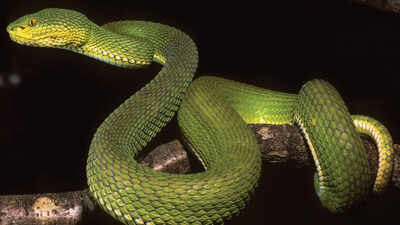
Scientists have recently described a new snake from Myanmar that’s turning the usual idea of how we identify species on its head. It is called the Ayeyarwady pit viper; this snake first stood out because members of the species don’t all look the same.
Some individuals resemble familiar pit vipers, while others look completely different, which made it hard for researchers to figure out what they were dealing with at first.In the study “A new species of pit-viper from the Ayeyarwady and Yangon regions in Myanmar”, published in the journal ZooKeys, scientists initially thought they were seeing signs of hybridisation between known species. However, genetic analysis revealed that all these different-looking snakes were actually one distinct species.
It illustrates the limitations of simply looking at an organism’s appearance when it comes to determining its true identity. It is possible that biodiversity in less explored regions, such as parts of Myanmar, could be more diverse than previously thought.
Ayeyarwady pit viper discovery in Myanmar and its unusual appearance
Central Myanmar is known to be home to many species of pit vipers, and the discovery of a new species there was notable due to the wide range of morphologies exhibited by individuals of that species.
Some examples had a bright green colouration with no other markings, while others exhibited far darker patterns or blotches along their bodies. Because individuals of this species look so different from each other, researchers struggled to classify it using the usual methods. Normally, they depend on consistent physical traits to identify a species, but here those traits were too unreliable.As a result, researchers sought to utilise additional sophisticated identification techniques in order to gain a proper understanding of the species.
Why does this snake species look like multiple species at once
While proceeding along with their studies, scientists saw that the snakes' forms were often influenced by where they lived. In specific areas, the snakes might look similar to a specific known species, but in other areas, they might look like another type of snake entirely.Such variability is atypical and will create difficulty when attempting to identify the snakes. The diversity in appearance may be influenced by factors such as habitat, genetic lineage or previous interactions between two different snake types. As a result, the Ayeyarwady pit viper case is a unique example of how one species can exist in different forms and not lose their identity as a single species.
Genetic research confirms the snake is a separate species
To resolve this problem, researchers decided to perform genetic testing. Previous studies have shown that these snakes were from a different evolutionary lineage. The results of the recent study showed that these snakes were not the result of mating between different species but were an entirely different species.It is thought that there could be past interbreeding among related species for the physical differences among them. However, genetics helped differentiate this particular snake from others, thus highlighting the significance of DNA testing in modern taxonomy.
What this discovery means for evolution and biodiversity
The recent discovery of the Ayeyarwady pit viper demonstrates the intricacies associated with the processes of evolution and species classification. This discovery proves that species delineation does not have clear-cut lines, and the mere use of morphological characteristics cannot always help us identify a species correctly.Moreover, this discovery underscores the importance of further exploration and scientific research of poorly researched territories. The more new species we discover and examine, the more complex we may find biodiversity.









 English (US) ·