

 1 day ago
8
1 day ago
8
ARTICLE AD BOX
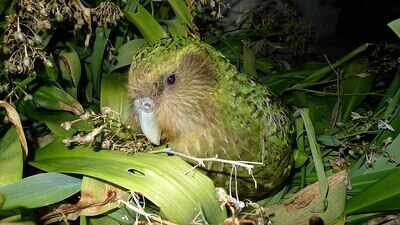
Image of a kākāpō. Image Credit: Wikimedia Commons
Unlike other endangered species whose survival depends on habitat preservation or broader landscape-level risk reduction, the conservation of the kākāpō revolves around individual birds.
This is one of the most closely watched and intensively managed endangered species in the world.This critically endangered bird, Strigops habroptilus, is found only in New Zealand and is the world’s only flightless parrot. It is also the world’s largest parrot and is nocturnal. It is a long-lived bird that can live for several decades. Yet the species was driven to the brink of extinction after introduced animals such as cats, stoats and rats arrived in its habitat.Today, all surviving kākāpō have been transferred to protected, predator-free islands. They all have transmitters attached, either radio or GPS, and are constantly monitored, especially during breeding season.A bird that was never meant to survive predatorsKākāpō evolved independently in New Zealand’s forests for millions of years and had never been preyed upon by a land mammal. This led the bird to lose the ability to fly and rely on camouflage and stillness when threatened.
This became harmful once humans introduced predators such as cats, stoats, rats, and possums, which hunted kākāpō at every life stage.As stated by New Zealand’s Department of Conservation (DOC), by the end of the twentieth century, the species had almost gone extinct on the mainland, with only a small number of survivors left in isolated areas. Eventually, conservationists decided to move all remaining kākāpō to islands where introduced predators had been eradicated.All kākāpō alive today are individually cared forUnlike most wildlife restoration projects, kākāpō recovery focuses on individual birds rather than the population as a whole.According to a landmark review available through ResearchGate, all living kākāpō have been moved to predator-free islands away from their native habitat. Each individual kākāpō wears a radio transmitter, allowing conservationists to locate the bird, assess its health and carry out regular checks.
The review describes the project as one of the most intensive single-species conservation efforts ever undertaken for any bird.The abstract adds that only 34 males and 22 females were alive at the time, spread across several offshore islands, and that breeding happens naturally only once every two to five years. It also notes that females lay up to three eggs, incubate for about 30 days, and feed the chicks for three months after hatching.
In fact, over time, the programme has become increasingly complex. As reported by the Department of Conservation Kākāpō Recovery Programme, each individual bird now has its own unique identification and full medical history recorded along with genetic data.
In breeding seasons, nests are continuously monitored through cameras and electronic devices; eggs and chicks are provided with veterinary attention whenever needed.
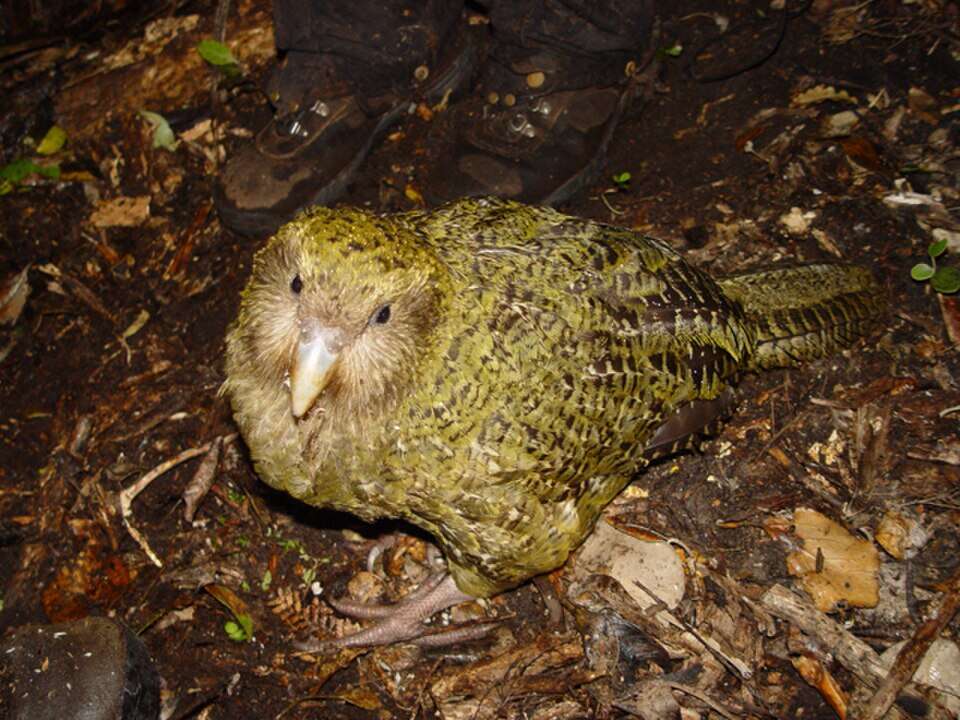
Pura, a 1-year-old Kakapo (Strigops habroptila. Image Credit: Wikimedia Commons
Breeding takes time; hence, it is hard to restoreRestoration of the kākāpō is not an easy task due to the slow reproduction process of the species.According to a study published in the journal Notornis, kākāpō breeding is closely tied to mast fruiting of native trees, especially rimu, with breeding attempts usually occurring every three or four years. Females raise their chicks alone over several months. Male kākāpō do not care for the offspring; instead, they gather at traditional display sites called leks and make deep booming calls that can be heard several kilometres away to attract females.Because natural breeding opportunities are rare, conservationists closely monitor every breeding attempt. Eggs can be artificially incubated if needed; chicks are often weighed and monitored, and intervention is provided when survival is threatened.Decades of conservation efforts are finally paying offThe species has recovered substantially from the brink of extinction.The kakapo has recovered due to predator-free islands, intensive nesting management, supplemental feeding, surveillance, and genetic management, according to the Department of Conservation.
The kākāpō population has increased significantly since the 1990s.Scientists are also using genome studies to help breed the birds successfully while preserving their limited genetic diversity. According to a study published in Nature Ecology & Evolution, genome sequencing of almost the entire living kākāpō population has provided conservationists with tools to guide breeding decisions, monitor genetic diversity, identify birds at greater risk of disease and support long-term recovery planning.An unusual story of conservationFew species are watched and cared for so closely. Each kākāpō gets a name. Each breeding cycle is meticulously organised. Every egg and every chick is essential for the survival of the species in the future. This is far from being an entirely successful recovery. The bird has to rely on human help because it cannot safely return to the habitat on the mainland, where alien predators are abundant.However, the kākāpō has become a notable conservation success story, showing the results of long-term cooperation between governments, scientists, Indigenous communities and conservation organizations. Although its survival remains fragile, the species has become an inspiring example of conservation thanks to sustained human effort.









 English (US) ·