

 8 hours ago
5
8 hours ago
5
ARTICLE AD BOX
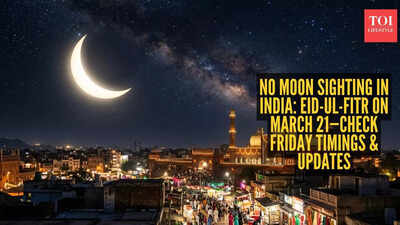
India will celebrate Eid-ul-Fitr on Saturday, March 21, 2026, after the Shawwal moon was not sighted on Thursday evening. This means a full 30-day Ramadan cycle will be observed, with Friday being the final fast. While some countries celebrate earlier, India adheres to local moon sightings, aligning with neighboring nations for a Saturday festivity.
The long-anticipated wait for the crescent moon has come to a quiet end across India, and the verdict is in: we have one more day of reflection before the festivities begin. After a suspenseful Thursday evening where telescopes and eyes were trained on the western horizon, religious authorities have officially confirmed that the Shawwal moon remained hidden.This means that for millions of Muslims across the country, Saturday, March 21, 2026, will be the official day of Eid-ul-Fitr. While some parts of the world are preparing to celebrate tomorrow, India will be completing a full 30-day cycle of Ramadan, observing the final fast this Friday.
The Official Word from the Clerics
The announcement came through late Thursday evening as moon-sighting committees from various cities reported back. Maulana Khalid Rasheed Farangi Mahli, Chairman of the Islamic Centre of India, confirmed the news from Lucknow.
"Since the moon was not sighted in Lucknow or anywhere else in India today, March 19, we will observe our 30th Roza tomorrow," he stated. "Eid-ul-Fitr will be celebrated on Saturday, March 21, with the main Namaz at 10 AM at the Lucknow Eidgah, where we will pray for peace across the nation and the world."
In the capital, the Naib Imam of Jama Masjid, Syed Usama Shaban Bukhari, echoed this sentiment, formally announcing to the gathered crowds and the media that the month of Shawwal-ul-Mukarram had not yet begun.
A Tale of Two Eids: Why India and Saudi Differ
It’s a common question every year: why is the date different? While Saudi Arabia, the UAE, and several Middle Eastern nations are set to celebrate on Friday, March 20, India stays true to its tradition of local sightings. Because the moon wasn't spotted in the Kingdom on Wednesday, they hit their 30-day mark a day earlier than us.India, along with neighbors like Pakistan, Bangladesh, and Sri Lanka, as well as Southeast Asian nations like Indonesia, Malaysia, and Singapore, are all now aligned for a Saturday celebration.
The Final Countdown: City-Wise Observation Windows
Even though the official word is out, many spent the evening checking the skies during the peak visibility windows. Here is how the sunset timings played out across major hubs:Kolkata: Sunset was at 5:50 PM, with the best viewing window ending by 6:10 PM.Chennai & Bengaluru: Windows closed around 6:35 PM and 6:45 PM, respectively.Delhi & Hyderabad: Both saw sunset around 6:30 PM, with observers scanning until 6:50 PM.Mumbai: The last to check, with the window stretching until 7:05 PM.
What to Expect on "Meethi Eid"
With the date now set for Saturday, the "Chand Raat" energy - that frantic, joyful Eve of Eid - will likely peak on Friday night. Markets from Chandni Chowk to Mohammed Ali Road are expected to be packed as families finish their last-minute shopping for new clothes and essentials for the traditional feast.Known affectionately as Meethi Eid, the day will be defined by special congregational prayers, the obligatory charity known as Zakat al-Fitr, and, of course, bowls of Sheer Khurma. While the mood in parts of West Asia remains subdued due to ongoing regional conflicts, the spirit of the festival remains one of community, gratitude, and a collective prayer for a better tomorrow.






 English (US) ·