

 1 hour ago
7
1 hour ago
7
ARTICLE AD BOX
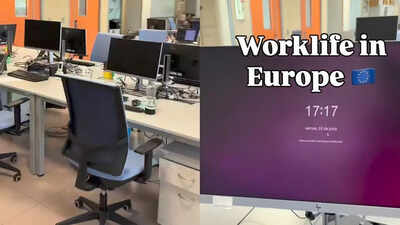
A video shared by an Indian woman living in Italy has rekindled the debate related to the work-life balance and other questions related to productivity, professionalism, and work organization in different countries.
In particular, in her Instagram reel called "Worklife in Europe," she shares how surprised she was to see almost an empty office at 5:15 pm. Her observation shows that all the people in her office had left for home after completing their daily routine and workday. Consequently, many users started comparing Indian work culture to the one observed in Europe and wondering what makes employees productive.
Empty workplace: The cause of the discussion
In the video, the user from India describes how impressed she was to see such an office at that time of day.
In particular, she says that the space was almost empty even though there were supposed to be some people still working. In addition, she states that it is difficult to imagine employees leaving their offices at such time because professionals in many Indian offices continue working till late evening.
Importance of maintaining balance between work and personal life
One of the ideas that could be seen from the video concerns the necessity of establishing a good balance between professional and personal activities and the need to ensure it.
In most cases, employees in Europe are encouraged to leave work at the appointed hour in order to go back home and spend their evenings resting, exercising, pursuing their hobbies, etc. Such an attitude contributes to the fact that personal life becomes a crucial part of people's lives in addition to work.
Differences between working practices in Europe and India
Another idea that can be noticed from the video concerns differences between work cultures existing in Europe and India.
The fact that people in Europe start leaving offices earlier and do not have to participate in any additional meetings and events outside working hours contrasts with those seen in India. In fact, Indian employees usually continue their work till late evening and cannot spend much time on other activities except their jobs.
Netizens commented:
"You didn't show us when people will come to the office, how they will work without any breaks in office hours.""Please take me there. I had denied working on weekends, and from then I feel under a microscope."
Reaction of users who watched the clip
Many people liked the idea shared by the author of the clip and commented on it, highlighting the necessity of considering their needs, which include having enough time to do some things apart from going to work. However, the majority admitted that such conditions can hardly be found in India and that they could not help wishing to have the same work schedule.
Can extended time spent at work improve productivity?
At this point, the question of whether the long-term presence in the workplace is associated with better performance arises. Indeed, users mentioned that many European workplaces focus not on long working hours but efficient use of the time when being there. Therefore, they concluded that efficiency and output should be considered more important than a prolonged stay in the office.
The main reason for popularity of the viral video
The reasons for the popularity of the video include the growing necessity for professionals to have a proper work-life balance.
In particular, burnout, stress, and problems related to the ability to communicate and interact with family members due to the absence of time could be highlighted. Consequently, videos showing the existence of an opposite work environment attract considerable attention.
Why is the debate important and relevant for many people?
In spite of the fact that the video describes the situation in a certain European office, it encourages many individuals to think about the existing work cultures, practices, and attitudes and question them. Even though experts point to the fact that work environment depends not only on the country where it takes place but on the industry and company as well; people start reconsidering approaches to work and success.








 English (US) ·