

 1 hour ago
3
1 hour ago
3
ARTICLE AD BOX

The journey to the highest international podiums rarely begins with favourable conditions. For many of India's most celebrated athletes, the path to greatness started in remote villages, driven by quiet determination and an unwavering belief in their own potential.
This inspiring reality took centre stage following the conclusion of the landmark Meghalaya Sports Conclave 2026 in Shillong, where the unspoken struggles and psychological triumphs of elite sport became a powerful lesson for the state's burgeoning athletic community.With Meghalaya hosting a massive youth demographic, where half of its residents are under the age of 20, the event served as a critical baseline for empowerment.
Ever since launching its flagship STAR programme in 2023, the state has been systematically identifying and nurturing talent, all while building high-performance facilities ahead of the 39th National Games in 2027. Against the backdrop of this ongoing development, sporting icons converged to deliver a masterclass in resilience.
They mapped out the precise intersection of mental fortitude, technical discipline, and institutional opportunity.Mastering the mental game of elite sportFresh from historic achievements on the global stage, shooter Manu Bhaker reframed the conventional understanding of athletic success. For Bhaker, elite performance is not a static destination but a fluid, lifelong negotiation with one's environment."The one constant in this world is change," Bhaker observed, reflecting on her evolution ahead of the Los Angeles Games in 2028. "Everything changes, circumstances, performances, situations. What remains constant is my love for the sport and my commitment to improve every day."

Speaking with striking candour about the vulnerabilities that persist at the highest levels of international competition, she debunked the myth that elite athletes are immune to pressure. "Positive self-talk is important. Being practical on the field is important," she explained. "Experience teaches you how to regulate emotions. Every competition becomes a learning opportunity."Crucially, Bhaker connected her elite experiences directly to the young demographic filling the auditorium, deliberately stripping away the aura of exclusivity that often surrounds global sporting success. "I am a small-town girl. In fact, I am a village girl," she stated, urging aspiring regional talent to look past institutional disadvantages. "Some people may have more opportunities than you, but what truly matters is the effort, energy and dedication you put into your dreams. If I can do it, so can you."Rewriting the boundaries of perceived limitationIf Bhaker outlined the philosophy of emotional regulation, World Para Archery Champion Sheetal Devi embodied the absolute refusal to accept external limitations. Born in a remote village in Jammu and Kashmir and introducing herself to competitive sports only a few years ago, Devi has rapidly transformed into one of the most culturally significant figures in modern Indian athletics.When asked about the mental and physical preparation required to execute her unique, world-conquering shooting technique, Devi’s approach was grounded in an uncomplicated commitment to the present moment. "Whether I am training on the ground or competing internationally, I always tell myself one thing, I have to give my best," she stated.
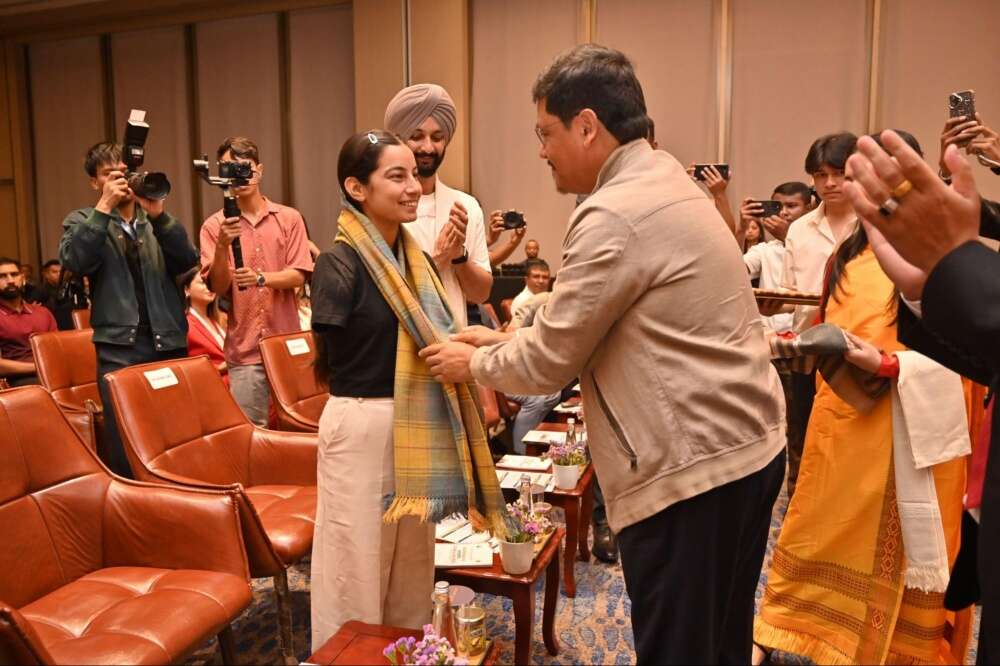
Devi noted a stark contrast between her own upbringing and the sports-centric evolution currently sweeping through the northeast. "In my village, sports was not even part of our lives," she recalled. "People only spoke about studies. Today, things are changing. Parents are encouraging children to study and play."Looking ahead to her own upcoming campaign in Los Angeles, Devi revealed that her strategy relies entirely on incremental progress rather than the anxiety of distant goals. "My targets are always small. I focus on the next tournament, the next competition, the next challenge.
If I do my best at each step, the bigger goals will follow."Her final directive to the youth of Meghalaya served as a powerful challenge to the sceptics who frequently doubt grassroots potential. "When I started, many people told me I could not do it," Devi shared. "But there were also people who believed in me. Do not accept it when someone says you cannot do something. We can do anything. There is no shortage in anyone, only the need for hard work."The final arrow and the evolution of systemsExpanding on the technical requirements of archery, Paralympic gold medallist and World No. 1 Harvinder Singh provided an analytical look into the psychological stamina required to sustain success at the absolute peak of international sport. Singh described a discipline where total synchronicity between mind and muscle is mandatory, revealing that his competitive edge is forged long before he steps onto the shooting line."It is a sport where both body and mind must work together perfectly," Singh explained. "Until the last arrow is released, the match is not over. One moment of distraction can change everything. You must stay in the moment. You must stay in the match."
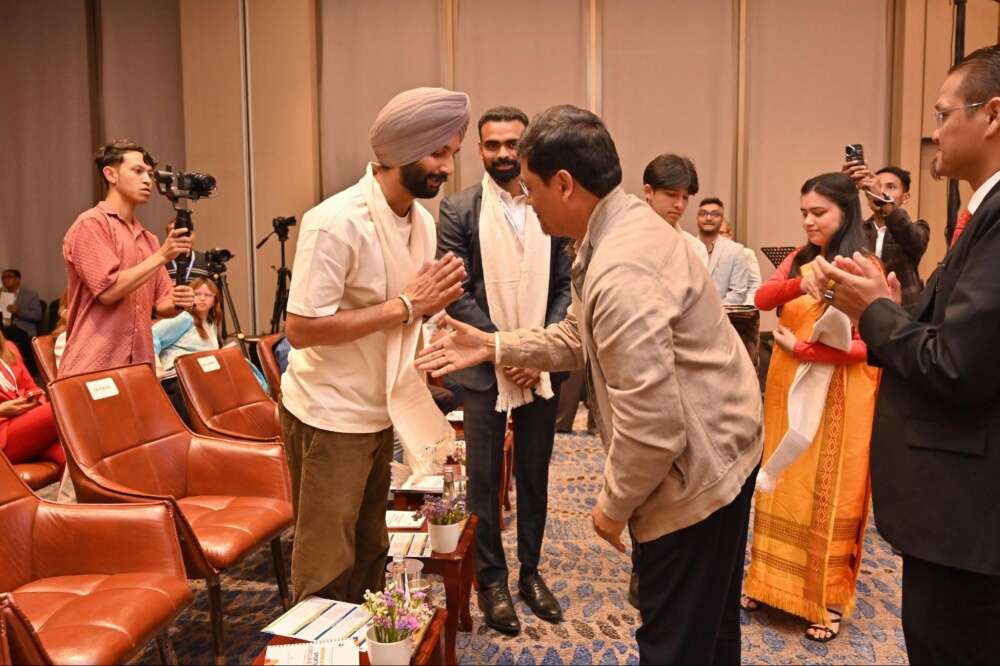
Singh's career has directly paralleled a dramatic, structural shift in India’s sporting infrastructure. Reflecting on his beginnings in 2012, when fewer than fifty para archers competed nationally, he credited the current explosion of medals to the systemic support structures now being mirrored by states like Meghalaya. "The growth has been remarkable," he noted, citing the collaborative efforts of the Sports Authority of India, sports federations, and private foundations.
"More athletes are competing, more medals are being won, and more opportunities are being created."Turning his attention directly to the regional audience, particularly youth with disabilities who remain isolated from athletic pathways, Singh delivered an unvarnished invitation to action. "My invitation is simple, come to the ground," he urged, emphasising that sport yields benefits that transcend traditional metrics of victory. "There are many Paralympic medallists today who once spent their lives confined to their homes. Sports changed everything for them. It creates confidence, opportunities, social connections and a sense of purpose. Come to the ground. Give sport a chance. It can change your life."A holistic vision for the complete athleteThese individual insights culminated in the day's most anticipated segment, a comprehensive panel discussion titled "Holistic athlete development for a sustainable sporting future".Moderated by host Yankee, the session brought Bhaker, Devi, and Singh together on stage alongside Olympic hockey legend PR Sreejesh, sprint icon Hima Das, and Chief Secretary Shakil P Ahammed. Adding crucial administrative context to the discussion, Chief Secretary Ahammed highlighted the state government's commitment to building a support structure that views athletes as complete individuals. Guided by this vision, the dialogue shifted the focus away from mere podium finishes to the complete athlete lifecycle, actively exploring the critical roles of education, mental health, life skills, and the broader social influence of athletes within their communities.
Together, this collective of sporting heavyweights and policymakers emphasised that true athletic success extends far beyond physical training, requiring a sustainable ecosystem that nurtures the individual just as much as the competitor.
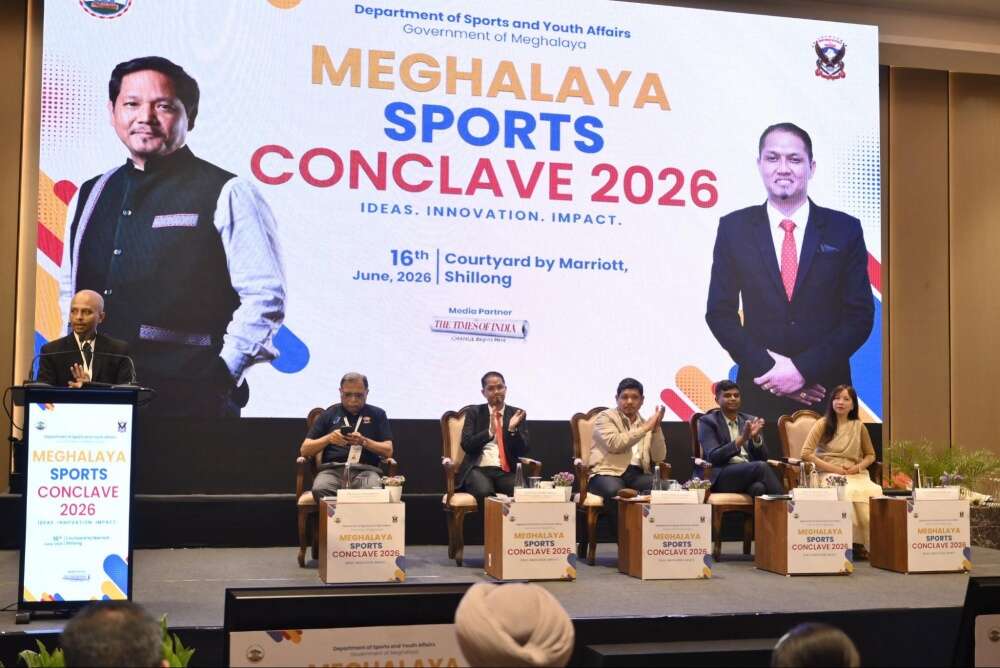
While their sporting disciplines, personal geographies, and competitive pathways differ fundamentally, the collective testimony of these champions converged on a singular, undeniable truth that while raw talent is entirely universal, the manifestation of that talent requires an equal measure of internal belief and external infrastructure.For the young athletes of Meghalaya stepping into high-performance pathways under the state's ongoing sports revolution, the conclave provided the ultimate psychological toolkit. The overarching message echoing through Shillong was clear.Greatness is never a consequence of geographical privilege or accidental circumstance. By mastering the mental game, breaking down monumental ambitions into small targets, and remaining resilient through inevitable failures, local youth can comfortably look toward the 2027 National Games and beyond. Champions are not defined by where their journey begins, but by the relentless discipline that carries them forward.Disclaimer: This article has been produced on behalf of Meghalaya Sports Conclave by Times Internet’s Spotlight team.







 English (US) ·