

 1 week ago
13
1 week ago
13
ARTICLE AD BOX
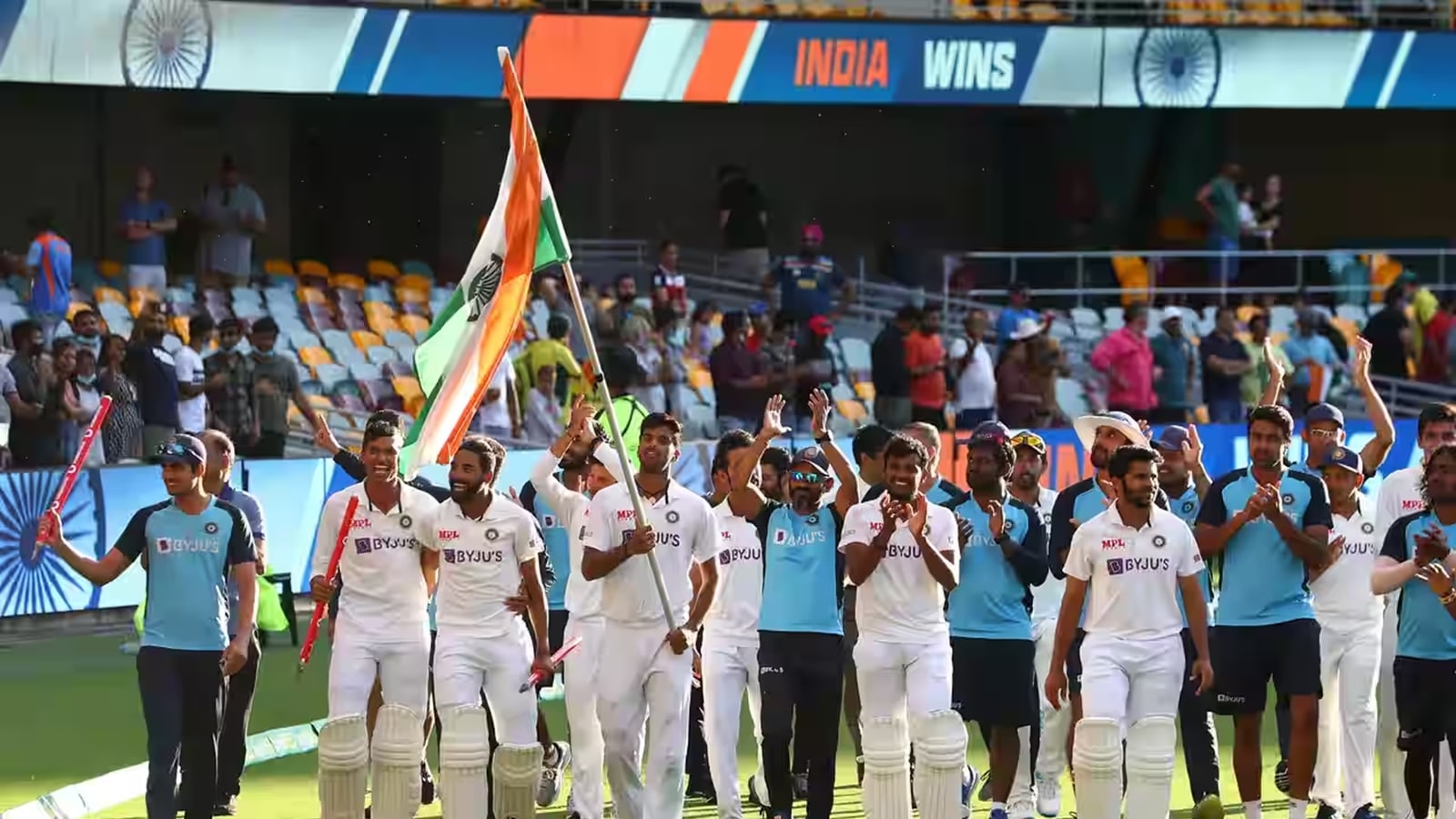 India won the series despite losing several senior players over the course of the tour and Australia largely possessing a full strength squad. (BCCI Photo)
India’s series win against Australia in 2018/19 was seen by many as one of the most significant moments in the team’s Test history. However, there is a good chance that Indian fans might not even place that among the favourite memories of seeing their side play Test cricket in Australia. That position might be taken by what India went and did in their subsequent tour Down Under, all of which culminated in Rishabh Pant etching his name permanently in the fond memories of cricket fans from his country and India confirming a second consecutive series win in the country by becoming the first team to beat Australia at the Gabba since Viv Richards’s world-beating West Indies side of 1988.
Then 2018/19 series may have been the first time that an Asian team had beaten Australia in a Test series played at the latter’s home. At the same time, there were some murmurs of the fact that this was an Australian side still recovering from 2018 ball tampering scandal and without Steve Smith and David Warner. Well, India went and did again in their next tour in 2020/21, this time with Australia mostly boasting a full strength for the entire tour and the visitors, on the other hand, losing their stars to injuries and other reasons as the tour went along.
Coming back from 36 all-out
The first to go was the captain himself. Virat Kohli had to go back home for the birth of his second child. While he rightly deserved no blame for that, there were already obituaries being written about India’s chances in that series due to how they had lost that first Test (36 all out and all that). However, that turned out to be the only Test they lost all series and they came into the fourth and final Test at the Gabba with the series level at 1-1.
Australia had won the toss and chose to bat first. Marnus Labuschagne’s 108 helped them put up a total of 369. India looked set to concede a huge lead after being reduced to 186/6 but then came a 123-run partnershop between debutant Washington Sundar and Shardul Thakur for the seventh wicket, which helped them get to within 33 runs of Australia’s first innings total.
Mohammed Siraj, playing just his third Test and yet thrust into the role of the lead bowler with all the rest of India’s senior pacers injured, burst through the Australian middle order, with his victims including Labuschagne and Steve Smith and finished with figures of 5/73, while Thakur followed up his half-century with a four-wicket haul. India were left with a target of 328.
From Gill to Pant with Pujara in between
Day 5 on January 19 began with India’s scoring standing at 4/0 in 1.5 overs, with debutant Shubman Gill out there with Rohit Sharma. While Rohit departed soon, Gill formed a partnership of contrasts with Cheteshwar Pujara. The pair put up 114 runs between them, in which Pujara absorbed 123 deliveries with his bat and body to score 26 and Gill scored 80 in 117. Gill fell nine runs short of a century on Test debut with India still nearly 200 runs away from the target. The wickets of captain Ajinkya Rahane followed after which came Pant, who would end up becoming the protagonist of the chase.
At no point did Pant seem in the mood to grind out a draw. At the same time, though, his was a calculated assault. He saw Rahane and Mayank Agarwal depart at the other end but kept the runs flowing at his. A 53-run stand for the sixth wicket with Washington Sundar which came in just 55 balls all but sealed the deal for India. While Sundar and Thakur fell at the other end, Pant kept India on the track. Finally, he smashed Josh Hazlewood’s last ball of the 97th over to the long-off boundary for four and those were the winning runs. They had beaten an Australian side that was filled to the brim with experience with a bowling lineup that had played a combined eight Tests.



 English (US) ·