

 1 day ago
4
1 day ago
4
ARTICLE AD BOX
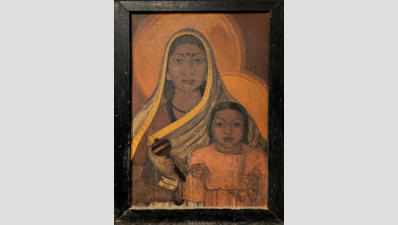
Porvorim: For the first time, the works of one of India’s greatest modernists, Angelo da Fonseca, will be placed on permanent display in his home state. At the Xavier Centre of Historical Research (XCHR) — the custodian of Fonseca’s artistic patrimony — his art will form a significant portion of a new museum that promises to drive more interest in the long-departed master who, in life, had a fraught relationship with Goa.The museum, which opens this Saturday evening at the XCHR premises in Porvorim, currently has around 60 Fonseca artworks on display, a fraction of the hundreds in XCHR’s possession. However, while the Fonseca gallery is a substantial portion of the museum, he isn’t the only artist on display. Also present are works by the Goan polymath Jose Pereira, the French artist and nun Sr Genevieve, and other works of mainly Christian art, several centuries old, many of which will be displayed publicly for the first time.“Fonseca can only be understood in the context of Christian art of previous centuries,” said Fr Delio Mendonca, who heads XCHR’s art projects. An international authority on Christian art, Mendonca was, until recently, extraordinary professor of history and cultural heritage of the Church at the Pontifical Gregorian University in Rome, which is one of the Catholic Church’s most prestigious centres of learning.
Fonseca was born in 1902 in St Estevam, and later moved to Bombay to study medicine. But he soon dropped out and moved to the Sir JJ School of Art, which he also left to eventually move to Shantiniketan in West Bengal “to be a shisya of the best Indian artist in the twenties of this century, Abanindranath Tagore”, he said of himself in an essay.Following his stint in Shantiniketan, “Fonseca returned to his birthplace (Goa) with the idea of starting a renaissance of his own, but his new-found cosmopolitanism was greeted with suspicion by a Christian establishment far more conservative than that of today,” wrote the art historian, Rupert Arrowsmith, in a 2014 essay.Disgruntled, Fonseca then relocated to Pune in 1931, and spent the rest of his years painting and pioneering the Indianisation of Christian art. His depictions of Mother Mary in a sari, or with a bindi, or seated in full padmasana, are today regarded landmarks of Indian art, leading to wide consensus that Fonseca was way ahead of his time. He eventually died in Pune in 1967.In 2006, Fonseca’s wife Ivy, who had spent decades securing and collecting Angelo’s life’s work, donated the entire lot to the Goa Jesuits, with the understanding that a permanent gallery of his art would be set up.
Ivy’s donation added to XCHR’s already-existing bank of Fonseca works the institute had purchased decades earlier. Saturday’s museum-opening is the start of the fulfilment of that promise.“Jesuit interest in and patronage to Fonseca during his lifetime and after is an ongoing collaboration,” wrote Mendonca in his 2022 book, ‘Fonseca’. Mendonca told TOI that while there are only around 60 works currently displayed, the hundreds in the institute’s repertoire will also be displayed at the museum as time goes by. “This collection ranks among the most significant repositories of Christian art worldwide,” he said.






 English (US) ·