

 2 hours ago
7
2 hours ago
7
ARTICLE AD BOX
Last Updated:April 04, 2026, 19:25 IST
With reliance on airpower, missiles, and drones, the war indicates a shift from contact warfare to non-contact warfare. It also highlights the limitations of such warfare


The Shahed-136 drone was first unveiled around 2021 but drew global attention when Russia began using Iranian-supplied units during its invasion of Ukraine in 2022. (AFP File Photo)
The Iran conflict has displayed the changing nature of warfare, especially with the infusion of technology. Iran was amongst the world’s most sanctioned nations for the past four decades, yet it has one of the highest levels of literacy in the region at 94-95 per cent, with female literacy reaching almost 99 per cent. It has achieved remarkable growth in technology in sectors like aerospace, defence and nuclear, prompting fear amongst its adversaries, a possible cause for the current conflict.
There are claims that it was supported in missile and nuclear technology by North Korea, Russia and China. However, the same has never been verified. Such was the fear of Iran’s nuclear development that Israel began eliminating Iranian nuclear scientists in targeted assassinations over the years, all aimed at stemming its nuclear programme. In aerial attacks in Jun 2025, Israel killed eleven specific scientists and also announced their names, taking the total number of scientists killed to 20. Iran responded, stating, ‘Hundreds of nuclear scientists can replace those who were martyred.’
A nation which does not toe the line drawn by superpowers must possess nuclear weapons to ensure survival. Iran was close to developing them and is being targeted, while North Korea, which possesses them, is secure.
AI (Artificial Intelligence) is being effectively employed in planning and targeting. The US, which introduced the Maven Smart System, launched by Palantir in 2017, has utilised it to plan its aerial strikes. The speed and scale at which decisions are made by AI leave little room for verification. There is no confirmation on whether AI was behind determining if the girls’ school in Minab, Iran, was a military target, resulting in the killing of around 170 people, including 160 children, nor whether human oversight was involved in confirming its status. The need for human oversight while exploiting AI in decision-making can never be overstated.
Israel claims to have been using AI since its 2021 war with Hamas. In the current conflict it has been using AI for generating target lists and tracking individuals for selective strikes. It has integrated it into its weapon systems to enhance kill rates. Its known applications include Lavender, an AI-based decision-support system; Gospel, which generates target lists; and ‘Where’s Daddy’, which tracks individuals ahead of a strike.
Iran’s use of AI in the conflict in information warfare and cyber operations is well known. Its Shaheed drones exploit AI for navigation and target tracking. Its utilisation for decision-making is unknown.
Iran’s famed Shaheed drones, earlier used by Russia in the Ukraine war and now against the US and Israel, have overwhelmed air defences in the Middle East. They were successfully launched alongside missiles, infiltrating Israel and the US’s much-touted anti-missile shields. Drones launched from Lebanon were far more effective against Israel due to shorter distances and reduced flight time.
As per the Jerusalem Post, Israel’s Iron Beam, a high-powered laser-based anti-drone system, has not been used in the current conflict, though it was successfully tested last year. The reasons for the same are unclear.
Ukraine, which faced swarms of Shaheed drones as well as the improved Russian version called ‘Geran’, incorporating anti-jamming features, developed its own layered anti-drone system. The problem for the defender is compounded when drones are launched alongside missiles to overwhelm air defence systems, forcing the use of costly missiles against cheap drones. The US reverse-engineered the Shaheed drone, terming it Lucas or FM 136, and has effectively employed it against IRGC targets in Iran.
To overcome the problem of detecting small drones, whose signatures are difficult to read, Ukraine developed an acoustic detection system integrated with its missile defence systems. These have now been deployed to protect critical infrastructure in five West Asian nations. Israel is also in talks with Ukraine to procure the same. This could be the future of anti-drone systems alongside high-powered lasers. This would reduce the cost of engaging cheap drones with expensive missiles.
The use of cluster missiles by Iran and Palestine II missiles by the Houthis, which bypassed Israel’s Iron Dome systems, indicates the growing role of missiles in conflicts. Targets in West Asia engaged by a combination of missiles and drones indicate the future of warfare. The Houthis, a known terrorist group under sanctions, have displayed high levels of technology in their Palestine II missiles.
With reliance on air power, missiles and drones, the war indicates a shift from contact warfare to non-contact warfare. It also highlights the limitations of such warfare. Despite massive destruction, the use of air power has not brought about the capitulation of Iran. Its refusal to engage in talks is an indicator of the limitations of non-contact warfare.
The exploitation of space-based assets was another feature of the conflict. The US Space and Cyber Commands, in joint operations, disabled Iran’s satellite networks and command-and-control capabilities prior to launching air strikes. Space-based assets also enabled the US to track Iran’s missile launches, facilitating their destruction. Images from commercial satellites were utilised for similar purposes to fill gaps.
Iran, on the other hand, relied on satellite reconnaissance from Russia and China to determine targets, both military and critical infrastructure, including the movement of US forces, especially since its own systems were damaged at the commencement of operations. There is little that the US could do to object, as it was following a similar approach in Ukraine. The availability of data from commercial satellites has allowed analysts, journalists and governments to monitor military developments in near real time, creating what is now being termed a ‘glass battlefield’. Space will be a crucial domain in future wars.
Building the right narratives is another aspect. Narratives determine global opinion. Most media are controlled by the West; however, social media remains open. Israel, as well as countries in the Middle East, have imposed strict media control intending to hide the extent of damage caused by Iranian retaliatory strikes on their soil. However, the same continues to flow through social media. In reality, it is difficult to determine the truth from the multitude of narratives.
In the Ukraine conflict, Western media denied space to Russia, including on ‘X’. Moscow relied on Telegram to share its version and messages. The same is not the case now. Iranian and pro-Iranian handles are actively portraying themselves as victims while also displaying resistance to the invasion. Their use of deep fakes has been effective. The common man normally tends to support the weaker side. In the Ukraine war, there was backing for Kyiv as it was the nation attacked. In the Iran conflict, it is Iran which is winning the war on narratives for similar reasons. Its ability to withstand, retaliate and refuse to negotiate is working in its favour.
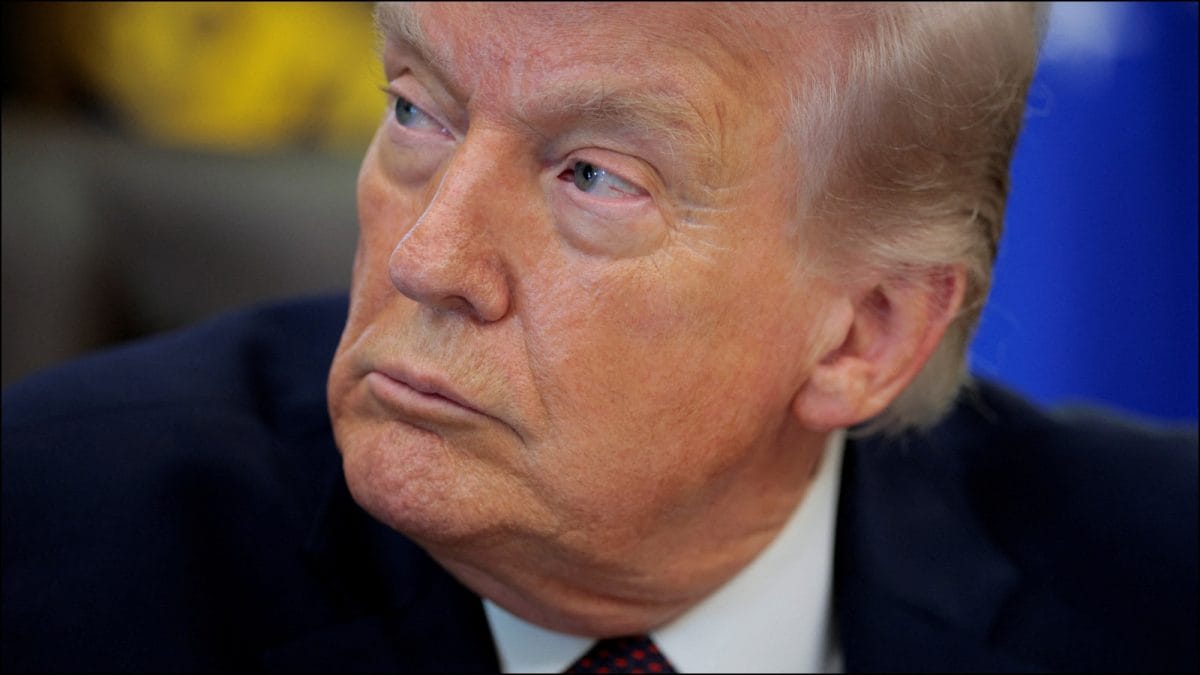
The US is losing the war on narratives largely due to rambling by Trump and his two main aides, Marc Rubio and Pete Hegseth. Their statements are offensive and largely contradictory. Added to this has been shifting goalposts in ending the war. Claiming the war is terminating soon, that Iran has no air defences, demanding the reopening of the Hormuz Straits, which were anyway open prior to the assault, and moving from regime change to claiming it has been achieved, the US leadership has lost support even within its own country. The decline of Trump’s approval ratings is the result of his administration’s ill-conceived approach to narratives.
The war has yet to end. Far more lessons will emerge. The utilisation of technology is an indicator of where warfare is heading and how nations should prepare. India is not far behind in technology but must ensure it does not miss the bus, as it has two major adversaries who may work in tandem.
The author is a former Indian Army officer, strategic analyst and columnist. Views expressed in the above piece are personal and solely those of the author. They do not necessarily reflect News18’s views.
First Published:
April 04, 2026, 19:25 IST
News world Opinion | From Drones To Deepfakes: How Technology Shapes The Iran War
Disclaimer: Comments reflect users’ views, not News18’s. Please keep discussions respectful and constructive. Abusive, defamatory, or illegal comments will be removed. News18 may disable any comment at its discretion. By posting, you agree to our Terms of Use and Privacy Policy.
Read More






 English (US) ·